In a world where technology was once heralded as the great equalizer, a curious paradox has emerged. Social media, the virtual town square that promised to connect us, now seems to serve the opposite purpose: isolating us in echo chambers, sharpening divides, and amplifying discord. Nowhere is this phenomenon more evident than in the curious alliance between two of the world’s most polarizing figures: Donald Trump, the U.S. President to be, and Elon Musk, the tech billionaire whose every move sets the tone for global innovation and controversy.
Together, they have transformed social media into a battlefield where the term "social" is now almost laughably ironic.
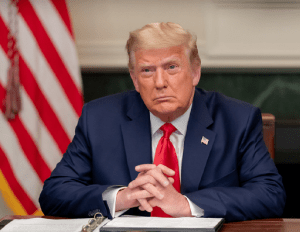
Donald Trump has long been a master of wielding social media as a weapon. His presidency was shaped by his ability to bypass traditional media channels through platforms like Twitter, turning 280-character missives into declarations that could move markets, polarize debates, or dominate news cycles. While his suspension from mainstream platforms in 2021 briefly curtailed his reach, his return to Musk's rebranded X (formerly Twitter) symbolized a restoration of his digital megaphone.
Elon Musk, for his part, has always straddled the line between innovation and provocation. After acquiring Twitter in late 2022, Musk redefined the platform’s rules—embracing a chaotic version of free speech that often seemed indistinguishable from pandering to the loudest, most controversial voices. Under his leadership, the platform reinstated previously banned accounts, including Trump’s, while driving away advertisers and alienating significant swaths of users who felt that X was becoming a haven for misinformation and hate speech.
The intersection of Trump’s populist rhetoric and Musk’s libertarian techno-ideals created a perfect storm. Their combined influence over social media shifted its purpose from fostering connection to cultivating conflict.
One of the most significant consequences of the Trump-Musk axis is the deepening of political and cultural polarization on platforms like X. By reinstating controversial figures and removing content moderation policies deemed "woke," Musk opened the floodgates for divisive rhetoric. The result was a platform where algorithms prioritized outrage and tribalism over meaningful dialogue.
Trump’s return to X was particularly emblematic of this shift. His posts became rallying points for his base, while critics often found themselves overwhelmed by a flood of online harassment or drowned out by algorithmic bias favouring sensationalism. Musk’s focus on user engagement metrics over community well-being ensured that the loudest voices—often the most extreme—dominated conversations.
The ripple effects extended beyond politics. Fringe conspiracy theories, amplified by bots and unmoderated accounts, became mainstream debates. Scientific consensus on issues like climate change and public health was frequently undermined by disinformation campaigns, further eroding public trust in experts and institutions.
What made social media revolutionary in its infancy was its promise of inclusivity. Anyone could join the conversation; anyone could have a voice. But the platforms under Musk’s stewardship, coupled with Trump’s penchant for stoking division, have instead turned into tribal media. Rather than bringing people together, they have become arenas for ideological warfare, where users self-segregate into factions, each convinced of its own moral superiority.
This tribalism has profound implications for democracy. A populace that cannot agree on basic facts cannot engage in productive debate or find common ground. Instead, it becomes easy prey for demagogues and opportunists who thrive on division. The erosion of shared reality makes compromise impossible and governance increasingly dysfunctional.
Driving this transformation is a cynical economic reality: outrage sells. Musk, a visionary entrepreneur with an eye for profit, understands this better than anyone. His ownership of X has been characterized by a relentless pursuit of monetization, from introducing paid verification to implementing subscription models for content creators. But this pursuit has come at a cost: by prioritizing engagement—often fuelled by anger and divisiveness—over the platform’s original purpose, Musk has ensured that social media remains anything but “social.”
Trump, too, benefits from the economics of outrage. His political brand relies on the perpetual spectacle, and social media provides the perfect stage. By leveraging Musk’s permissive policies on X, Trump has reinvigorated his ability to dominate the narrative, ensuring that polarization remains both a strategy and a byproduct of his online presence.
The alliance between Trump and Musk raises urgent questions about the future of social media and its role in society. Can platforms that thrive on conflict ever truly foster connection? Can we reconcile the need for free speech with the need for responsible moderation? And perhaps most importantly, who bears the responsibility for the societal consequences of unchecked digital polarization?
Critics argue that the solution lies in regulation. Governments around the world are increasingly scrutinizing tech giants, recognizing that the laissez-faire approach to platform governance has allowed disinformation and extremism to flourish. Yet regulation is a double-edged sword. In the wrong hands, it risks stifling legitimate dissent and innovation.
Others advocate for a return to the original ideals of social media: community-building, transparency, and inclusivity. This would require a seismic shift in how platforms operate, moving away from engagement-driven algorithms and prioritizing user well-being. However, such a shift would require leaders willing to forgo profit for principle—a prospect that seems unlikely in the current climate.
As Donald Trump and Elon Musk continue to reshape the digital landscape, the irony of “social” media has never been starker. What was once a tool for unity now mirrors—and magnifies—the divisions in our society. Their alliance, whether intentional or incidental, underscores a deeper truth: the platforms we use are not neutral. They reflect the priorities of those who control them.
For now, the “social” in social media remains an aspirational ideal, drowned out by the cacophony of tribalism, outrage, and division. If we are to reclaim it, the responsibility lies not just with the Trumps and Musks of the world but with all of us as users, citizens, and stakeholders in a more connected, less polarized future.


No comments:
Post a Comment