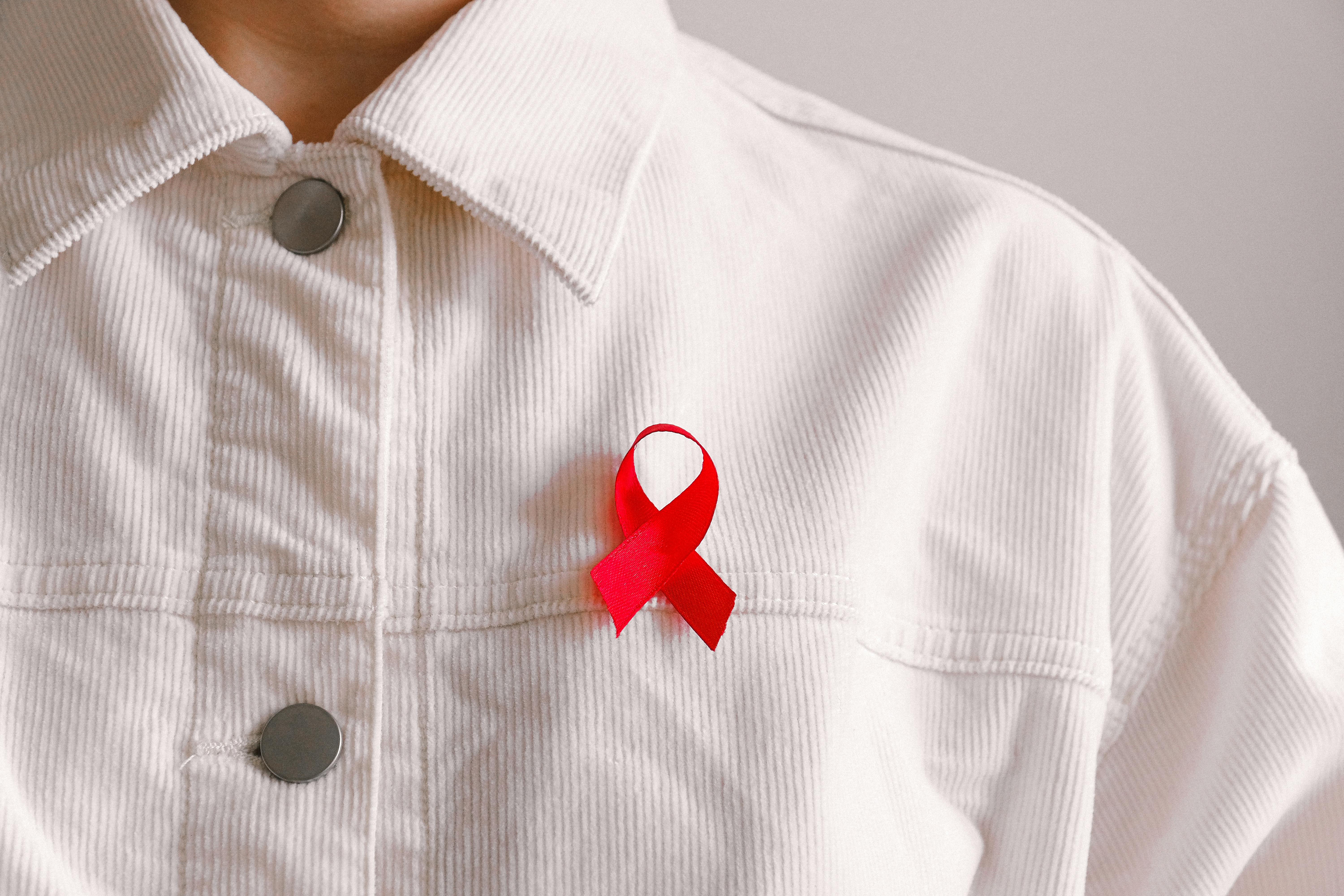
There’s a day each year when the world briefly lifts its gaze from the next breaking headline to an older, quieter emergency, World HIV/AIDS Day. It arrives every December, polite and persistent, like a reminder note tucked under the world’s windshield wiper. And every year, we repeat the usual motions: the ribbons, the speeches, the statistics, the calls for “continuing awareness.” But beneath the choreography, something deeper deserves our attention, our relationship to long emergencies, the ones that don’t make noise unless we force them to.
HIV/AIDS is one of those crises that taught the world how selective its empathy can be. It exposed our moral priorities, our prejudices, and our bureaucratic sluggishness. And even now, decades after the darkest years, the virus still tests us, not only biologically but ethically. This is the part we forget, the part that World HIV/AIDS Day wants us to remember but struggles to say outright: the world didn’t just survive the epidemic; it survived the mirror it held up.
There’s a particular discomfort in talking about HIV today. Not because it’s taboo, it’s far from that but because it forces us to confront how quickly complacency sets in once a crisis becomes familiar. For many, HIV has faded into the background of public consciousness, tucked alongside other chronic problems we assume modern medicine has outsmarted. But the state of HIV/AIDS in the world today is not a solved equation; it’s an ongoing negotiation between science, society, and attention spans.
Treatments have improved so dramatically that they almost undermine their own urgency. When a disease becomes medically manageable, its moral weight in the public mind often dissolves. It becomes less a threat and more an inconvenience, something people file under “handled,” even when it isn’t. But viruses don’t care about our assumptions, and injustices don’t resolve themselves just because we stop discussing them at dinner.
World HIV/AIDS Day is meant to puncture that complacency, if only for 24 hours. It invites us to remember the millions of lives lost, the communities shaped by grief, the activism born in fury, and the scientific breakthroughs carved out of desperation. But remembering isn’t enough. The question isn’t whether we still care, but whether we care in a way that matters.
In a world conditioned to catastrophe fatigue, HIV/AIDS offers a paradox: a crisis that is both quieter than before yet still alarmingly present. People living with HIV today navigate a terrain that is medically hopeful but socially uneven. Stigma hasn’t vanished; it has simply changed its wardrobe. It appears now in subtler, less public ways, in the whispered assumptions, the bureaucratic hurdles, the disparities in access, the shame that lingers like background noise. If progress is real, it is also conditional. If the future looks brighter, it is unevenly lit.
What’s also uncomfortable to admit is that HIV/AIDS still disproportionately affects communities that society routinely marginalizes, sex workers, intravenous drug users, LGBTQ+ communities, and populations in regions where healthcare is treated as a luxury. The virus survives where inequity thrives. This too is part of the reckoning. HIV is not just a medical phenomenon but a social barometer: it reveals who is protected and who is left waiting outside the gate of compassion.
And then there’s the quieter truth, one we speak about sparingly that the global struggle against HIV/AIDS is also a struggle against time. Not biological time but historical time. Memory fades. Outrage cools. Movements lose momentum. Every year we move slightly further from the era in which HIV was headline news and slightly closer to forgetting what it cost to get where we are.
In that light, World HIV/AIDS Day isn’t a ceremonial nod; it’s a guardrail against forgetting.
It’s also an invitation for something journalism seeks but often mishandles: nuance. HIV/AIDS is both a triumph of science and a testament to ongoing failure. It’s a story of extraordinary medical advancement and stubborn social inequities. It’s a narrative where hope and injustice sit uncomfortably at the same table.
To talk about HIV today is to accept contradiction. Yes, the treatments are effective—but access is uneven. Yes, public awareness exists but superficiality flourishes. Yes, stigma has diminished but not dissolved. We live in the in-between, and World HIV/AIDS Day asks us not to rush past it.
If there’s an opinion worth asserting today, it’s this: the future of HIV/AIDS will depend less on laboratories and more on attention. Science can save lives only when society lets it. The virus persists where information is scarce, healthcare is uneven, and silence is culturally enforced. The greatest breakthroughs are useless if they don’t reach the people who need them.
This day, this single day, won’t change the world. But it can challenge the complacency that threatens progress more than the virus itself. It can remind us that long emergencies require long memory. It can nudge us to treat surviving crises not as closed chapters but as responsibilities inherited.
World HIV/AIDS Day shouldn’t be a moment of somber ritual but a reminder that society does its best work when it refuses to look away. And in a world trained to look away quickly, that refusal might be the most radical act we have left.


No comments:
Post a Comment