But does the Igbo have any plight in Nigeria? I think all Nigerians will accept that the Igbo face a plight in Nigeria. The Igbo fought a civil war with the rest of Nigeria.
Am I qualified to write this piece? What are the qualifications? It is a necessary first question. I’m not Igbo, but I’m Nigerian; I’m Yoruba. The Igbo are citizens of the same country, Nigeria. I have schooled with them, I have attended the same church with them, and I have lived with some of them either in the same compound or in the same hostel. I have bought from them. You can’t evade this as a Nigerian. The Igbo control the commerce of this nation. If you have not bought from an Igbo man or woman, then you are not living in Nigeria. The Igbo live everywhere, even in the remotest parts of Nigeria. It is said that if you get into a community and you don’t see an Igbo man or woman there, then don’t stay in that community; you won’t enjoy your stay there.
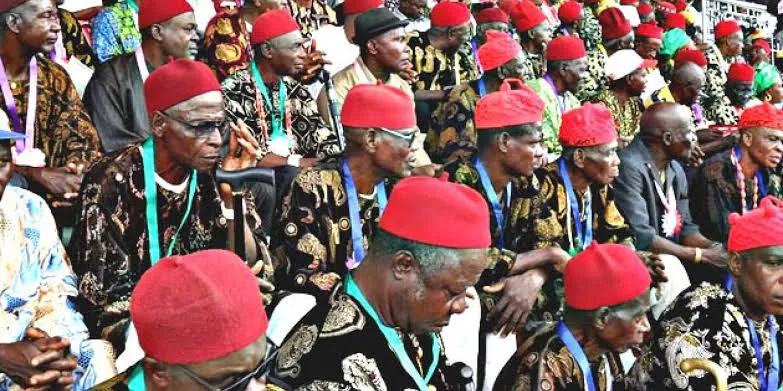
I have spent years trying to unravel the Igbo man. I have had to pray to God to help with Igbo friends from whom I can learn about this very important race. My prayer was answered with one; we lived together in a one-bedroom apartment with my family. He made a real sacrifice for my family and me. We both thought we desired cross-tribal communion, but today our friendship is no longer as we wanted it to be. We are still friends, but not as we wanted it to be. What broke our relationship? The 2023 elections brought my friend’s Igbo factor to light. I was unable to get him to understand my own truth. He tried to push some of his, which I accepted, but he will not even consider mine. For example, the question he posed: was the 1966 coup Igbo? He posed the question when General Ibrahim Badamosi Babangida, IBB, the dictator and former self-declared president of Nigeria, wrote in his biography, A Journey in Service, that the 1966 coup was not an Igbo coup.
We will come back to this. But does the Igbo have any plight in Nigeria? I think all Nigerians will accept that the Igbo face a plight in Nigeria. The Igbo fought a civil war with the rest of Nigeria. They lost thousands; the Igbo, for propaganda reasons for which they are very good at, will tell you they lost millions of souls. They will say it as if there is no loss on the side of Nigeria.
The Igbo knows how to play the victim. There is nothing wrong with them in any conflict; everything is wrong with their opponents. They heap blame on others and accept none on their side. My early exposure to what seemed to me to be Igbo but which I know today was wrong was that every fair-skinned person in Nigeria is Igbo. Again, as a youth that anybody who lived anywhere from Benin City upward was Igbo. We called them Okoro then, and honestly even now I don’t know why. My early exposure marked out Igbo as very brilliant. I can’t imagine any Igbo man as a dullard. I don’t know how that got into me, but as I read history as an adult, I found one reason that may have helped my view of Igbo.
It was when I read Dr. Nnamdi Azikiwe’s exploits as a politician. He was a fantastic propagandist who fought his wars with words. For example, he was said to have told the Igbo Union in an attempt to recruit Igbo into the NCNC in order to gain control of the party that because of the martial prowess of the Igbo, the Almighty was by that showing the Igbo his ordination by God as ruler of Africa. Therefore the rulership of Igbo in Africa was a question of time. Azikiwe commanded the press in a way that nobody before him did, and he deployed them effectively. So powerful was this deployment of his press that Chief Obafemi Awolowo, the leader of Action Group (AG), kept the formation of AG secret from Dr. Nnamdi Azikiwe in the fear that if he heard, the party would be killed in its youth by Azikiwe’s verbal onslaught. That was the power of Azikiwe’s pen that Awolowo, of equal power in oratory and writing, feared.
Azikiwe’s newspaper gave a fillip to all the Igbo who believed in him. They are the strongest; therefore, be afraid when you want to engage them in fisticuffs. They are very brilliant; therefore, be afraid when you are in the same classroom with them. No matter how brilliant you think you are, they are sure to beat you. They are very smart, and in any encounter with them, you must know you can never outsmart an Igbo man. They don’t come second; they must be the first always. The Igbo are very hardworking, and because they have the highest need for achievement score in Nigeria, all of them succeed. The Igbo are conquerors, and they must conquer; it’s only a question of time. The Igbo are very neat, while others are very dirty. They are widely travelled, and therefore they know the frailties of other persons, while others know so little of them. Because of their exclusiveness, not many people like to visit their cities, towns, and villages. Dr. Nnamdi Azikiwe, through his newspaper, helped give vent to all these assumptions. Really, some of them are true, but also true is the fact that others also have these, some in greater measure than the Igbos.
When I went to work in Lagos, I met real Igbos, and I started getting to know them. They have strengths like every other person, and they have weaknesses just like every other person. But the over-promotion of the Igbo has become a problem for this very good race. They believe all these things about themselves, and they become proud and secluded. The Igbo love money. An Igbo preacher once said that if you really want to know whether an Igbo man is really dead, shake a can filled with coins in his ears. If he didn’t wake up, then he is truly dead. All these ascribed qualities, not real in some cases, are the plights of the Igbo. It made them incapable of any objective self-examination. And others who observe them too, believe because of years of propaganda. I’m a very good example.
But as the years went by and these self-ascribed qualities began to clash as others met and interacted with Ndigbo, the mask began to tear off, and the real man, subject naturally to weaknesses, began to show up. As I grew up in life, as I wrote public exams with the Igbo, I began to realize that anything built on hype cannot endure; Igbo are like other humans with a mixture of strength and weakness. But the Igbo had gone too far in that show-off and braggadocio that it was impossible to retrace his steps. That was the cause of the civil war. Yes, Igbo was offended by the genocide.
History is now revealing how the intelligentsia and senior civil servants of the north travelled round the north for two weeks inviting the Hausa-Fulani to rise in vengeance against the murder of northern leaders in the Igbo-led coup of 1966. It is now known that the commoners were not going to react, but the top civil servants and intelligentsia of the northern region felt the north would be permanently weak if the people didn’t react to the murder. It took a top civil servant, Ahmed Joda, now late, I think, on the orders of his colleagues and possibly with the acquiescence of their military governor, Major Hassan Katsina, to mobilise people in the north against the Unification Decree of 1966, which the North believe would lead to Igbo domination. The riots were a culmination of various political tensions and events of that era. The riots, which occurred in May and intensified after the July 1966 counter-coup, were largely a spontaneous, though possibly mobilized by elements of the elite and military, response to a number of factors: The January 1966 coup, the first military coup, perceived as an “Igbo coup” because most of the plotters and casualties among political and military leaders were of northern and western origin, created deep suspicion and animosity in the North.
The outbreak of riots in the north were a widespread, mass phenomenon involving soldiers and civilians. Thereafter began massive killings of the Igbo. All you needed to be killed was to be Igbo.
Lt. Colonel Odumegwu Ojukwu, who had been appointed the military governor of the Eastern Region and who had brought the ascribed Igbo invincibility and pride to the top in his personality, behaved typically in the crisis. First, Ojukwu thought he was superior to Gowon, who was made the Head of State courtesy of the intervention of the British High Commission in Lagos. Gowon was humble and gentle and virtually offered Ojukwu the nation in their popular Aburi Accord until top civil servants in Lagos told him he had offered Nigeria away. Humble Gowon accepted the advice and reneged. Lt Col Ojukwu was unfortunate; the corps of top Igbo civil servants and academics he gathered around himself who also shared in those ascribed values strengthened Ojukwu in his stubbornness. The East must secede.
Chief Obafemi Awolowo, first premier of the Western Region, put his life on the line and travelled to the east to meet Ojukwu. He told him war was unnecessary and that Ojukwu should stay on so a “larger Nigeria can be built which can accommodate all Nigerians.” Headstrong because of the ascribed Igbo qualities, Ojukwu declined the advice of the elderly Awolowo, saying when he met Awolowo on the tarmac as he went to board a flight back to Lagos, “Baba awa ti lo” (Baba, we have gone). With that parting handshake, there was no going back again for Ojukwu, and the east, which he labeled Biafra, must leave the union. But that was the last stubbornness that broke the camel’s back. It was a civil war that set the Igbo back. They quickly recovered because of some of the ascribed qualities, but not without a cost.
Ojukwu himself said that the Igbo that went all over the world to look for money because the war made them abjectly poor did not go out with the traditional real Igbo values given by the parents. They just must make money at all costs. (See ‘Because I’m involved’ written by Odumegwu Ojukwu). That journey began with the unbridled search for money, which has marred Nigeria’s reputation everywhere the Igbo are today. In some cases, he was either forging a certificate or carrying drugs or engaging in one heinous crime or the other. That does not mean he is the only one doing it. Indeed, a southern Kaduna man who was my boss told me that the Igbo didn’t start the drug business, that the Hausa-Fulani had been at it for long before the Igbo jumped into it, “but you know everything Igbo does, they bring their braggadocio and pride and show off.”
Why did the Igbo follow Ojukwu almost blindfolded? Even great Zik was not left out; he had gone with Ojukwu, allowing his dream of ruling Africa to shrink to ruling a tiny enclave in the east of Nigeria. But he quickly detoured and returned to Nigeria when it became obvious to him that the secession was a journey in futility.
Again, why did the Igbos follow Ojukwu? It takes likes to follow likes. Ojukwu and his fellows shared in the ascribed qualities of Igbos. Pride is the principal ruin of all men and women, and it takes rough and terrible circumstances to prune it. Igbo will always ascribe their plight to other men or to circumstances outside of themselves. But for anybody in religion, he will know that the greatest enemy of man is himself. Igbo has no enemy outside of Igbo. And pride is that enemy that decades of propaganda have fed. The Bible says God hates pride, but he gives grace to the humble. Because the Igbo had been proud, God allowed them to fall into Ojukwu’s deception in order to humble them. Not that God will excuse those who did evil to them, no. All that is happening all over the north now is all vengeance of God against the Igbo genocide. God will not do iniquity, the Bible says, and he leaves no sin unjudged.
I do not think the Igbo learned the lesson in humility during the civil war. Israel as a nation never learned their lessons till today. It can take several deals before lessons are learned. The Igbo have again fallen into the same trap as Ojukwu in following Nnamdi Kanu, who has become an idol in the east. If there is any man that summarizes the Igbo ascribed qualities, that person is Mazi Nnamdi Kanu. He is so brash, so rash, so rude, so overbearing, and so abrasive and intemperate. I’m still coming to terms with how an otherwise very intelligent people will follow such a brute. But the Igbo did. He will insult them and even spend their money on himself in pursuit of fashion, and they will still follow him. How can a person with any modicum of intelligence do the kind of thing Nnamdi Kanu did, giving instruction for the destruction of his country through a radio message? Though it was a stupid thing to do, the Igbo still followed him, even giving him their money, and if you know Igbo, don’t joke with their money. You must know how blind they became to give such huge money to Nnamdi Kanu and Simon Ekpa in Finland, who wept like a baby at his conviction in a Finnish court.
What happened again? Humility from God. Why did it happen that the conviction of both Nnamdi Kanu and Simon Ekpa happened within months of each other? This is none other than the hand of God to get the Igbo sensitive to this problem of pride. Pride is very subtle and dangerous; it takes the help of God to detect it and to remove it.
Now because of the Igbo pride, they want to wish away the 1966 coup as not Igbo-centric. No, that coup was Igbo. For revolutionist Chukwuma Kaduna Nzeogwu, it was a revolution, but for other Igbo in the group, it was a coup to assert the ascribed qualities of Igbos and to lord that race over others. That was the point my Igbo friend and brother will not accept but which God resolved for us. I don’t know how he resolved it, but I received a ten thousand naira gift from my brother after he refused a relationship with me for some time. Let the Ndigbo search their hearts individually; let them come humble before God and before their neighbours. And the plight of the Igbo will be over in a corporate Nigeria.
First Published in METRO
***********************
Tunde Akande is both a journalist and pastor. He earned a Master's degree in Mass Communication from the University of Lagos.


No comments:
Post a Comment