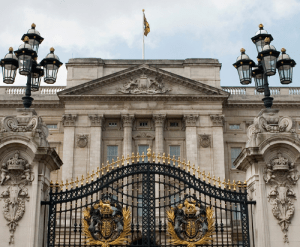
There is something profoundly revealing about the way institutions choose whom to protect. Buckingham Palace has spent decades perfecting the art of dignified silence, strategic amnesia and moral flexibility but nowhere is that craft more exposed than in its wildly different treatment of Prince Andrew and Prince Harry.
Andrew Mountbatten-Windsor became a walking reputational catastrophe, yet the Palace response was soft, slow and carefully padded. Titles were removed reluctantly, statements were massaged into bloodless neutrality and public outrage was met with the unmistakable tone of an old club protecting one of its own.
The message was clear; Andrew was a problem to be managed, not a moral failure to be confronted. Even as evidence mounted and explanations collapsed under their own absurdity, the institution bent itself backward to preserve the illusion of continuity.
Contrast that indulgence with the glacial, almost punitive posture adopted toward Prince Harry and the hypocrisy becomes impossible to ignore. Harry committed no crime, faced no credible allegations of corruption or abuse, yet he was treated as an existential threat.
His real offense was not scandal but disobedience. He spoke openly, rejected the Palace’s code of silence and prioritized personal survival over institutional image.
For a monarchy built on optics, that kind of autonomy is unforgivable. Where Andrew’s sins could be buried under protocol and ceremony, Harry’s independence threatened the entire performance.
The Palace froze him out with remarkable efficiency. Military titles stripped quickly, security withdrawn without sentiment and briefings leaked that painted him as unstable, ungrateful and reckless.
The contrast is not just unfair; it is instructive. Andrew embarrassed the Crown but obeyed its rules, while Harry challenged the structure itself by refusing to suffer quietly.
In royal logic, silence is loyalty and suffering is duty. The institution can forgive monstrous behaviour far more easily than it can forgive defiance.
This is not about family drama or personal grievances; it is about power. The monarchy survives by enforcing hierarchy and Harry broke rank in public. By leaving, speaking and refusing to play his assigned role, he exposed how conditional royal compassion truly is. Sympathy flows downward only when it reinforces the system.
Andrew, shielded and cushioned, represents the old monarchy protecting itself from consequences. Harry, cast out and condemned, represents the danger of accountability, transparency and modern expectations.
The cruelty of the Palace’s response to Harry is not accidental; it is deliberate. Institutions punish whistleblowers and rebels more harshly than abusers because the former threaten control.
When viewed side by side, the moral calculus becomes grotesque. One man allegedly exploited vulnerability and was managed with kid gloves; the other demanded boundaries and was exiled.
This is why public sympathy has shifted, despite relentless attempts to frame Harry as the villain. People recognize injustice when they see it, even beneath crowns and crests.
The Palace may believe it defended tradition but what it really revealed was fear. Fear of losing narrative control, fear of change and fear of a prince who refused to disappear quietly.
In choosing to protect Andrew and punish Harry, the monarchy made its values unmistakably clear. And once seen that imbalance cannot be unseen.
No amount of ceremony, pageantry or rehearsed dignity can fully cover the stench of that choice. History tends to be far less forgiving than palaces expect.
The real tragedy is not that Harry left, but that the institution forced the exit. A monarchy confident in its morality would not need exile to maintain order. Instead, it chose loyalty over justice, silence over truth and obedience over humanity. That decision will echo far longer than any interview, memoir or headline.
Empires and crowns do not fall because of outsiders; they erode from the inside when credibility collapses. Protecting Andrew may have bought temporary quiet but punishing Harry broadcasted rot.
The public no longer accepts the idea that birth excuses behaviour while conscience is treated as betrayal. In that sense, Harry’s greatest crime was reminding people that royalty is still accountable.
The Palace can close ranks, rewrite narratives, and wait for attention to drift. But the comparison will remain, stark and uncomfortable, etched into public memory.
In the end, this is less about two princes than about what power chooses to protect. Buckingham Palace answered that question clearly, and history is already taking notes.
The chill shown to Harry may linger as the monarchy’s most revealing legacy. Not scandal, but selective mercy, is what finally stripped the Crown of moral authority.


No comments:
Post a Comment