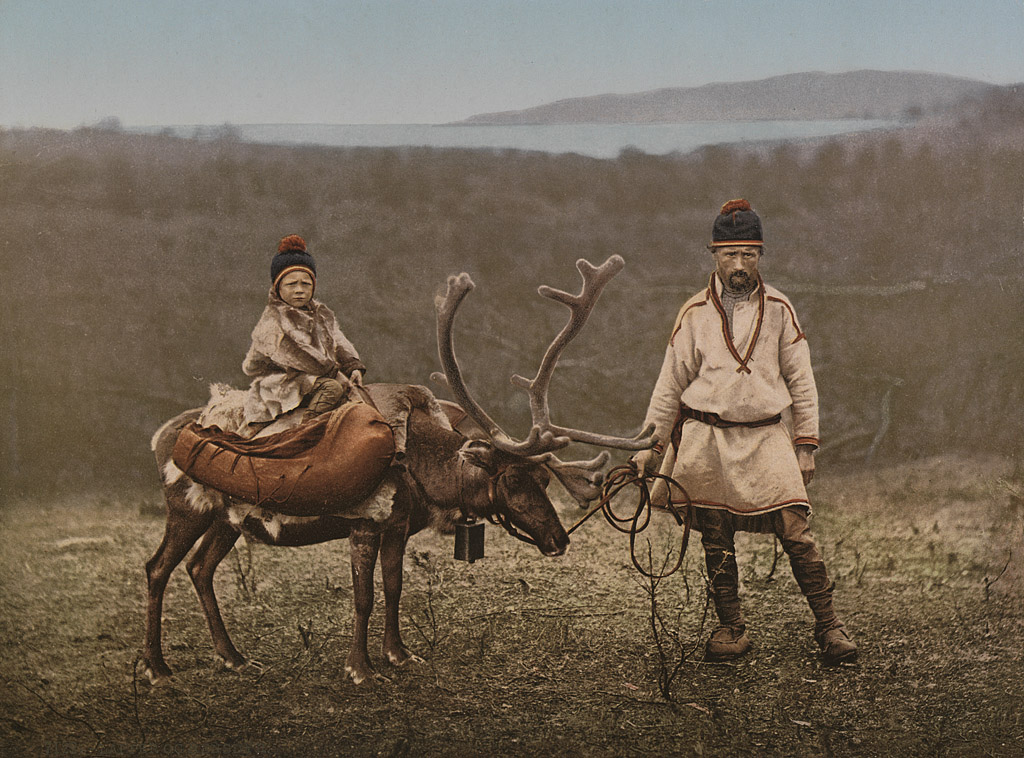
On Sámi National Day the flags rise in the cold light of the north and for a moment the world remembers that Europe has an Indigenous people. The remembrance however is brief, ceremonial and often strangely polite. It arrives wrapped in folk costume and weathered drums, then departs before asking any uncomfortable questions. Celebration, in this context, can become a soft substitute for recognition and recognition itself is still the unresolved argument at the heart of Sámi life.
The Sámi exist across borders that were never drawn with their consent. Norway, Sweden, Finland and Russia divide what was once a continuous cultural and ecological world. Modern states treat this as geography; Sámi experience it as a daily negotiation of identity. Who counts as Sámi? Who gets to speak? Who decides which traditions are authentic enough to be protected and which are inconvenient relics to be modernized away? These are not abstract questions. They shape access to land, language education, political voice and even the right to be counted.
Recognition, when it comes, often arrives with conditions. Governments are happy to acknowledge Sámi culture so long as it remains symbolic rather than sovereign. A joik at an official ceremony is welcomed; a protest against mining on reindeer grazing land is met with irritation or legal language. Identity is celebrated as heritage but resisted as authority. The message, sometimes subtle and sometimes blunt, is that Sámi people may remember their past but should not insist too loudly on shaping their future.
Language is where this tension becomes most intimate. Several Sámi languages are endangered, not because Sámi parents failed their children but because the state once worked very hard to make forgetting feel necessary. Boarding schools, assimilation policies and public shame did their work efficiently. Today, language revitalization is encouraged, yet often underfunded and bureaucratically tangled. A language can be praised as priceless while being treated as optional. When a language disappears, it does not go quietly; it takes with it a particular way of understanding land, time, and responsibility.
Identity, meanwhile, is frequently policed from both outside and within. States prefer tidy definitions, registries, bloodlines, official memberships. Sámi communities, carrying the scars of exclusion, sometimes mirror this defensiveness, wary of dilution or appropriation. The result is a painful paradox. People who feel Sámi in memory, practice or loss may still be told they are not enough. Colonialism fractures not only land but belonging, leaving people to argue over the remaining pieces.
Climate change has sharpened all of this. The Arctic is warming faster than the rest of the planet and reindeer herding, already strained, is becoming precarious. Ice forms where snow should be soft; migration routes break. Governments frame this as an environmental issue, occasionally even inviting Sámi voices into panels and conferences. But when economic priorities collide with Indigenous knowledge, the old hierarchy reasserts itself. Expertise is welcomed until it contradicts profit.
What makes Sámi National Day complicated is not that it exists but that it risks becoming an endpoint instead of a beginning. One day of acknowledgment can serve as a moral alibi for the rest of the year. It allows societies to feel generous without being just. The harder work lies elsewhere, in land rights that are enforceable, not symbolic; in education systems that treat Sámi history as central rather than peripheral; in political structures that share power rather than consult it.
Recognition is not a favour. It is a correction. Identity is not folklore. It is a living, sometimes uncomfortable insistence on continuity. To honour Sámi National Day honestly would mean accepting that celebration without change is a kind of quiet disrespect. The Sámi are not asking to be remembered. They are asking to be reckoned with, on their own terms, in the present tense.
There is also the question of visibility versus agency. Museums, textbooks, and tourism brochures increasingly feature Sámi imagery, often stripped of context and struggle. The gákti becomes a design element; the drum a logo. Visibility flatters the majority culture, which can admire without listening. Agency, by contrast, is disruptive. It demands consent, negotiation, and refusal. It means accepting Indigenous priorities that slow projects and complicate law. If Sámi National Day is to matter beyond symbolism, it should make people uncomfortable. It should prompt questions about whose laws govern land, whose knowledge is dismissed, and whose future is expendable. Comfort is easy; justice rarely is. The north remembers everything done to it. The question is whether societies built upon it are ready to remember too, not for a day, but for generations. That remembering would require humility, patience, and the courage to accept limits, including the radical idea that progress can be measured not by speed or profit but by repair, restraint and shared survival in a damaged, warming world together.


No comments:
Post a Comment