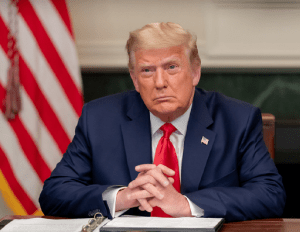
There was a time when diplomacy moved at the pace of cables, briefings and carefully staged summits, when language was calibrated, ambiguity was strategic and silence itself could be a tool. Then came the era of the thumb, impulsive, immediate and unfiltered. In this new register, Donald Trump did not merely disrupt political norms; he redefined the tempo and tone of global communication, often reducing complex geopolitical realities to bursts of contradiction and spectacle.
The damage is not easily measured in treaties broken or alliances formally dissolved. It is subtler, more corrosive, an erosion of trust, the essential currency of international relations. When messages oscillate between threat and conciliation within hours, when policy appears to be shaped as much by mood as by method, counterparts are left not just wary, but disoriented. Diplomacy depends on predictability, even among adversaries. Trump’s communication style replaced predictability with volatility.
Consider the broader implications of such erratic signaling. In regions already fraught with tension, ambiguity can be dangerous. Words from a U.S. president are not casual remarks; they are signals interpreted by militaries, markets and governments alike. When those signals conflict, the margin for miscalculation widens. A contradictory post about negotiations, whether involving Iran, Pakistan or any other sensitive axis, does not exist in a vacuum. It reverberates through embassies and intelligence briefings, forcing allies to second-guess and adversaries to probe for weakness.
But the consequences extend beyond foreign policy. Trump’s rhetorical style normalized a kind of public discourse that privileges immediacy over accuracy and confidence over coherence. In doing so, it seeped into other domains, education, public health, even civic life. When leaders communicate in absolutes one day and reversals the next, institutions built on expertise begin to appear optional. The result is not merely disagreement, but fragmentation: a public less able to distinguish between informed guidance and performative assertion.
Globally, this fragmentation carries weight. American influence has long rested not only on military or economic power but on the perceived stability of its institutions. When that stability appears compromised—when messaging from the top seems inconsistent or untethered, other nations adjust. Some hedge, forming new alliances or strengthening regional blocs. Others exploit the uncertainty, advancing their own agendas in the gaps left by a distracted or unpredictable superpower.
Prosperity, too, is affected. Markets thrive on clarity, or at least on patterns they can interpret. Sudden shifts in tone, threats of tariffs followed by reversals, praise for adversaries followed by condemnation, introduce a kind of noise that complicates decision-making for businesses and governments alike. Investment hesitates. Long-term planning becomes more cautious, more fragmented, more defensive.
To frame all of this as the product of a single individual’s “thumbs” may seem reductive, but it captures something essential about the moment: the compression of consequence. In earlier eras, the machinery of governance filtered impulse through layers of deliberation. In Trump’s case, that machinery often appeared bypassed, or at least overshadowed, by direct communication channels that rewarded speed and provocation over reflection.
The danger, then, is not only in what was said, but in how it reshaped expectations. If global leadership becomes synonymous with unpredictability, if contradiction is recast as strategy rather than instability, the norms that underpin cooperation begin to fray. And once frayed, they are not easily restored.
History will likely debate the extent of the damage, parsing policy outcomes and geopolitical shifts. But the tonal shift, the sense that the world’s most powerful office could speak in bursts of contradiction and still be taken seriously, may prove to be one of the more enduring legacies. In diplomacy, as in life, words matter. When they lose their weight, so too does the fragile architecture they are meant to support.


No comments:
Post a Comment