For decades Scandinavia was the reassuring answer to a question that liberal democracies kept asking themselves, can a country be prosperous without becoming cruel? Denmark, Sweden, Norway and Finland appeared to say yes. Their bargain was simple enough to understand and difficult enough to reproduce competitive markets, strong unions, high taxes, universal services and a state confident enough to restrain capital without strangling it.
That reputation is beginning to look less permanent. Across northern Europe the political weather has shifted. Public services face pressure, housing has become painfully expensive, immigration has become a defining political fault line and governments increasingly speak the language of competitiveness, efficiency and security. The old Scandinavian instinct, to make capitalism serve society, can sound increasingly like an inconvenient luxury.
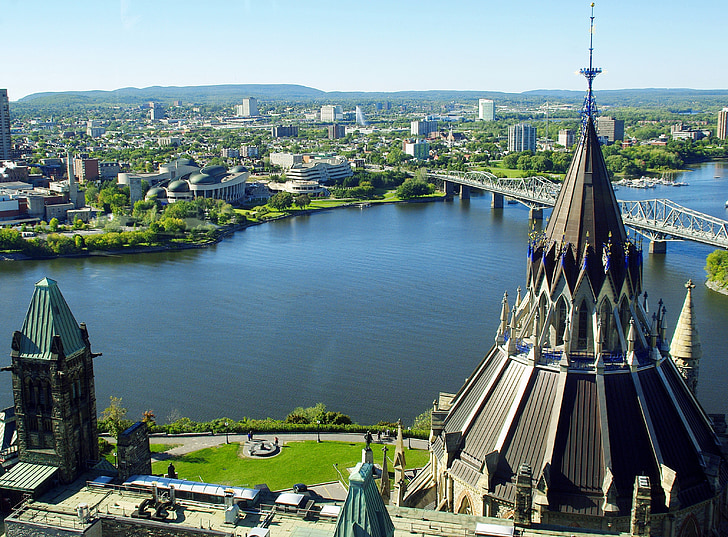
Then Canada comes, of all places. Canada has never been a Scandinavian country transplanted across the Atlantic. Its welfare state is less comprehensive, its federal structure more complicated and its political culture more comfortable with private provision. Yet that may be precisely why it offers a more interesting model for the next phase of democratic capitalism. Canada can demonstrate that a modern welfare state does not have to be a museum piece from the post-war era. It can be redesigned around contemporary anxieties, housing, healthcare, childcare, ageing, regional inequality and the economic disruption caused by technology.
The crucial point is not that Canada is suddenly more socialist than Sweden. It plainly is not. The point is that the democratic political centre is being rebuilt around a different proposition, government should make ordinary everyday life more economically survivable.
That matters because the emerging Trumpian model of capitalism is not merely about tax cuts or deregulation. It is about treating economic strength as a national contest in which winners deserve rewards and losers are expected to adapt. Its political appeal is obvious. People resent bureaucracy, distrust elites and want growth. But a society cannot indefinitely tell families that markets are wonderfully efficient while their rent, prescriptions, childcare and groceries consume ever larger portions of their income.
The answer is not to abolish markets. It is to make them less terrifying. Canada's opportunity, therefore, lies in treating social policy as economic infrastructure. Affordable housing is not simply a compassionate gesture; it allows workers to live where jobs exist. Healthcare is not merely a moral obligation; it reduces insecurity and protects household finances. Childcare is not just family policy; it expands labour participation. Public investment is not necessarily bureaucratic waste; done intelligently, it can create the conditions under which private enterprise flourishes.
This is where Scandinavia should pay attention. Its historic success was never based on romantic statism. It was based on pragmatism. If its political descendants now embrace a harsher version of market individualism, they risk preserving the capitalism while quietly dismantling the social contract that made it legitimate.
Canada's challenge is equally formidable. It must prove that government can build without becoming ponderous, spend without becoming reckless and protect citizens without insulating them from change.
The irony is delicious. The old northern model may now need rescuing from the north. Canada could become the unlikely laboratory for a new bargain, capitalism with guardrails, ambition with security, and prosperity measured not merely by what an economy produces, but by how many people can afford to live inside it.


No comments:
Post a Comment