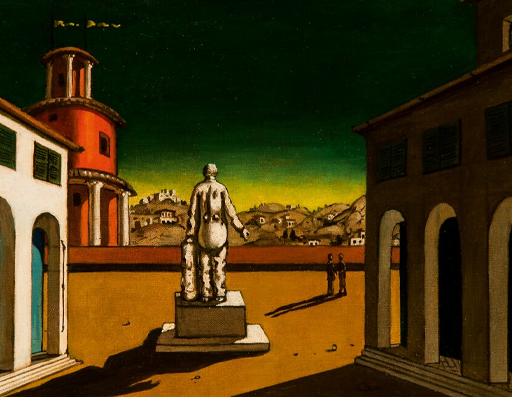
There is a particular fantasy that returns whenever a democracy grows tired of itself, the fantasy of the strong hand, the swift order, the permanent exception. In the American version it often arrives dressed as nostalgia, a red hat pulled low over the eyes, promising to restore a greatness that was mislaid somewhere between a factory closing and a cable-news panel. Donald Trump did not invent this longing but he has learned to speak it fluently, the way a con artist learns the local dialect before borrowing your watch.
Dictatorships as history has shown do not usually announce themselves with trumpets. They slip in under the door on the back of an emergency. A war, conveniently distant and morally simplified, works well. So does a convulsion at home, cities burning on television, the flag folded into a costume of panic. Martial law is not sold as a crown but as a crutch. Just until the leg heals, the story goes. Just until order returns. History, which has the weary tone of someone who has heard this joke too many times, suggests that the crutch tends to become the limb.
Trump has spent years rehearsing the language of the exception. He speaks of enemies as if they were weather systems, unavoidable and destructive, requiring extraordinary measures. He speaks of elections with the affection of a landlord discussing termites. The details shift, immigrants one season, journalists the next but the melody is consistent, only I can fix it and what I need to fix it is fewer rules.
One can imagine the menu of justifications laid out like laminated options at a roadside diner. A foreign adventure, preferably against an adversary, who can be reduced to a headline villain, would do nicely. Iran is a familiar antagonist in the American imagination, a silhouette already stenciled onto decades of rhetoric. Even the more surreal suggestions that occasionally drift through political conversation, Greenland, Canada, Mexico, share the same narrative utility. They are places that can be pointed to on a map while the word “security” is spoken slowly, reverently as if it were a prayer.
If war is the blunt instrument, domestic unrest is the scalpel. A serious breakdown of order in one state or one city can be magnified into a portrait of national collapse. Minnesota, invoked lately in anxious shorthand, becomes less a place than a symbol, proof that the country is slipping its leash. Cameras linger on flames. The causes are compressed into a single word, chaos and the solution appears, already ironed, in a uniform.
Once the uniform is in the room elections begin to look untidy. Ballots are fragile things, made of paper and trust. They do not photograph well beside armored vehicles. It becomes easy to postpone them “temporarily,” the way one postpones dental appointments, until postponement becomes habit. Freedoms, too, start to feel inefficient. Speech is noisy. Assembly is unpredictable. The temptation to trade them for silence, for straight lines and early bedtimes, grows stronger the longer the emergency lasts.
The real tragedy is not that such a transformation would be dramatic but that it would be banal. Racism and prejudice, already threaded into the fabric of daily life, would be elevated from private vice to public policy, from muttered belief to printed directive. Torture would be renamed with a bureaucratic euphemism, as if pain were merely a clerical error. Imprisonment would expand to fill whatever space the imagination allows. Death would become statistical, a column in a report, a number that can be lowered with the right font.
Supporters would insist that none of this was the plan. The plan, they would say, was safety. The plan was to feel less afraid. And for a moment, perhaps, they would. Fear is exhausting; obedience is restful. There is a relief in being told that complexity is a luxury and doubt a weakness. There is a seduction in watching someone else carry the burden of decision, even when that someone is carrying it toward a cliff.
What makes this fantasy durable is not Trump himself, who is too loud to be subtle and too thin-skinned to be timeless. It is the part of the American psyche that mistakes domination for competence and cruelty for candor. The part that hears the word “dictator” and imagines efficiency instead of funerals.
The question, then, is not whether one man dreams of ruling without interruption. Many men do. The question is whether a country, bored with its own arguments and bruised by its own failures, will decide that the noise of democracy is more frightening than the silence that follows it. Democracies rarely die screaming. More often, they sign themselves away, one emergency at a time, grateful for the quiet.


No comments:
Post a Comment