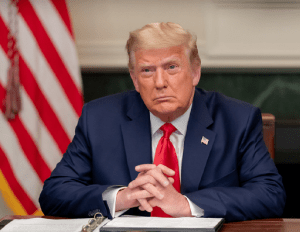
When the Trump administration released its 33-page National Security Strategy declaring that Europe risked “civilisational erasure,” many saw it as yet another jolt to an already fragile transatlantic relationship. But beneath the headline phrase lies something deeper and far more troubling, the growing sense that the United States, once the self-appointed steward of the Western democratic order, has become ambivalent if not openly hostile, toward the very partners it helped rebuild after the WWII.
To understand the weight of that rhetoric, one must recognize the broader context. Donald Trump’s approach to Europe has always been defined by suspicion, impatience, and, at times, outright disdain. He has repeatedly portrayed European nations as burdens rather than allies, institutions like NATO as lopsided and outdated, and the European Union as little more than a trade adversary. His speeches, interviews, and policy signals have consistently reinforced a worldview in which Europe is not a partner to be cultivated, but a continent to be lectured.
For many Europeans, the warning of “civilisational erasure” did not feel like a protective call to arms but rather a rebuke, a blunt accusation that Europe had failed in its duty to maintain cultural, political, and strategic strength. Critics argue that Trump’s language echoed far-right talking points popular among nationalist and ultraconservative movements across the continent: narratives of cultural decline, demographic fear, and the collapse of traditional identity. This resonance has led some observers to accuse Trump of amplifying, intentionally or not, the messaging of European extremist parties, groups that celebrate his rhetoric as validation of their own.
But stepping back from the political noise, one thing is undeniable: Trump’s language marked a stark departure from the tone of every modern American president before him. There was no subtlety, no diplomatic varnish, no attempt to present the U.S. as a steady hand guiding a shared future. Instead, the strategy document served as a reminder that Trump’s foreign policy instincts were shaped less by alliances and multilateralism, and more by confrontation, grievance, and a belief that America’s partners were perpetually taking advantage of its generosity.
The effect was immediate. Across European capitals, diplomats and officials privately expressed frustration and fatigue. For decades, the United States and Europe had shared more than treaties; they shared an idea of the West as something worth defending: a union of democratic principles, economic cooperation, and collective security. Trump’s framing suggested not only that Europe was failing, but that its failure threatened the very core of Western civilization. It was a dramatic narrative, dramatic enough to play well with his domestic political base, but destabilizing for the partners expected to stand alongside the U.S. in matters of global security.
Yet the tension here does not lie solely in Trump’s harshness. It lies in the vacuum of constructive vision. Criticism of allies can be healthy; democracies need honesty. But Trump’s worldview offered little sense of how partnerships should evolve, how shared challenges should be met, or how the West should adapt to a multipolar 21st-century landscape. Instead, it traded in fear, decline, and the imagery of a world slipping away. This rhetoric may galvanize some, but it does not build coalitions. It divides them.
Europe today is indeed facing profound challenges: rising nationalism, migration pressures, economic disparities, and geopolitical vulnerabilities. But to frame these challenges as signs of impending erasure is not analysis, it is alarmism. It feeds on impulse rather than strategy. More importantly, it ignores the nuance that Europe is not a monolith but a mosaic of democracies constantly negotiating their identities. The continent’s struggles do not signify its disappearance; they signify its evolution.
Opinion pieces often risk overstating the symbolic weight of political documents. But in this case, Trump’s National Security Strategy mattered because it crystallized what many had sensed for years: that for the first time in modern memory, the United States had a president who questioned not just Europe’s performance, but Europe’s value. The American voice that once reassured now unsettled. The hand that once guided now pointed accusatorially.
As the world navigates a future fraught with uncertainty from technological upheaval to authoritarian resurgence, the strength of the Western alliance depends on clarity, mutual respect, and shared purpose. Trump’s rhetoric, intentionally or not, fractured that foundation. Europe may endure its crises, as it has countless times before, but the transatlantic bond will not repair itself through nostalgia or lectures.
If anything is at risk of “erasure,” it is not Europe’s civilization, but the cooperative spirit that once defined the West. And rebuilding that will require a different tone, a different vision, and a renewed understanding that allies are strengthened not by fear, but by trust.


No comments:
Post a Comment