There is an unmistakable rhythm to political power once it realizes it can bend the rules of consequence. It begins quietly almost imperceptibly like the faint creak of a hinge on a door you did not expect to open. Then, once the precedent is established and the hinge has taken its first turn, others step forward, testing its strength, pushing harder, emboldened by the sound they’ve now recognized as opportunity.
Donald Trump with his parade of pardons, did more than merely absolve a roster of loyalists and rogues. He demonstrated that the highest office in the United States could be wielded not simply as an instrument of executive mercy but as a political tool, one capable of granting absolution to individuals who, by every traditional understanding of justice, should have served the remainder of their sentences contemplating the gravity of their crimes. His pardons functioned like VIP passes to a different tier of accountability, one reserved for the connected, the useful, the faithful.
And once a system learns that accountability is optional, it becomes a contagious notion. The world watches, takes notes and sometimes imitates.
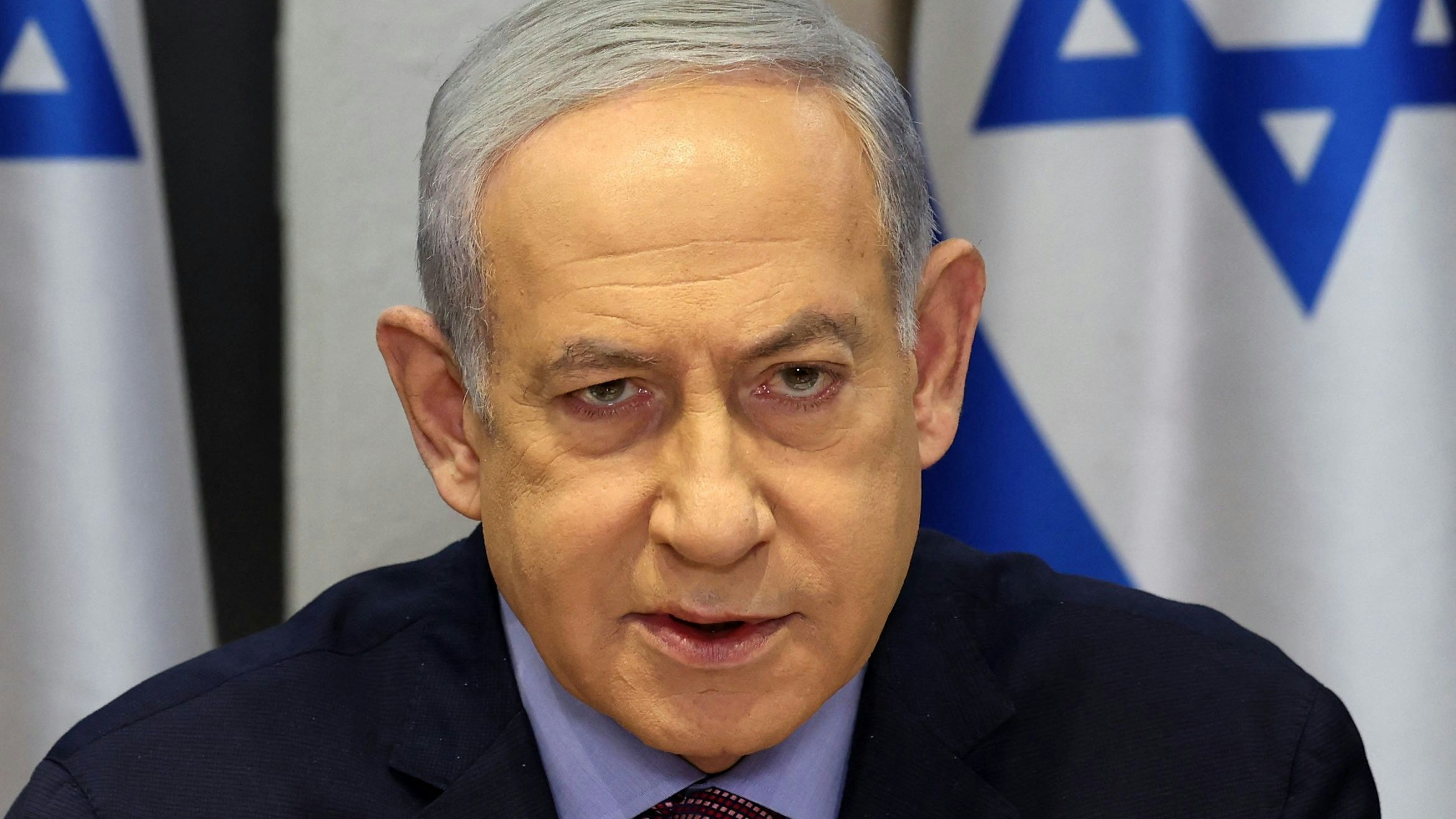
Enter Benjamin Netanyahu, who, in the deepening mire of his corruption trial and the growing pressures of governance, has reportedly turned toward the Israeli presidency with the same sort of political bravado, a hint, a suggestion, perhaps even an expectation that a pardon might be in order. Whether framed as a request or a demand depends on one’s reading of Israel’s political wind patterns, which are notoriously unpredictable. But the mere fact that the idea hangs in the air with any degree of plausibility is, in itself, a troubling sign.
The concept of a leader seeking a pardon while still in power and intending to remain in power edges precariously close to a parody of democratic norms. It transforms what should be the solemn ritual of accountability into something resembling a self-service kiosk: press here to skip the legal process; press again to sanctify the act as necessary for national stability. A nation that prides itself on having a vigorous judiciary suddenly finds itself caught between the abstract ideal of equality before the law and the concrete reality of a prime minister who refuses to step aside even when standing trial.
Netanyahu, of course, is a master of political survival. His career is defined by agility, resilience, and the kind of self-assured conviction that allows a leader to frame personal battles as national ones. He is not the first embattled politician to perceive legal accountability as an existential threat to their leadership and he will not be the last. But the emerging pattern, inspired in part by what Trump normalized, is that leaders in legal peril increasingly view the possibility of a pardon not as a last resort but as a strategic pivot.
A pardon, once considered an extraordinary act, has begun to take on the character of a political escape hatch. Under this new framework, the legal process is not merely a system to be navigated but an obstacle to be surpassed preferably by leaping over it entirely.
What is most concerning is not that Netanyahu might seek a pardon. Politicians seek all manner of things. It is the shifting expectation that such a move could even be entertained. Democracies rely on a delicate lattice of norms, expectations, and unwritten rules. Once leaders discover those norms can be manipulated or worse, ignored, the lattice begins to buckle.
Israel, like the United States, exists in a moment of centrifugal political forces. Institutions strain under the weight of conflict, polarization, and public exhaustion. Citizens who once believed in the symmetry of justice begin to suspect the system operates on a tilt. And in such an environment, a pardon for a sitting prime minister whether granted, demanded, or merely floated, has the potential to become not just a legal maneuver but a symbolic fracture.
Imagine the consequences: a leader absolved before judgment, freed from the shadow of legal scrutiny, emboldened by a system that blinked first. What follows is not simply the survival of one politician but the erosion of a principle that undergirds every functioning democracy: that leaders, too, are bound by law.
A nation that pardons its leaders while they are still in office risks normalizing the idea that power itself is an alibi. It tells future leaders some more benign, others potentially far more dangerous that accountability is negotiable. That the law is pliable. That the future remains in the hands of those who survive long enough to rewrite the terms of their own innocence.
Critics will argue that the political landscape requires flexibility. That stability is paramount. That a leader under scrutiny might still be indispensable. But indispensable leaders are the cornerstones of many broken democracies. The argument that someone is too vital to face justice is often the prelude to the realization that the system was never strong enough to restrain them.
Israel now stands at a crossroads, one that America has recently encountered, and one that other democracies will confront again. The question is not just whether Netanyahu will seek or receive a pardon. The deeper question is whether the political imagination of modern leadership has fundamentally shifted. Whether we have entered an era in which the powerful see legal consequence not as something to avoid but as something to circumvent through political leverage.
Trump’s pardons cracked open the door. Netanyahu’s situation tests how wide it can swing.
And the rest of the world, leaders, citizens, and courts alike, must decide whether that door becomes a permanent feature of twenty-first-century politics or whether democracies still possess the will to close it.


No comments:
Post a Comment