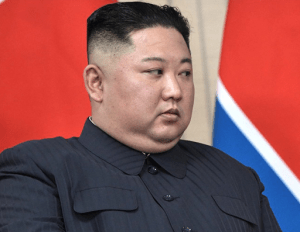
The idea that a 13-year-old girl could soon become the political heir to one of the world’s most secretive and militarized regimes sounds almost surreal. Yet the growing visibility of Kim Ju Ae, daughter of North Korean leader Kim Jong Un, has sparked intense speculation that the next chapter of North Korea’s dynastic rule may already be unfolding before our eyes. Whether this is genuine succession planning or an elaborate performance designed to confuse foreign observers remains the real question.
North Korea has always treated power as family property. Since Kim Il Sung established the state, leadership has passed through bloodline rather than ideology or merit. His son, Kim Jong Il inherited authority followed by Kim Jong Un. In that sense preparing another successor early is entirely consistent with how the regime operates. What feels unusual is not the dynasty itself but the age and gender of the supposed heir.
Kim Ju Ae’s public appearances have been carefully choreographed. She has stood beside her father at missile launches, military banquets and official ceremonies, places traditionally reserved for figures of symbolic importance. In a system where symbolism is political language, nothing happens by accident. Every photograph released by state media carries intention. Every smile, every placement, every uniformed general standing behind a child sends a signal.
But signals in North Korea are rarely straightforward. There are two competing interpretations. The first is literal, Kim Jong Un is genuinely preparing his daughter as successor. From a strategic standpoint, this makes sense. Authoritarian systems thrive on predictability within the ruling elite. By presenting an heir early, Kim may be trying to stabilize internal power structures, discouraging rivals from plotting while reassuring loyalists that continuity is guaranteed. The earlier a successor becomes familiar to the public and the military the smoother a future transition may be.
The second interpretation is far more intriguing and perhaps more believable. Kim Ju Ae may function less as an heir and more as a political shield. By showcasing a child, Kim Jong Un softens his image internationally while complicating intelligence analysis abroad. Foreign governments are left debating succession scenarios instead of focusing solely on weapons programs or strategic ambitions. The narrative shifts from missiles to family.
In this reading, the young girl becomes a carefully crafted distraction. North Korea has long mastered psychological theater, projecting mystery as a defensive strategy. Ambiguity itself becomes power. If outsiders cannot determine who will rule next, they cannot easily predict the regime’s future behavior.
There is also the domestic dimension. Displaying a daughter challenges traditional expectations without actually reforming the system. It allows Kim to appear modern while maintaining absolute control. Elevating a young female figure could signal confidence, the regime is so secure that even unconventional symbolism poses no threat.
Yet one uncomfortable reality remains. Regardless of intention the burden placed on Kim Ju Ae is enormous. A teenager is being positioned, symbolically or literally, within a political system defined by isolation, pressure and absolute authority. Whether she becomes ruler, mascot or myth, her identity is no longer her own.
So is this succession real? Perhaps partially. North Korea rarely lies outright; instead it tells half-truths wrapped in spectacle. Kim Ju Ae may indeed represent the future but not necessarily the immediate one. For now she serves another purpose, reminding the world that in Pyongyang politics is theater and the script is written solely by the man directing the stage.


No comments:
Post a Comment