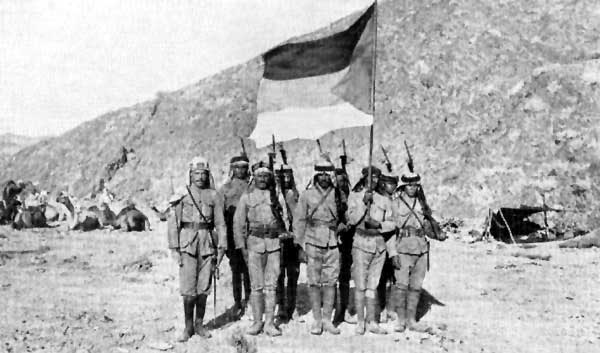
By June 1916, the Ottoman Empire had ruled much of the Arab world for centuries. Yet beneath the surface of imperial authority, dissatisfaction was growing. When Sharif Hussein bin Ali launched the Great Arab Revolt from the holy city of Mecca on 10 June 1916, he ignited a movement that would alter the course of the First World War and help shape the modern Middle East.
More than a century later, the revolt remains a subject of fierce debate. Was it a noble struggle for Arab self-determination? Was it a wartime alliance of convenience manipulated by foreign powers? Or was it both simultaneously? The answer lies somewhere in the complex realities of war, empire, nationalism and diplomacy.
By the early twentieth century, the Ottoman Empire was often described as the "Sick Man of Europe". Although still vast, stretching across Anatolia, the Levant, Mesopotamia and parts of Arabia, the empire faced mounting internal and external pressures.
Many Arabs remained loyal subjects of the Ottoman Sultan, who was also regarded by many Muslims as the Caliph. However, tensions had increased significantly after the rise of the Committee of Union and Progress, commonly known as the Young Turks, following the revolution of 1908.
The Young Turk leadership sought to strengthen and centralise the empire. While understandable from the perspective of imperial survival, these policies often alienated non-Turkish populations. Arab intellectuals and political activists increasingly complained that their language, culture and regional interests were being neglected.
The outbreak of the First World War in 1914 intensified these concerns. The Ottoman Empire entered the conflict on the side of Germany and Austria-Hungary, placing it in direct opposition to Britain, France and Russia. Wartime requisitions, censorship and military conscription created additional hardships across Arab provinces. For some Arab leaders, the war presented an opportunity.
At the centre of events stood Hussein bin Ali, Sharif of Mecca and hereditary guardian of Islam's holiest cities. Hussein possessed both religious prestige and political ambition. He feared that Ottoman centralisation threatened his authority in the Hejaz and saw an opportunity to pursue greater Arab autonomy—or perhaps even independence.
Between 1915 and 1916, Hussein engaged in secret correspondence with Sir Henry McMahon, the British High Commissioner in Egypt. The exchange became one of the most significant diplomatic episodes of the war.
Britain sought to weaken the Ottoman Empire by encouraging rebellion within its territories. Hussein, meanwhile, sought assurances that Britain would support the creation of an independent Arab state after the war.
The precise meaning of the promises exchanged remains controversial even today. What is beyond dispute is that both sides believed they had reached an understanding beneficial to their interests. On 10 June 1916, Hussein made his move.
The opening shots of the Great Arab Revolt were fired in Mecca. Hussein's forces attacked Ottoman positions and proclaimed their rebellion against imperial rule.
Initially, the uprising faced significant challenges. The Ottomans retained experienced troops, modern weaponry and established defensive positions. Yet the rebels possessed advantages of their own. They understood the local terrain, enjoyed support among many tribal groups and benefited from British financial assistance and military supplies.
Within months, the rebels captured several important towns along the Red Sea coast, including Jeddah. Control of these ports enabled Britain to deliver weapons, ammunition and advisers, ensuring that the revolt could continue.
The uprising soon expanded beyond the Hejaz, becoming a wider campaign against Ottoman authority.
No discussion of the Great Arab Revolt can avoid the figure of Thomas Edward Lawrence, better known as Lawrence of Arabia.
Lawrence served as a British intelligence officer and liaison to Arab forces. Possessing an unusual understanding of Arab culture and politics for a British officer of his era, he helped coordinate operations between British commanders and Arab leaders.
Popular culture has often transformed Lawrence into the central hero of the revolt. Films, novels and biographies have elevated him into a near-mythical figure striding across the desert in flowing robes.
The reality was more complex. The revolt was fundamentally an Arab movement led by Arab commanders and sustained by Arab fighters. Lawrence himself repeatedly acknowledged this fact. While his strategic advice, diplomatic efforts and organisational abilities were valuable, he was neither the creator nor the sole architect of the uprising.
Indeed, the greatest military achievements of the revolt were made possible by the efforts of thousands of Arab combatants under leaders such as Hussein's sons, Faisal and Abdullah.
The enduring fascination with Lawrence often reflects a broader Western tendency to focus on familiar personalities while overlooking local actors who played the principal roles.
The Arab Revolt succeeded not by defeating Ottoman armies in conventional battles but through innovative guerrilla warfare.
Rather than attempting to seize and hold heavily defended positions, Arab forces targeted communications and supply lines. Their favourite target became the strategically vital Hejaz Railway, which connected Damascus with Medina.
Repeated attacks on railway tracks, bridges and trains forced the Ottomans to divert significant resources to defence and repairs. This constant harassment weakened Ottoman mobility and complicated military planning.
The campaign demonstrated how irregular forces could exploit mobility, local knowledge and strategic flexibility against a larger conventional army.
As the war progressed, Arab forces advanced northwards through the desert. Their capture of Aqaba in July 1917 represented a major strategic victory, opening new opportunities for cooperation with British forces advancing through Palestine.
By 1918, Arab and Allied armies were participating in a coordinated offensive that contributed significantly to the collapse of Ottoman control in the region.
The end of the war brought military success but political disappointment. Arab forces entered Damascus in October 1918 amid scenes of celebration. Many participants believed that the dream of an independent Arab state was finally within reach.
However, wartime diplomacy had already complicated the situation. Unknown to many Arab leaders, Britain and France had secretly negotiated the Sykes–Picot Agreement in 1916, outlining spheres of influence across much of the Middle East. Furthermore, Britain's 1917 Balfour Declaration introduced additional commitments regarding Palestine.
As post-war settlements emerged, Arab expectations collided with European strategic interests. Rather than granting full independence across the territories envisioned by Arab nationalists, Britain and France established a system of mandates under the auspices of the League of Nations. France took control of Syria and Lebanon, while Britain assumed authority over Iraq, Transjordan and Palestine.
To many Arabs, this outcome felt like a betrayal. The sense that wartime promises had not been honoured became a defining element of modern Middle Eastern political consciousness. Whether one interprets British actions as deliberate deception or diplomatic ambiguity, the resulting resentment proved enduring.
The Great Arab Revolt occupies a unique place in modern history because its consequences continue to influence international politics more than a century later.
It contributed to the emergence of Arab nationalism as a powerful political force. It accelerated the dismantling of Ottoman authority in the Arab world. It helped establish the foundations of several modern states, including Jordan and Iraq. It also left unresolved questions concerning borders, sovereignty and identity that remain politically sensitive today.
Perhaps most importantly, the revolt illustrates a recurring lesson of history: military victories do not always produce the political outcomes participants expect.
The men who launched the uprising in June 1916 sought freedom from imperial control and hoped to build an independent Arab future. They achieved a remarkable wartime success and played a significant role in the defeat of the Ottoman Empire. Yet the peace that followed delivered a political settlement shaped largely by European powers rather than by Arab aspirations.
The Great Arab Revolt deserves to be remembered as more than a colourful desert campaign or the backdrop to the legend of Lawrence of Arabia. It was a pivotal episode in the collapse of one empire and the emergence of a new political order across the Middle East.
Its leaders believed they were fighting for independence, dignity and self-government. Their struggle contributed significantly to Allied victory during the First World War. Yet the aftermath revealed the harsh realities of international politics, where promises made in wartime often collide with strategic interests once the fighting ends.
More than one hundred years later, the events of 10 June 1916 continue to cast a long shadow. The revolt's achievements, controversies and disappointments remain woven into the history of the modern Middle East, reminding us that the end of one empire does not necessarily guarantee the fulfilment of national dreams.


No comments:
Post a Comment