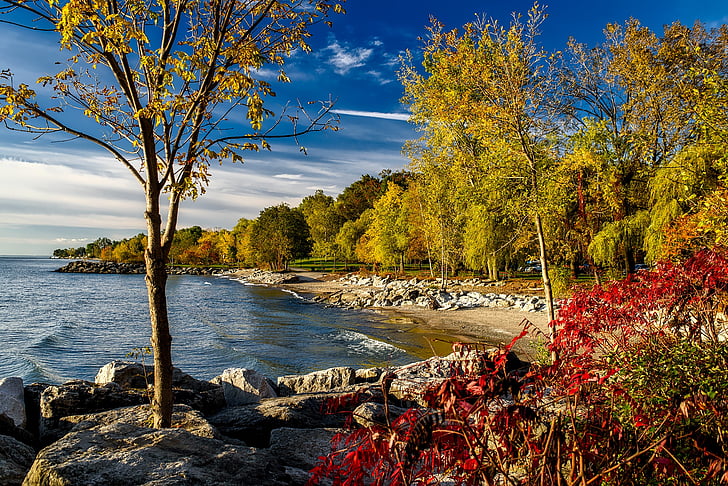
There is something almost childishly comic about Donald Trump’s latest contribution to the US-Canadian trade war, if Canada will not bend, perhaps its geography can be punished instead. After negotiations collapsed and Washington imposed 50 per cent tariffs on Canadian goods, Trump suggested that Lake Ontario should henceforth be called “Lake America.” It is the sort of gesture one might expect from a five-year-old who, after losing an argument over a toy, announces that the toy has been renamed in his honour.
Except that the five-year-old is the President of the United States. That distinction turns the joke into something darker. That is the difference between a powerful state and a powerful personality abroad.
A lake does not care what it is called. Lake Ontario, shared by Canada and the United States, has been there considerably longer than either country’s political quarrels. Its name cannot be changed by presidential sulking any more than a child can redraw a border with a crayon. Yet the impulse behind the proposal matters because it reveals a particular conception of power: if something resists you, make it symbolically yours.
This is not diplomacy. It is domination reduced to branding. Trump’s political imagination has always been unusually attracted to names. Names become trophies, declarations of ownership, evidence that the powerful have prevailed. But international relations are not a real-estate brochure. He cannot compel Canadians, international organisations or the rest of the world to abandon a name embedded in history and common usage.
More importantly, the lake is merely the punchline. The serious business is the tariff war. The United States and Canada have spent decades constructing one of the world’s most integrated economic relationships. Cars cross the border several times during production. Energy, metals, agriculture and manufactured goods move through supply chains so interwoven that pretending the two economies can simply be separated is rather like proposing that Siamese twins solve an argument by moving to different houses.
Tariffs are not insults written on envelopes. They become higher costs, disrupted investment, nervous employers and eventually more expensive goods. Canada will suffer. So will US businesses and consumers.
And yet Trump appears to treat every disagreement as a test of personal obedience. Canada is not merely another trading partner; it becomes a defendant. Its refusal to accept Washington’s terms becomes evidence of insolence. The vocabulary shifts from negotiation to submission: fall in line, punish, retaliate, rename.
This is where the childishness becomes dangerous. A spoiled child can throw a tantrum and break a lamp. A president can throw a tantrum and damage alliances, markets and the assumptions on which international stability depends. The United States possesses extraordinary economic, military and diplomatic power. When its president treats that power as an extension of his personal temperament, the world is entitled to worry.
Perhaps Lake Ontario will remain Lake Ontario. Canadians will continue calling it that, and the water will carry on doing what lakes do.
But the episode leaves behind a more troubling question: how much of American power should be devoted to winning arguments that never needed to become wars in the first place?
The answer should be, considerably less. Great powers demonstrate strength by knowing when not to use it. They do not need to rename the lake when they have already got the navy.


No comments:
Post a Comment