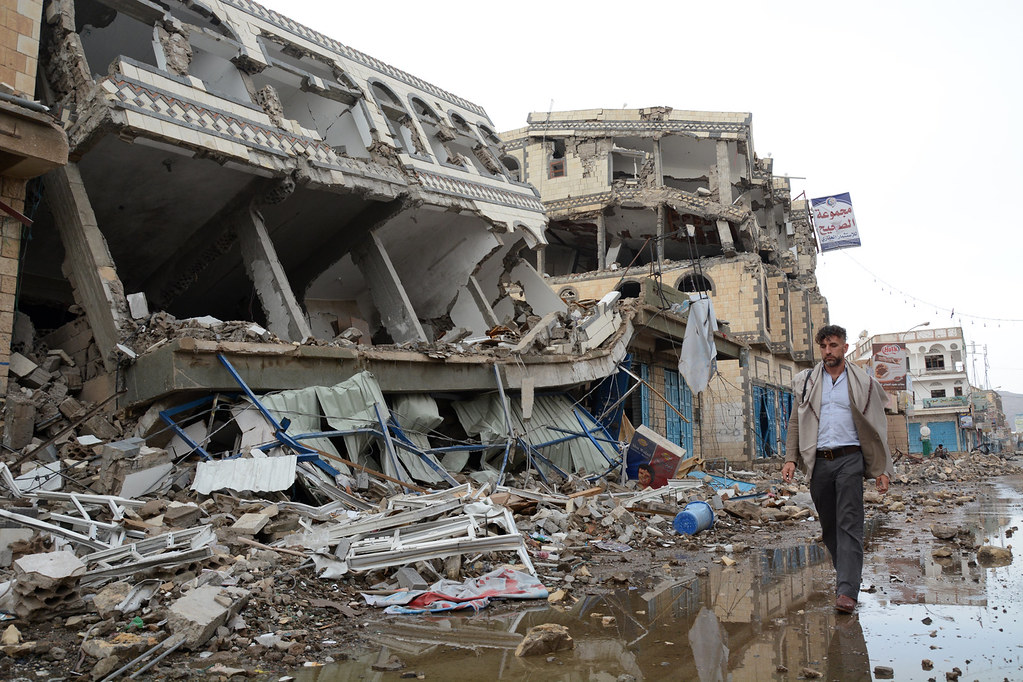
The contemporary dogma wants if something is not under control, send more soldiers, more aircraft, more missiles and more money. Eventually, they tell themselves, the map will become obedient. Yemen has spent years proving the opposite.
Now Saudi Arabia and its Yemeni allies are preparing a new offensive aimed at reversing Houthi gains around the Bab al-Mandab Strait, including territory that gives the Houthis direct leverage over one of the world's most important maritime chokepoints. The objective is understandable: reopen the Red Sea and make commercial shipping safe again. The problem is that the proposed solution belongs to another century.
A conventional army can capture a town. It can seize a port. It can destroy a weapons depot. It can establish checkpoints and parade its generals in front of television cameras. But none of this guarantees control over a narrow stretch of sea when the opponent does not need to defeat your army to make shipping dangerous.
That is the uncomfortable lesson of asymmetric warfare. A cheap drone does not need to sink a fleet. A missile does not need to destroy a container ship every day. A small boat does not need to defeat a navy. The threat itself is enough. If shipping companies believe that one vessel in a hundred could become the next target, insurance costs rise, crews become nervous, schedules change and ships take the long way around Africa.
The battlefield therefore moves from Yemen's mountains to corporate boardrooms in Rotterdam, Singapore and Copenhagen. And this is where the military logic begins to look almost absurd. Saudi Arabia can spend billions trying to secure the coastline. International navies can patrol the water. Aircraft can bomb launch sites. Intelligence services can hunt commanders. Yet the Houthis do not need permanent command of the sea. They need only the capacity to make the sea uncertain.
Uncertainty is their weapon. The obsession with “securing” Bab al-Mandab also ignores the fundamental political failure underneath the military problem. Yemen is not a pirate nest that can simply be cleaned out. It is a fractured country where competing armed groups, regional powers, local interests and political grievances have survived years of intervention. Even the anti-Houthi camp remains deeply fragmented.
The fantasy is that one more offensive will finally produce a decisive victory. We have heard that fantasy before. Military campaigns in Yemen have repeatedly demonstrated that bombing does not manufacture political legitimacy. Nor does capturing territory automatically produce stability. Every new offensive risks producing another generation of fighters who understand the conflict not as geopolitics but as survival.
And while generals discuss corridors and chokepoints, ordinary Yemenis pay the bill. The cruel irony is that the more aggressively Riyadh tries to impose security through force, the greater the possibility that the Red Sea becomes even less secure. Escalation creates retaliation. Retaliation creates more escalation. And every round provides another justification for the next.
This is not security. It is an industrial process for manufacturing insecurity. The world also needs to abandon another dangerous illusion: that global shipping can be made permanently safe by military power alone. Maritime commerce depends on predictability, not domination. A warship can protect a vessel today. It cannot guarantee that tomorrow's vessel will not face a different drone, a different missile or a different armed group.
The Bab al-Mandab crisis is therefore not simply a Yemeni military problem. It is a warning about the fragility of globalisation itself. If governments want secure shipping, they need diplomacy, political settlements, regional arrangements and serious investment in Yemen's reconstruction alongside defensive maritime protection.
Otherwise, they will keep trying to bomb uncertainty out of existence. And uncertainty, unlike a military target, cannot be bombed. The tragedy is that everyone knows this. They just keep ordering the missiles anyway.


No comments:
Post a Comment