They are like neighbours we are aware of,
except we are NOT aware of and
they have absolutely nothing to do with Halloween.
For more Ghostin’, HERE!
For more Ovi Cartoons, HERE!


Damage control is not diplomacy. It is what governments do after diplomacy has already failed. That distinction matters in the increasingly complicated relationship between Greece and Turkey, where every carefully staged handshake risks becoming another exercise in managing yesterday’s problem rather than preventing tomorrow’s crisis. And this is precisely why Kyriakos Mitsotakis’ non-schedule meeting with Recep Tayyip Erdoğan in New York deserves more scrutiny than the choreography of another stand-in photo.
The disturbing part is not that the Greek PM is meeting Erdoğan. Of course he should. Neighbours with a history of disputes, competing interests and overlapping ambitions have to talk. The disturbing part is the apparent absence of a sufficiently defined agenda. Diplomacy without an agenda can easily become diplomacy by improvisation and improvisation is rarely a sensible strategy when dealing with a leader who understands leverage considerably better than he understands restraint.
Erdoğan has spent years constructing Turkey as a regional power whose influence stretches far beyond its borders. He has combined military power, economic relationships, migration, energy, diplomacy and geography into a foreign-policy toolbox that gives Ankara options. Turkey does not need every option to be used. The mere existence of those options creates leverage.
Greece, by contrast, too often appears trapped in a reactive diplomatic rhythm; tension rises, European partners become nervous, Washington encourages dialogue, Athens seeks de-escalation, Ankara signals flexibility, a meeting is arranged and everybody congratulates themselves on having prevented a crisis. Then the cycle begins again.
That is not a strategy. It is a fire brigade. The problem with permanent damage control is that it gradually changes the balance between the parties. The side that creates uncertainty acquires bargaining power; the side constantly trying to restore stability becomes responsible for maintaining it. Eventually, stability itself becomes the concession.
This is where Mitsotakis needs to be particularly careful and sadly he literally …fails. There is nothing inherently wrong with dialogue. Indeed, refusing dialogue between Greece and Turkey would be reckless. But dialogue has value only when it serves a clearly defined diplomatic purpose. A meeting should establish what can be discussed, what cannot be traded away, what constitutes progress and what happens when commitments are ignored. Otherwise the meeting risks becoming another ritual in which the existence of dialogue is mistaken for the achievement of diplomacy.
Erdoğan understands political theatre. He understands the symbolism of presidential meetings, the language of strategic patience and the usefulness of appearing reasonable while keeping multiple avenues of pressure open. Calling him a regional superpower may be premature; calling Turkey an increasingly consequential regional power is simply recognising reality. Ankara wants influence and it has repeatedly demonstrated that it is prepared to pursue it.
That does not make Turkey an enemy. Nor does it make Erdoğan an inscrutable mastermind with a secret plan behind every curtain. But it does mean that Greek diplomacy should stop behaving as though good intentions automatically produce balanced negotiations.
Athens needs its own leverage. That means European solidarity cannot remain a ceremonial phrase. It means alliances must be converted into practical diplomatic capital. It means Greece needs clearly articulated red lines, but also clearly articulated areas where cooperation with Turkey is possible. And above all, it means Greece should enter negotiations knowing precisely what it wants, not merely hoping to prevent what it fears.
There is a dangerous psychological trap in diplomacy: believing that because nothing exploded today, something was achieved. Nothing exploding is not necessarily progress.
A successful Greek-Turkish relationship cannot be built on endless emergency management, carefully worded communiqués and photographs from meetings whose substance disappears before the aircraft lands.
Mitsotakis can meet Erdoğan in New York. He should talk to him. But Athens should not confuse access with influence, conversation with negotiation, or calm with resolution.
Diplomacy is not the art of making every crisis disappear from tomorrow’s newspapers. It is the art of ensuring that the next crisis begins with fewer advantages for the other side. That requires an agenda. And, more importantly, it requires a strategy.

Donald Trump has a familiar way of turning compromise into conquest. Announce a deal, declare victory, repeat the word “permanent” often enough, and let everyone else argue over the small print. His Greenland announcement follows precisely that choreography. Washington gets to celebrate an expanded military presence in the Arctic; Copenhagen gets to say Greenland remains Danish; Nuuk gets to say its sovereignty and right to self-determination have survived. Everybody has apparently won. Which, naturally, raises the more interesting question: who actually paid the price?
Trump certainly did not get the Greenland he demanded. For months, he threatened to acquire the island, refused to rule out force and treated the territory of a NATO ally as though it were an attractive piece of real estate sitting on an auction table. Denmark and Greenland repeatedly answered with the same message: Greenland was not for sale. The emerging agreement does not change that. That matters.
If Trump wanted sovereignty, he did not get it. If he wanted ownership, he did not get it. If he wanted Denmark to surrender Greenland, Denmark has not surrendered Greenland. The Danish government insists that the agreement respects the kingdom’s sovereignty and Greenlanders’ right to self-determination. The Greenlandic leadership says essentially the same thing. And the agreement still requires parliamentary approval.
Yet it would be naïve to pretend that nothing has changed. The United States appears set to obtain a substantially stronger military position in Greenland, with arrangements designed to prevent rival powers from establishing bases or making certain sensitive investments. Trump says Washington will begin developing a larger military presence almost immediately. The United States already operates Pituffik Space Base, so this is not an American arrival in Greenland. It is an American expansion.
And that is where the Danish victory becomes rather more complicated. Denmark resisted the extraordinary proposition that an ally could threaten to seize its territory. But after months of pressure, the result may be an agreement giving Washington considerably more strategic influence over that territory. The flag does not change. The constitutional relationship does not change. But the strategic balance does.
Trump therefore gets something extremely valuable without having to acquire anything formally. He gets the political theatre of victory and much of the strategic substance he wanted. That is clever diplomacy or clever branding, depending on one's perspective.
But there is another player whose position deserves greater attention: Greenland itself. For years, Greenlanders have discussed greater autonomy and possible independence from Denmark. Now the island finds itself caught between two enormous strategic realities. Denmark retains sovereignty, while the United States wants Greenland to become an even more important military platform. The Greenlanders are being told that this strengthens their security and development. Perhaps it will. But security arrangements involving great powers have a habit of producing consequences that extend far beyond the wording of treaties.
There is also a dangerous precedent here. An American president threatened the territory of a NATO ally. The threats created enough anxiety to bring Denmark and Greenland into negotiations. The eventual agreement may be entirely consensual and may protect sovereignty. But the diplomatic lesson could nevertheless be uncomfortable: pressure works.
That is not the same as saying Trump won. He did not get ownership of Greenland. He did not get Danish sovereignty transferred to Washington. He did not erase Greenland's right to self-determination. Indeed, the agreement appears to reaffirm precisely those principles.
But he may have demonstrated something more subtle and potentially more consequential: a sufficiently aggressive demand can change the starting point of a negotiation.
The danger for Denmark is therefore not that Greenland has suddenly become American. It is that the meaning of Danish sovereignty could gradually become thinner while remaining perfectly intact on paper.
And perhaps that is the real Greenland deal. Trump can call it a victory. Denmark can call it sovereignty preserved. Greenland can call it security strengthened. The final judgment belongs to what happens after the signatures. Because sometimes a country does not lose its territory. It merely discovers that somebody else has become very comfortable inside it.

On 21 September, the world will once again observe the International Day of Peace. The United Nations has chosen an unusually appropriate theme for 2026: “Invest in Peace - For Everyone, Everywhere, Every Day.” It is difficult to imagine a more necessary message, or a more uncomfortable one. Peace today sounds almost like an old-fashioned word, something placed carefully in speeches while governments count missiles, redraw red lines and calculate how many civilians can be described as “collateral damage”.
The calendar offers little encouragement. War continues in Ukraine. The Iran war has become another major source of instability. Yemen, after years of suffering and a fragile truce, has again been pulled into intensified fighting, with tens of thousands displaced in the latest escalation. Around these wars sit many others, from Sudan and Gaza to conflicts that barely survive a paragraph in international news. The geography changes; the vocabulary does not. Security. Retaliation. Deterrence. Victory. Strategic interests. National sovereignty. And, eventually, another cemetery.
The uncomfortable truth is that modern politics has become remarkably good at explaining why peace is impossible.
There is always a reason to postpone it. The enemy must first be weakened. The border must first be secured. The terrorists must first be defeated. The nuclear programme must first be destroyed. The territory must first be liberated. The alliance must first demonstrate strength. The other side must first make the first concession.
And while everyone waits for the other side to blink, ordinary people lose homes, families, livelihoods and futures.
Yemen offers perhaps the most brutal lesson. A country can disappear from the headlines without disappearing from war. The latest Houthi offensive has displaced more than 100,000 people, reminding the world that a conflict does not become peaceful simply because international attention has moved elsewhere.
Ukraine offers another lesson: prolonged war does not become normal merely because it has lasted for years. Behind military maps and diplomatic statements are prisoners, refugees, destroyed towns, traumatised families and generations growing up with the sound of drones and missiles. Even the language of negotiation has become another battlefield.
The greatest failure, however, is not that governments wage wars. Humanity has been doing that for thousands of years. The failure is that governments continue to treat peace as the period between wars rather than as political work requiring investment, patience and imagination.
Peace requires institutions. It requires diplomacy before missiles. It requires international law that powerful states cannot simply reinterpret when inconvenient. It requires schools instead of military recruitment, functioning hospitals instead of field clinics, food security instead of blockades and economic opportunity instead of another generation of grievance.
Most importantly, peace requires people to be regarded as people before they are regarded as Ukrainians, Iranians, Yemenis, Israelis, Palestinians, Russians, Americans or anything else.
The International Day of Peace should therefore not be another annual performance of solemn speeches, white doves and carefully photographed politicians. It should be an accusation against our political imagination.
If humanity can mobilise billions for war, surely it can mobilise something for peace. Peace is not naïve. War is not realism. Sometimes stopping violence requires strength; sometimes protecting people requires force. But strength without diplomacy becomes an addiction, while military victory without political settlement merely prepares the next war.
The world does not need another beautiful declaration about peace. It needs governments to make peace as concrete as war: funded, organised, negotiated and defended.
Because somewhere tonight, a child is sleeping beneath a roof that may not exist tomorrow. That child does not care who won the argument. That child wants peace. And perhaps that is the simplest definition we have.

We have created a wonderfully efficient modern illusion: go to the gym for an hour, sweat heroically, lift something heavy, run until the treadmill begins to look like an instrument of torture and then declare yourself an active person. After that, sit down.
Sit in the car. Sit at the desk. Sit through meetings. Sit while eating lunch. Sit on the train. Sit while scrolling through the phone. Sit for television in the evening. Perhaps even sit while discussing how important exercise is.
Welcome to the strange modern species known as the active couch potato. The phrase sounds amusing, but the contradiction behind it is serious. Exercise and sedentary behaviour are not simply opposite ends of the same scale. A person can exercise regularly and still spend most of the day barely moving. And that distinction matters.
We have become obsessed with the workout as an event rather than movement as a lifestyle. Fitness has been packaged into sixty-minute blocks, complete with gym memberships, smart watches, workout clothes and motivational slogans. The implication is wonderfully convenient: complete the ritual and you have earned the right to return to the chair.
But the human body did not evolve to negotiate with office furniture. An hour of exercise is unquestionably valuable. It strengthens muscles, improves cardiovascular fitness, supports mental health and provides countless benefits. The mistake is believing that this hour somehow cancels the remaining hours of near-total inactivity. It doesn't.
The problem with prolonged sitting is precisely that it is prolonged. The body is not designed merely to receive one heroic dose of movement and then spend the rest of the day switched off. Research increasingly distinguishes between exercising and simply moving throughout the day. People who exercise but remain sedentary for long periods can still have poorer metabolic health than people who combine exercise with regular light movement.
And here is the irritatingly simple solution: move more. Not necessarily another hour at the gym. Not another punishing workout. Not another expensive gadget telling you that you have failed to close a brightly coloured activity ring.
Stand up. Walk to the other room. Take the stairs. Walk while making a phone call. Get off the bus one stop earlier. Carry the shopping. Wander around the office instead of sending an email to someone sitting twenty metres away. Break up the great uninterrupted slab of sitting that has become one of the defining characteristics of modern life.
The irony is that our grandparents probably did much of this without knowing they were engaging in “non-exercise activity”. We have invented a society in which walking ten metres is considered an inefficiency and then created fitness industries to compensate for the consequences.
That is the absurdity. We have mechanised movement out of daily life and then pay money to recreate it artificially. The answer, therefore, isn't to abandon the gym. Quite the opposite. Keep going. Exercise remains important. But stop treating exercise as absolution.
The real goal should be a day in which movement is scattered rather than imprisoned inside one precious hour. The active couch potato isn't lazy. Often, quite the opposite: he or she is disciplined enough to exercise regularly. The problem is conceptual. We have confused being physically active with having an active life.
They are not the same thing. A healthy routine should contain both: deliberate exercise and ordinary movement. So by all means spend an hour sweating at the gym. Just don't spend the next eight hours worshipping the chair.

Ulf Kristersson has left office, the centre-left has squeezed through the electoral door and Magdalena Andersson is preparing to return to Rosenbad. Sweden has changed government, but it has not necessarily changed direction.
The arithmetic is almost comically Swedish, 176 seats for the centre-left bloc, 173 for the right. A majority so narrow that one might be tempted to measure it with a ruler. Kristersson has accepted the result and resigned, as parliamentary democracy requires. The Social Democrats can celebrate. The champagne may even be poured.
But nobody should confuse an electoral defeat with an ideological defeat. The Sweden Democrats lost seats and slipped from second to third place, their first decline in national support since entering parliament in 2010. That matters. But the more interesting question is what remains after the electoral furniture has been rearranged. For four years, the Sweden Democrats were not simply shouting from the political wilderness. They became central to the governing arrangement, helping define the political vocabulary of Sweden on immigration, crime, integration and national identity.
And political vocabulary has a nasty habit of surviving the government that popularised it. This is the great paradox of the Swedish election. The centre-left has won, but much of the political terrain on which the election was fought had already moved rightwards. Immigration became a problem to be managed rather than primarily a human and social question. Crime became a political currency. Integration was increasingly discussed through the language of obligation, control and punishment. The old Swedish argument about how to build a society was gradually replaced by an argument about whom society should distrust.
Changing the government does not automatically change that atmosphere. There is an even more uncomfortable problem. Far-right politics is no longer dependent upon spectacular electoral victories. It can lose an election and still win something more durable: normality.
This is particularly important among younger Swedes. Political movements become dangerous when they stop looking dangerous. A teenager encountering the Sweden Democrats on a social-media feed does not necessarily encounter their historical baggage, ideological evolution or controversies. He or she encounters a meme, a joke, a furious video about crime, a complaint about taxes and a declaration that politicians have forgotten ordinary people. Politics arrives disguised as entertainment.
The algorithm is wonderfully democratic in the worst possible sense: it does not care whether an idea is wise, humane or historically literate. It cares whether somebody will click.
And young people click. The far right understands this environment rather better than many traditional parties do. It knows that political recruitment does not always begin with a manifesto. It can begin with resentment, humour, irony, masculinity, cultural grievance or the apparently harmless question of why everything used to be better. By the time the political label appears, the emotional architecture may already be built.
That is why Sweden's centre-left victory should not become an excuse for political sleepwalking. Andersson inherits a country in which the traditional parties themselves have spent years arguing over how far to accommodate the anxieties that propelled the far right. If the response to the election is merely to reverse a few policies, restore a few subsidies and declare democracy victorious, the deeper problem will remain untouched.
Democracy is not a four-year cleaning service. It requires schools capable of teaching history rather than merely testing memory. It requires journalism capable of challenging propaganda without turning every controversy into theatre. It requires politicians who can discuss immigration without either romanticising its difficulties or weaponizing them. And it requires young citizens to be given something more substantial than perpetual outrage to believe in.
The Swedish far right may have lost this election. That is a fact. But it has already demonstrated that political influence does not require occupying the prime minister's office. Sometimes all that is required is to make everybody else speak your language.
That is the part Sweden should worry about. Because governments change rather quickly. Political habits do not.

For years, Europe treated economic interdependence as a promise. Trade would make countries richer, investment would make them partners and supply chains would make conflict irrational. It was an attractive theory, and for a long time it looked like common sense. But interdependence has acquired a darker meaning. The same pipelines, markets, technologies and financial networks that bind countries together can also become instruments of coercion.
The European Union is finally learning this lesson. Its Anti-Coercion Instrument is not simply another item in Brussels’ expanding alphabet soup of regulations. It represents something more consequential: the beginning of a European doctrine of economic deterrence. The EU is discovering that its greatest strategic asset may not be an army but the sheer attractiveness of access to its market.
This is an uncomfortable transformation for a bloc that has traditionally preferred rules to retaliation. Europe likes to imagine itself as the continent of regulation, negotiation and multilateralism. Yet rules without the capacity to enforce them are merely polite suggestions. In an age when states increasingly use tariffs, trade restrictions, investment controls and economic dependencies as political weapons, politeness can become a strategic liability.
The Anti-Coercion Instrument changes the calculation. If another government attempts to bully the EU, or one of its members, through economic pressure, Brussels can contemplate a response extending beyond diplomatic complaints. Market access itself can become leverage.
That is the important shift. Europe is not suddenly becoming a mercantilist power. It is learning that economic power has to be usable power.
The distinction matters. The objective should not be to punish every unfriendly government or turn trade policy into permanent economic warfare. That would merely reproduce the coercive behaviour Europe claims to oppose. The instrument is most useful precisely when it remains credible but difficult to trigger. Deterrence works because the other side believes retaliation is possible, not because retaliation happens every Tuesday.
There is also a larger European paradox. The EU has spent decades integrating its economies while leaving many strategic dependencies inadequately diversified. Cheap energy, critical minerals, advanced technology and important industrial inputs were often treated primarily as commercial questions. Governments discovered too late that the cheapest supplier can become the most expensive strategic mistake.
The answer is not autarky. Europe cannot build a fortress economy around itself. Nor should it abandon global trade because authoritarian governments have learned how to manipulate it. The answer is resilience: diversified suppliers, stronger European production where strategically necessary, closer partnerships with democratic economies and institutions capable of responding collectively.
This is where the EU's enormous single market becomes more than an economic achievement. It becomes geopolitical infrastructure.
A country may ignore a European declaration. It is considerably harder to ignore access to hundreds of millions of consumers, sophisticated financial systems, industrial supply chains and a regulatory market that shapes commercial behaviour far beyond Europe's borders.
But Brussels should be careful. Economic weapons have recoil. Restrictions can hurt European companies, consumers and workers as well as foreign governments. Excessive use could encourage other powers to construct rival economic blocs, accelerating the fragmentation of global trade.
Europe therefore needs something it has often lacked in foreign economic policy: strategic discipline. The emerging lesson is simple. Interdependence is neither inherently peaceful nor inherently dangerous. It is power. Whoever controls the points of dependence possesses leverage.
For decades Europe possessed that leverage without quite understanding it. Now it is learning to use it. The real test will be whether Brussels can wield the weapon without becoming addicted to the fight.
Like me, you may have read some books on politics, diagnosed the problems, and come up with your own theories on how to fix Nigeria’s politics. But have you experienced it in practical terms?
You may have, but I had not until very recently. I detest our nation’s politics and stay away from the fray. I only discussed it. But I decided to observe it from the actions of practitioners. I took advantage of the current lifting of the ban on political campaigning to watch politicians at close quarters.
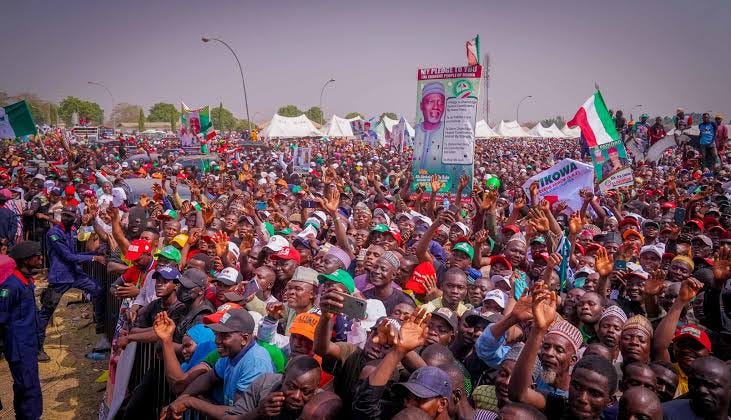
Furthermore, my community is grappling with an issue previously experienced by other communities, but which I am now confronting for the first time. The ugly Nigerian, who made life difficult for ordinary people, crept into our community transformer while everybody slept, climbed the very tall electric poles and cut the transformer cables.
Their job was easy. There was no current flowing through those cables and they were cut off easily. They carted the cables away. Our leaders had just returned from the Disco that controls our community to plead that the fuse of the transformer which they had removed because as they alleged we were not up to date in the settlement of our electricity bill be put back. They were successful and we were plluged back.
But two days later, cable thieves struck a deadly blow and we went back into pitch darkness. Our leaders went back to see what could be done. We need to raise 3 million naira to connect another cable back. That amount was negotiated down to N2.2 million. Even at that, our community could still not afford it. We are a very poor community. We are the ones that politicians tell lies to then use and dump.
What was a calamity became for me an opportunity to satisfy my new quest to watch politicians do their business in Nigeria. At least I will be at a vantage position to watch and learn. I joined the elders and suggested to them that we seek help from politicians jostling for offices. Ordinarily, replacing cables, I told this set of mostly illiterate leaders, is not the job of electricity consumers. Once we pay our tariffs and pay out taxes, it is the job of the Disco to fix our cables.
I told them that politicians could help us by making noise about the stolen cables and the resultant darkness that had descended on our area. If our representatives make a little noise in the House, our Disco will immediately rise to the issue. If we don’t do that we may just be in darkness for many years. Another way is to suggest the politicians buy the cables for us.
We set to work and suggested two prominent politicians, one, a gubernatorial candidate and the other a senatorial candidate who is said to be a moneybag. We drafted our letters and planned to deliver the letters to each one of them. I advised that we deliver the letters personally to the politicians. Some who have experience with politicians said we must hire a vehicle to convey many people to the house of the politicians because they like crowds.
The real experience of Nigerian politics for me began from this stage; behind my back some people who probably heard we were making plans to seek the politicians for help began to visit them with fabricated messages. They claimed they have been sent by these politicians to beg the community not to allow anybody but themselves to do the job. Their pleadings were so fervent that you would think once we got to them the job would commence immediately. After a while I began to discern their lies but those elders did not.
These jobbers probably have a distant connection with the politicians but not one that is able to make any impression or get anything done. In the evening while we were at a small political rally for our ward, our chairman had a call that he must get home quickly because a jobber was bringing the amount we had requested to him in cash. The chairman told me, and we arranged that he must be on the way immediately while an old political warhorse stayed behind to continue with our chase of a member of the House of Representatives who was to address the rally.
Another footman had promised he had arranged for us to see this Honourable. But when the man came and our letter was handed to him, his reaction showed vividly that he had never been briefed that we were coming. He immediately returned the letter to the ward leader who gave it to him. The Rep only came with one million naira meant for all in attendance that night to share. The politicians in all their hierarchies are the most disorganized people. That is obviously why our government is disorganized.
Over ninety percent of attendees for that rally were women. They were very poor. I had seen a particular one among them in the street many times looking to me to give her some money. On a few occasions when I had money I had given her some. On this particular occasion, when she spotted me in the place I sat beside the bigwigs she came to specially greet me. I gave her five hundred naira and she was so happy that she introduced her son, a member of the party ward leadership to me.
I asked our chairman why women outnumbered the men in attendance. He told me “women had more time available to them than men. The men by now, even though it was about 6 pm must be at their places of work but the women even if they engage in petty trading, don’t mind packing up their wares to attend a rally. At another political rally, a meeting of 12 wards of a popular political party, women attendance was up to ninety percent.
They danced to the local musicians who sang the praises of the contestants, they danced waving their handkerchiefs in the air, they created their own music and danced to it. They sang to thank their husbands who allowed them to participate in politics. They called themselves ‘Obinrin Rere’ (Good Women). They must have borrowed that from the “Good Women Choir” of the Christ Apostolic Church, a popular evangelical church in Nigeria.
At both rallies, the pattern was similar: no difference, no creativity. Even the sitting and standing arrangements are the same. I think it is because many of them have wandered into virtually all political parties. Their menfolk had no kind opinion of these women, and everything about their demeanour bore the description of the men. They are regarded as ones who don’t keep a home, ones who flirt around and ones who may not stay long in the house of any man, what modern day calls single women. They are the lower rung of the ladder.
With the preponderance of women in the political parties, why is it that they are scanty in the legislature and the executive arm of government? The men who are not as many dominate these offices. It may be a factor of education as women’s education is still discouraged in many parts of the country even in the so-called educated south. The women do all the dancing and the men get all the votes.
There were very aged women among the women folk who could barely walk. There were many and they sat down. What could bring them to the rallies? I found out it was money, a paltry one thousand naira. The women were especially poor; the men were too but they were younger.
Because our own plan to get the Rep to help us failed, I left in frustration and anger. As I left the young man, one of those who had gathered around the leaders, ran after me, “Baba, won’t you stay back to collect your envelope?” This was not new to me, I knew that politicians bait these poor people with as little as one thousand naira. But the words dropped out of my mouth effortlessly: “I don’t need the envelope.’’ As the words dropped from my mouth, it was echoed by other youths standing by and the boy chasing after me left off the pursuit.
Shortly after exiting the gate, I heard a commotion. I later gathered that the one million naira provided by the Honourable member for sharing had triggered altercations among attendees, as their leaders had absconded with the funds.
Only God knows the fate of those women, especially the frail old ones among them. I was too angry to look back. But I was so sure that democracy is a farce in Nigeria. But I need to continue to get you into the home and the campaign office of the gubernatorial candidates.
First Published in METRO
***********************
Tunde Akande is both a journalist and pastor. He earned a Master's degree in Mass Communication from the University of Lagos.
History is not a decorative ornament for nations; it is the spine that holds their identity upright. When nations forget their history, the...


