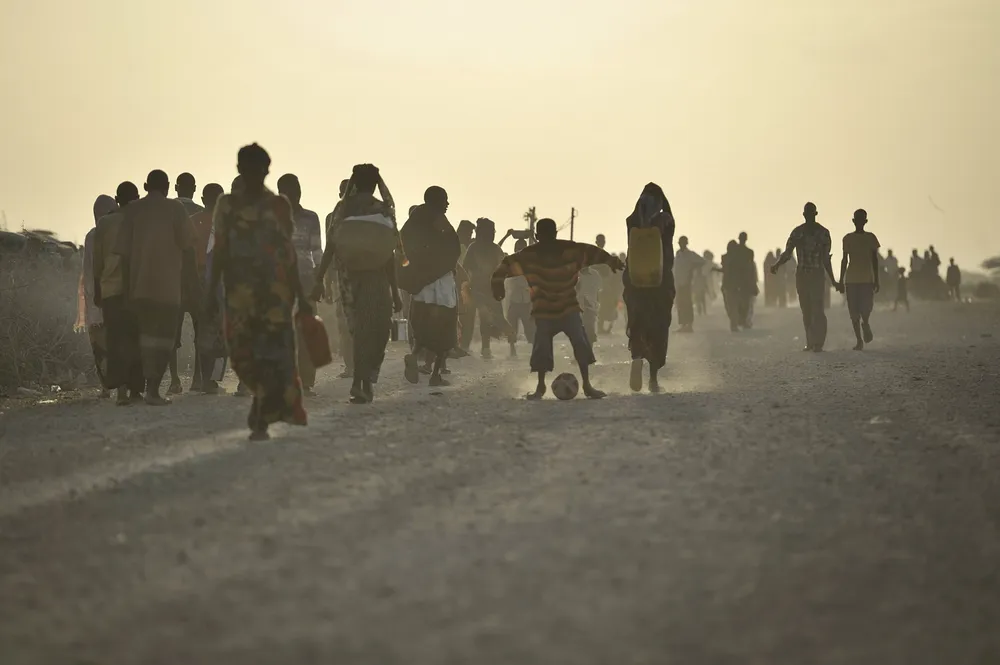
Is peace possible for Sudan, or are we content to let its people die quietly while the world scrolls past? This is not a rhetorical flourish meant to provoke polite debate. It is a blunt question carved from mass graves, bombed neighbourhoods, and cities emptied of life. Sudan is bleeding, and the most horrifying part is not only the violence itself, but how easily it has been absorbed into global indifference.
Sudan’s war is not a sudden tragedy. It is the predictable collapse of a state hollowed out by decades of corruption, militarization, and international neglect. Two armed giants, the Sudanese Armed Forces and the Rapid Support Forces, are tearing the country apart in a grotesque power struggle that has nothing to do with protecting civilians and everything to do with control, profit, and ego. Khartoum, once a chaotic but living city, has become a battlefield of snipers, airstrikes, and looting militias. Darfur, a name already synonymous with horror, is again witnessing ethnic cleansing while the world pretends it is surprised.
Peace, in theory, is always possible. In practice, peace requires something far rarer: genuine pressure, sustained attention, and moral clarity. Sudan has received none of these. What it has received instead is silence punctuated by vague statements of “concern,” carefully worded so they offend no one with power. Innocent people die while diplomats speak in passive voice.
Let’s be honest about why Sudan is ignored. There is no easy narrative. No single villain neatly packaged for headlines. No geopolitical payoff large enough to force urgency. Sudan is not a trendy war. It does not threaten global oil supplies in dramatic ways, nor does it sit at the center of a Cold War chessboard. Its victims are poor, Black, displaced, and far from Western capitals. Their suffering does not interrupt stock markets, so it does not interrupt attention.
The international community prefers conflicts where outrage can be monetized and resolution can be branded as success. Sudan offers neither. It offers moral discomfort. It forces the world to confront how selectively it values human life.
Meanwhile, Sudanese civilians are trapped between bombs and betrayal. Hospitals are attacked. Aid convoys are looted. Women are raped as a weapon of war. Children die from dehydration not because water doesn’t exist, but because militias control access to it. This is not collateral damage. This is the systematic dismantling of civilian life. And still, the world hesitates, as if waiting for a clearer signal that this matters.
Peace talks come and go, staged more for international optics than for real outcomes. Agreements are signed, broken, and forgotten. Armed leaders are invited to negotiation tables without consequences, reinforcing the lesson that violence is a viable political strategy. Why stop killing when it gets you recognition?
The tragedy is compounded by hypocrisy. Many of the same countries wringing their hands over Sudan continue to indirectly fuel the conflict through arms sales, regional alliances, and strategic silence. They call for restraint while shaking hands with those who profit from chaos. They speak of stability while enabling instability because it is convenient.
So is peace possible? Yes, but not under the current global logic. Peace will not emerge from empty statements or performative diplomacy. It will not come from pretending that Sudan’s war is too complex to address. Complexity has become the favourite excuse for inaction.
Peace would require consequences for war criminals, not future invitations to power-sharing deals. It would require sustained humanitarian access enforced, not negotiated away. It would require listening to Sudanese civil society, not sidelining it in favour of men with guns. Most of all, it would require the world to care even when there is nothing to gain.
Ignoring Sudan is not neutrality. It is a choice. A choice to accept that some lives are disposable. A choice to normalize mass death as background noise. A choice to let history repeat itself because intervening is uncomfortable.
Every day this war continues without real pressure, the message is reinforced: you can kill thousands, displace millions, and still be treated as a legitimate actor. That message does not stay in Sudan. It travels.
Peace is possible, but only if silence ends first. And the longer the world remains quiet, the more honest the answer to the question becomes. Not because peace cannot exist but because we have decided it does not matter enough to pursue.


No comments:
Post a Comment