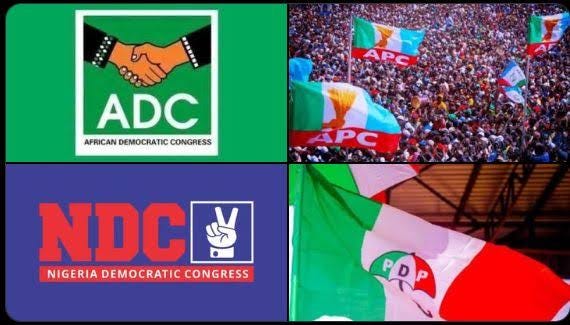
Every Nigerian has a price and whoever can pay it wins the election.
My friend and brother, who I always go to for political discussions, has confidence in me. He has been in politics for a long time. He lived with me during his NYSC in Lagos in the early 80s. In those days during sleep, you will hear him shouting “up Awo.” I knew from then that he would end up in politics, though he is a graduate of chemistry. And that is exactly what happened. He entered politics during the second republic in the days of Chief Obafemi Awolowo.
I asked him recently what motivated him to enter politics. I told him he always shouted “up Awo” in his sleep in the days we lived together in Surulere in Lagos. He told me he always attended Chief Awolowo’s campaigns and always stood in the front row. So he heard all Awolowo said. He was attracted by what Awolowo said in those campaigns. Chief Obafemi Awolowo was a great, committed and dedicated statesman who introduced many transformative policies in the western region in Nigeria’s early days.
My friend was part of the successors of Awo when they formed the Alliance for Democracy (AD). He told me with relish that the entire team could not afford the N50,000 to pay for the party’s registration, and that it was his secondary school classmate who gave them the money. He introduced me to that man. He worked with the likes of the then Lagos State deputy governor, Alhaji Rafiu Jafojo.
Nigeria was saner then. They had no money but they were committed and principled. Chief Obafemi Awolowo had passed and his lieutenants who drank very deep into his lifestyle and philosophy were continuing his works. Both Alhaji Lateef Jakande and his deputy, Alhaji Rafiu Jafojo were Muslims and it didn’t matter to anybody. Bola Ahmed Tinubu joined later and he introduced some elements of money politics into their midst. “If you ask for N20,000, Tinubu will give you N50,000,” my friend told me.
He worked with Alhaji Lam Adesina who served as governor of Oyo State. Lam Adesina was a poor school principal, yet he won the nomination of the AD. “When you go to visit him in his house, a very simple bungalow, he does not serve you food. One day his wife brought him lunch which was just a few pieces of roasted plantain. She thrusted it in the hands of her husband,” and said “that is your lunch, and if you like, you can share it among the people here.” Lam did not. That was his meal.
Unlike the politicians of today, Lam was a stickler for time like his political boss, Chief Obafemi Awolowo. “If you give Lam 10 o’clock, you can be sure he will be waiting for you.” My friend told me this when I observed the shoddy attitude of current politicians. They are so disorganized. I was making my observation when my friend jumped in to give the example of Lam Adesina.
He agreed with me that his colleagues are not so organized today. When I made my observation to another politician, he said politicians are not that organized. They don’t keep time and it reflects in all they do. How then can leaders who are not organized and who treat time with levity organize a nation? The reason why Nigeria continues to fail is reflected in the disorganization of the politicians who lead the nation. “Don’t expect politicians to be organized” is a common refrain in the mouth of politicians as if they were specially created to be disorganized.
I tried to talk my friend and colleague into upping his game in politics, into contesting a higher office. Since he served as local government chairman, he had only won election into the state assembly, an election that was cancelled when General Sanni Abacha, the man who organized it, died. Since then he had served at the background. Why? “My friend, politics is big money in Nigeria,” he continues to mutter to me. “Why can’t you use your brain to make an impact and forge ahead,” I asked? “It is more than that, politics is big money in Nigeria. My forte is organization now, I can summon people within two days.”
I can’t understand why a man would not want to make progress in his chosen career. I was later to understand what had come over my friend. Since he crossed from the AD to PDP, since he left the camp of the serious and disciplined, he has lost all the virtues he learned which were carryover of the Awo virtues. He has become a pursuer of money. He has joined a group of Nigerians whose great wrecking they do in national politics is hardly realized. He had joined a special rentier class who lived on the misfortune of common Nigerians.
There are three classes or hierarchies of politicians in Nigeria, the first are the higher up, the president, the governors, the ministers, the commissioners, the legislatures, special advisers etc at the centre and the states. They have access to the treasury. They could dip their hands into it and steal as much as they want. They are visible. The next level is the middle men and women, represented by my friend. They don’t work but never lack as long as politics is around. They build big houses in choice areas.
They are around the first level politicians. They may have what looks like businesses, but those businesses are smokescreens. They are very rich. The first level gives them money to use and distribute to those on the shop floor, the downtrodden who sing at their rallies. Usually what gets to these third rankers are nothing but pittances, five hundred naira or at best one thousand naira. I had an experience at a rally of the APM where one first line politician, a member of the House of Representatives, addressed the party members.
Actually, I got appalled by the shoddy arrangements and, after the member of House of Representatives had wasted our time, he didn’t arrive on time, a testimony again of the Nigerian politician’s disdain for time, I made to leave. A young man ran after me yelling, “Sir, won’t you wait for your envelope.” I was so annoyed that I didn’t know when I said: “I don’t need it.” This envelope I later learnt contained one thousand naira. It is the reason everybody came there and so they thought I had also come for it. The politician I later learnt had donated one million naira which the next line of leaders had lied was only N500,000. Hell broke loose.
With monetized politics, Nigeria can never move forward. I have heard of where these middle level leaders, about ten of them, shared 75 million naira given by an aspiring member of the House of Representatives. I have heard of countless amount of money that have been shared and they all stop at the level of the middle-level leaders. I have heard in this current campaign of an account of 120 million naira given by the bigwigs in Abuja to a middle level politician who crossed from one party to another, I have heard of 200 million naira given by Abuja to a gubernatorial contender who promised to trade away presidential ballots of his party.
When FCT Minister Nyesom Wike boasted that he would resign if President Bola Tinubu didn’t win Rivers State and the FCT, he was not leaning on any love of the people for the president and himself, he was trusting on the power of money. Every Nigerian has a price and whoever can pay it wins the election. When Seyi Makinde, Oyo Governor, thought he could be president or at least be a spoiler to throw spanner in the works for President Bola Tinubu’s second term bid, he was not trusting in any popularity, he was trusting in his hold on the state treasury.
One thug, they call them youth as a euphemism, told me, denying he’s not motivated by money, “If I wanted money I would go to APM, because they are spending so big.” All the parties are involved. This is the same thug that also told me that he was the one who sent his boys to disrupt a meeting of middle level leaders of a political party. They had gathered at a dinghy hotel to share 75 million naira given to them by a first line leader. According to that thug, he did that to let them know that nobody can enter his territory without his consent. For his efforts, the thug got N150,000.
What will bail us out? We cannot legislate because those who will put together that legislation are also neck deep in the crime. We don’t have data that will enable us monitor how much is being spent. For now, it is apparent that Nigeria is not short of resources to fund all that is necessary as people are made to believe. But much of our resources are going to waste in the pockets of lazy political jobbers. We will need something that will clean this Augean stable and impose a welfare community that will take care of all.
First Published in METRO
***********************
Tunde Akande is both a journalist and pastor. He earned a Master's degree in Mass Communication from the University of Lagos.


No comments:
Post a Comment