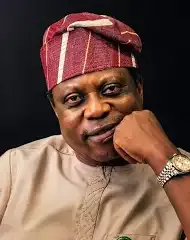
Oyo Politics:The arrival of the big spender in Ibadan by Tunde Akande

Hon. Remi Oseni

Aderemi Oseni, the man contesting the Oyo South senatorial seat, has arrived in the city with a big bang. The way Remi Oseni is spending in politics makes the late MKO Abiola’s wealth look trifling.

After the era of Ahmadu Bello, Nnamdi Azikiwe, and Obafemi Awolowo, the trio who guided Nigeria to independence in 1960, money became the only way to win elections in Nigeria. Alhaji Tafawa Balewa, the first and the only Prime Minister was not rich, yet he became the nation’s prime minister. He had character. Sam Mbakwe first civilian governor of Imo State, was well educated but hardly could be called rich, yet he became the governor of Imo State. His stellar performance has not been equalled. Called the weeping governor because tears easily dropped from his eyes at the sight of human misery, Mbakwe returned to the University of Lagos after his tenure to take a PhD where he reportedly sat in the same class with his son.

Chief Emmanuel Oladipo Alayande, the longest serving principal of Ibadan Grammar School, Ibadan would seem to be the first of the old pack to be a victim of money politics. He was the anointed candidate of Chief Obafemi Awolowo, the leader of Unity Party of Nigeria (UPN) for the governorship of Oyo. But the ebullient and rich youth in the UPN opposed their leader and insisted on a primary. Awolowo succumbed to their suggestion and asked for a primary. Chief Bola Ige, a lawyer and former student of Alayande, won the primary.

When the press asked Chief Alayande why he lost, he told them hilariously: “ah those youths are very rich, I don’t have their kind of money.” Alayande said money helped Bola Ige’s victory. Among the disciples of Awolowo, mammon entered and determined the outcome. Alayande has produced many great Nigerians but was adjudged by the UPN members not to merit the governorship of Oyo State. The man who reportedly scuttled the late Chief Alayande’s political ambition, Alhaji Busari Adelakun, had no formal education and was reputed to be a thug.

Chief Alayande was disciplined and of impeccable character but was not deemed qualified to rule by a system that is based not on merit and competence but on cash. After one term in office, Chief Bola Ige himself was thrown out of power, not because he was not competent or not doing well, but by the same power of money from the nation’s capital in Abuja. A few years later, still in politics and the serving attorney general of the federation, he was murdered by the same money system in Ibadan, where he had earlier won the party primaries and governorship by the power of cash.

Ibadan, the political capital of the old Western Region where Awolowo demonstrated good politics and a great heart for service to the people, where by those policies the Yoruba leapt to the top and achieved such visibility in the world, is experiencing another leap in money politics. Aderemi Abass Oseni, the man contesting the Oyo South senatorial seat, has arrived in the city with a big bang. The way Remi Oseni is spending in politics makes the late MKO Abiola’s wealth look trifling.

Abiola won his presidency by the power of his money. Issues were not involved, Nigerians have grown to have little patience for issues but a large appetite for cash. When I think of the opponents of Remi Oseni in the current contest, I pity them - they just don’t have a jot of a chance. Odidiomo, the nickname of Remi Oseni’s major contender from Seyi Makinde’s Allied Peoples Movement (APM) is formidable but he can’t win. With Nigerians’ love for money, even if Seyi Makinde will open the Oyo State treasury for him, he will still stand no chance. In my opinion, Remi may be richer than Oyo State. Adedeji Dhikirullahi Stanley, commonly known as Odidiomo, APM senatorial candidate for Oyo South, is massively built but I don’t think that huge frame will deliver him. He said he had built four billion naira projects in the state and would be unveiling them one by one.

He said they were projects that would outlast the great grand children of his constituents, but the one I saw in the Ward 9 of his constituency in Kudeti was just a locally constructed bridge over a canal. The old one caved in a few months ago and the replacement is showing the same weakness as the old one. Odidiomo did not build the bridge, I think he just gave money to the locals who are more interested in their pockets than the welfare of the constituents, like their political bosses, to build the bridge. That bridge will not see the next rain fall.

Odidiomo is huge, but he has an elephant to contend with in his bid for the Senate. Remi has a tiny frame but his pocket is very deep. At a meeting of landlords in Ward 9 over the theft of the cables of their transformer, this writer suggested Remi Oseni as a person they can reach out to to bail the community out from the theft. The community, I told them, could not dream of raising the over two million naira estimated to put the transformer back to work. Otherwise the community will be in darkness forever.

The IBEDC, the disco in Ibadan whose duty is both to secure and maintain the transformer will not do it. IBEDC gives an estimated bill to the community in contravention of appropriate law, which means the community pays more than it should. The community is not deemed to merit pre-paid meter; that is for the rich. The government is not bothered because the community is poor and has no voice. But the timing is auspicious.

Politicians are desperately throwing themselves on the mercy of every citizen as they face election to return to power. After this writer made a case at the Ward 9 landlords’ meeting in Kudeti, Ibadan, for Hon. Remi Oseni to intervene over the stolen transformer cables, a lady rose to make an even stronger case for the honourable.
She put the question of Remi Oseni’s wealth more starkly. Remi Oseni, she said in deep Yoruba, has money that is begging to be spent. “When people ask him for a million he gives them two, when they ask him for three million, he gives them five. When they asked him for fifty solar poles, he gave them 150.”

Remi Oseni does not believe a politician should have to stay away from his audience when he campaigns. He walks among the audience and touches the crowd. He likes to touch people and look into their eyes. When he notices a need, he treats the need specially.

He got to a girl and asked if she was in school. She was not in school because she left when her parents died. He promised the girl a million naira immediately to continue her education. According to politicians who followed the promise up, the girl received the money in a bank detail she produced the week after the promise. Political associates of Remi Oseni think his attitude of walking through his audience is because he is a Christian and is used to that style of preaching by pastors.

The danger of that style was soon revealed. Remi Oseni went to Ayeye, a popular market in Ibadan, and interacted with the traders there. He has done that for a long time. He has given 50 million naira interest-free loan to traders in Agbeni market and other markets. He was walking among the traders when political thugs came and began to shoot sporadically. They riddled the security van of Remi Oseni with bullets and shot so much that all the traders ran in different directions. Obviously the gunmen came for Remi Oseni but he was saved by the whiskers.

Will Oseni continue that style? It is not known yet. But he did not turn up for a meeting in Ward 9 of Oke Odo, Ibadan where a large reception was arranged for him. Both politicians and landlords in Ward 9 had marshalled a litany of needs for him to attend to when suddenly at about 4 pm, news came that he would not be coming and that he had sent a representative. But very discerning people think that he didn’t come because of the previous Ayeye market attack by hoodlums.

Oke Odo is known to have produced the notorious “one million boys” hoodlums who were feared all over Ibadan. They ruled and reigned in their areas and their leader, nicknamed “Ebila” was called Kabiyesi, a greeting usually reserved for Yoruba kings. Ebila was killed in a direct confrontation with soldiers in May 2020. Yet his gang, though depleted, is still visible in the area. Moreso, a controversy over the N250,000 donated by the gubernatorial candidate of Oyo State and the son of Ibadan, Senator Sharafadeen Alli of APC was raging in the area. The threat of violence was very palpable in the atmosphere. So people think Remi Oseni did not come because he feared for his safety and security.

Yet the representative of Remi Oseni promised two and a half million naira to the landlords and Imams, one million naira to the thugs euphemistically called youths, one million naira to the traders and one million naira to Isese, the traditional worshipers. The youths insisted on getting their promise immediately and when they received it by bank transfer the whole area erupted with youthful jubilation. The representative of Remi Oseni did not espouse any manifesto of Oseni or of Oseni’s party, APC. Of course nobody came to hear any manifestos, the party itself had none, everybody came to take the money Oseni had to give.

That has become the pattern. If you have money, you rule. If you have access to the treasury, whether you are the dumbest ass, people will vote for you. A few asked where Oseni made his money. Meta AI gave a hint about his construction company, Steep Development Company, but there are rumours that in his early years he worked for an engineering company that took a contract from a company that belonged to Steve Ajudua, a man alleged to have a reputation of pioneering advanced free fraud in Nigeria. Steve Ajudua read law at the University of Benin but did not practice.

Nobody is certain about the source of his wealth, but Oseni is certainly a big spender, and his wealth and the way he throws it around will constitute a threat to Sarafadeen even if Sarafadeen eventually becomes governor. Sarafadeen has a reputation for stinginess, which his campaign team does not think they should work on. Remi Oseni also wanted to become governor but had to step down for Sarafadeen by the intervention of President Bola Tinubu. The immediate victim of Remi Oseni’s wealth is Odidiomo as they collide in the upcoming election; his eventual victim will be Sarafadeen Alli, who might emerge governor.

First Published in METRO

***********************

Tunde Akande is both a journalist and pastor. He earned a Master's degree in Mass Communication from the University of Lagos.


Ephemera #164 #Cartoon by Thanos Kalamidas

Ephemera: a word with ancient Greek roots meaning:
‘something that is produced or created that
is never meant to last or be remembered’.

For more Ephemera, HERE!
For more Ovi Cartoons, HERE!


The idiots who keep opening the door to fascism in Greece by Thanos Kalamidas

From television studios to football terraces, from Cyprus to Greece, the grotesque political resurrection of Ilias Kasidiaris is becoming another uncomfortable demonstration that while history does not necessarily repeat itself, stupidity certainly has an excellent memory.

There is something profoundly rotten about a democracy that spends years explaining why a dangerous political movement must be confronted, only to invite its most recognisable representatives back into the living rooms of ordinary citizens as though they were merely controversial entertainers. And there is something even more depressing about a media establishment that apparently cannot distinguish between political journalism and the rehabilitation of political extremism.

Ilias Kasidiaris, the former Golden Dawn figure convicted of participating in a criminal organisation and imprisoned, is once again sucking up attention, visibility and political oxygen. His reappearance in the public conversation, whether through television exposure, political manoeuvring, football-related spectacles, or the circulation of his image beyond Greece, raises a question that should embarrass every serious journalist: Have the Greek media learned absolutely nothing? Apparently not.

Kasidiaris is not some misunderstood provincial politician whose career was interrupted by an unfortunate administrative oversight. He was one of the most recognisable faces of a movement whose political identity was inseparable from authoritarian nationalism, violent intimidation and the glorification of Nazi symbolism. Golden Dawn was not simply another party with over-enthusiastic supporters and a bad taste in uniforms. Its criminal character was established by the Greek judiciary. The murder of Pavlos Fyssas, the violence against immigrants, and the systematic intimidation carried out by its members were not imaginary political inconveniences; they were documented crimes. Yet here we are again, watching the familiar machinery of publicity warm up.

The Greek media have a peculiar talent for turning political danger into television entertainment. Give them an inflammatory personality, a provocative statement, an outrageous gesture, or a carefully manufactured confrontation, and suddenly the studio lights come on. The presenter smiles, the cameras roll, the audience gets its spectacle, and the extremist gets precisely what he came for: recognition, legitimacy, and an audience larger than he could ever assemble through ordinary political debate.

The business model is embarrassingly simple. Controversy produces clicks. Anger drives ratings. Extremism, properly packaged, becomes prime-time entertainment. And somewhere inside this commercial circus, democratic responsibility quietly slips out the back door.

The problem is not that journalists should refuse to cover Kasidiaris. Democracies cannot operate through censorship, convenient silence, or the suppression of uncomfortable political realities. The problem lies in the distinction between reporting on an extremist and providing him with an uncritical platform for political rehabilitation. Journalism should interrogate, expose, contextualise, and challenge. It should not function as an unpaid public-relations firm for men whose careers depend on exploiting democratic freedoms while holding democratic values in utter contempt.

There is also a staggering contradiction at the heart of the Greek public conversation. Politicians, commentators and respectable citizens repeatedly declare themselves shocked by the rise of the far right, yet the very same political culture keeps feeding these personalities the publicity that makes their resurrection possible. Then everyone acts surprised when the monster walks back into the room.

From Greece to Cyprus, the circulation of such figures and their political mythology should alarm anyone who understands how easily national grievances, economic frustrations, and social anxieties can be weaponised into combustible nationalist theatre. The far right does not need an entire society to turn fascist overnight. It simply requires enough people to become indifferent, enough institutions to grow complacent, and enough media outlets to decide that another provocative headline matters more than democratic vigilance.

Football offers another convenient stage. Stadiums, tribal loyalties, posture-heavy masculinity, and nationalist symbols provide an emotionally charged environment where political extremism can disguise itself as cultural identity or patriotic enthusiasm. Naturally, not every football supporter is an extremist. But pretending that political movements do not exploit football culture is just another exercise in wilful blindness.

This is precisely where the Greek media deserve the sharpest criticism. They know the history. They know the judicial verdicts. They know the images, the violence and the political consequences. They know perfectly well what kind of toxic language is being recycled. Their responsibility is therefore greater, not smaller.

History may repeat itself, but it rarely does so without a nudge. Somebody has to open the door. Somebody has to switch on the cameras. Somebody has to decide that a convicted extremist deserves another round of publicity because it might boost the ratings.

Democracy is not merely the right to appear on television; it is the responsibility to defend the political conditions that make television, journalism, and freedom of speech possible in the first place.

Kasidiaris may well want to launch another political career. That is a matter for democratic institutions and the law. But the Greek media need to ask themselves whether they intend to remain journalists or become the marketing department for democratic self-destruction.

Because when fascism returns wearing a familiar face, the most dangerous idiots are not necessarily the ones cheering in the audience. They are the respectable people behind the cameras who insist they are merely doing their jobs.


Sudan, the warlords’ republic by Solomon Mensah

When a country begins to fracture, the world does not necessarily hear the sound. Sometimes it simply stops listening.

Sudan is not merely bleeding. It is disintegrating, and the international community has perfected the art of watching a catastrophe become background noise. While diplomats rehearse their carefully sterilised vocabulary of ceasefires and negotiations, a country of extraordinary historical significance is being transformed into a collection of armed territories, competing loyalties and increasingly permanent warlord fiefdoms.

The November defections within the Rapid Support Forces (RSF) are not simply another military embarrassment for Mohamed Hamdan Dagalo, better known as Hemedti. They expose something considerably more dangerous: the possibility that Sudan's war is escaping even the control of those who started it. Senior commanders abandoning the organisation, tribal loyalties shifting, and regional alliances becoming increasingly transactional suggest a militia whose internal cohesion is deteriorating faster than the international appetite for dealing with Sudan. Recent defections have exposed deep fractures within the RSF's tribal alliances and its family-centred command structure.

And here lies the tragedy. A collapsing central authority does not necessarily produce peace. It produces vacancies, and vacancies in Sudan are invitations to armed entrepreneurs.

The RSF was never a conventional army held together by national purpose or constitutional loyalty. It was an instrument of power built around patronage, money, tribal networks and violence. Its expansion depended on the ability to distribute spoils, reward commanders and maintain an uneasy coalition of armed interests. Now that battlefield losses, economic pressures and competition over resources are undermining that arrangement, the cracks are becoming political geography.

Sudan is consequently drifting towards something more insidious than a conventional partition. The country may retain its name, its flag and its diplomatic representation while losing the substance of national sovereignty. The Sudanese Armed Forces dominate the eastern and central territories, while the RSF consolidates its grip over much of Darfur and parts of Kordofan. Parallel administrations, competing financial arrangements and separate systems of territorial control are creating the foundations of an increasingly entrenched division. But maps are the least important casualties of this fragmentation. People are.

For millions of Sudanese, national unity has become an abstract luxury compared with the immediate realities of hunger, displacement, sexual violence, ethnic persecution and the daily struggle to survive. Entire communities are being uprooted, while the destruction of homes, livelihoods and local institutions makes eventual reconciliation increasingly difficult. A partition imposed through exhaustion and violence would not resolve these grievances. It would institutionalise them. And what exactly is the international community doing?

Issuing statements. Organising conferences. Expressing profound concern. Occasionally remembering Sudan when another atrocity becomes too grotesque to ignore.

The hypocrisy is particularly infuriating because this war is not sustained by Sudanese weapons alone. External supply networks, regional rivalries and foreign political calculations have repeatedly helped the belligerents preserve their capacity to fight. The international response continues to resemble a fire brigade negotiating access while somebody keeps pouring petrol into the building. Accusations concerning external support remain politically contested, but the broader reality of an internationalised conflict is impossible to dismiss.

The RSF's fragmentation should therefore not be mistaken for an opportunity to celebrate military collapse. A fractured militia can become several militias, each more local, more unpredictable and less accountable. Commanders who abandon Hemedti may simply discover another patron, another revenue stream or another population to terrorise. Defection is not democracy. Nor is the defeat of one armed organisation automatically the liberation of the people it has brutalised. Sudan deserves better than the cynical choice between competing military dictatorships.

It needs a civilian political settlement, humanitarian access without military manipulation, serious restrictions on external weapons supplies, accountability for atrocities and a reconstruction process that restores institutions rather than merely replacing uniforms at government buildings.

The danger is that the world will eventually accept partition as realism. That is how forgotten partitions become permanent: first as an emergency arrangement, then as an administrative convenience, finally as an irreversible political fact.

Sudan is not an inconvenient African problem waiting patiently for the next diplomatic calendar. It is a warning about what happens when armed power becomes more valuable than citizenship, when international interests outweigh human lives, and when exhaustion is mistaken for peace. The warlords may eventually divide Sudan between themselves.

The real question is whether the world will help the Sudanese people reclaim their country, or quietly congratulate itself for having stopped paying attention.


Enlargement without a spine by Melina Barnett

Europe wants more members but it should first ask whether it still knows how to govern itself. Brussels is preparing to welcome new democracies, rebuild geopolitical credibility and expand its continental influence while simultaneously struggling to convince its existing members that solidarity, compromise and common responsibility are anything more than diplomatic decorations. Europe wants to become bigger. The uncomfortable question is whether it can survive becoming bigger without first learning how to function.

The November 2026 Enlargement Package celebrates progress by Montenegro, Albania, Moldova and Ukraine, presenting integration as a strategic investment in European stability. And strategically, it is. Russia’s aggression, the vulnerability of the Western Balkans and the political instability surrounding Europe’s eastern neighbourhood have transformed enlargement from a bureaucratic exercise into a geopolitical necessity. Leaving these countries permanently in Europe’s waiting room would be an invitation to authoritarian influence, political manipulation and strategic dependency. But geopolitical necessity does not magically manufacture institutional competence.

The European Union already struggles with twenty-seven governments pursuing twenty-seven national calculations under the comforting fiction of a common European interest. Foreign policy, taxation and other sensitive decisions remain hostage to unanimity, allowing individual governments to obstruct collective action, bargain for concessions or simply turn European solidarity into a personal political hostage. The result is an increasingly familiar spectacle: ambitious declarations followed by exhausting negotiations, watered-down compromises and the occasional humiliating paralysis.

Now imagine adding countries carrying the consequences of war, fragile institutions, economic disparities, unresolved territorial disputes and enormous reconstruction requirements. Ukraine alone would fundamentally transform the Union’s agricultural, financial, security and political calculations. Moldova and the Western Balkans would bring legitimate demands for investment, institutional protection and economic convergence. These are not minor administrative adjustments. They represent a profound redistribution of European power, money and responsibility.

And yet, Brussels continues selling enlargement through the reassuring language of progress reports, technical benchmarks and negotiating chapters, as though the European project were an oversized spreadsheet waiting for a few additional columns. The real danger is not enlargement itself. It is enlargement without institutional reform.

A Union that cannot consistently enforce its democratic standards internally risks becoming a particularly expensive club of selective principles. Governments that undermine judicial independence, manipulate institutional safeguards or treat European funding as an entitlement rather than a responsibility expose a fundamental contradiction. Brussels demands transformation from aspiring members while struggling to discipline those already sitting at the table. This hypocrisy is not merely embarrassing. It undermines the credibility of the entire accession process.

Nor should enlargement become another theatrical exercise in rewarding geopolitical loyalty while quietly postponing democratic accountability. Countries deserve a credible European future, but their citizens deserve functioning institutions, independent courts and accountable governments more than ceremonial accession dates. Accelerating membership without securing those foundations would import instability rather than eliminate it.

Europe also needs to confront its own political exhaustion. The original integration machinery was designed for a smaller, more manageable community. Today, the Union faces war, energy insecurity, technological dependency, democratic erosion, migration disputes and increasingly aggressive nationalism. Adding members without changing decision-making structures risks transforming institutional fatigue into permanent paralysis.

The answer is not to slam the door. That would be strategically cowardly and historically disastrous. Nor is it to promise membership by the late 2020s as though deadlines could substitute for political courage.

Europe needs differentiated integration, stronger democratic enforcement, a serious reconsideration of unanimity and a financial framework capable of accommodating new members without turning existing solidarity into a continental auction. Above all, it needs political leaders willing to explain that European integration requires sacrifices, not merely subsidies and symbolic victories. The candidate countries are not Europe's problem. They are Europe's opportunity. But opportunities become disasters when ambition outruns competence.

The European Union must decide whether enlargement is the culmination of a functioning political project or an attempt to disguise its institutional decay behind a larger membership. Because a Europe of thirty or more members, unable to agree on what twenty-seven already demand, will not become a stronger Europe. It will become a larger waiting room, with everyone inside waiting for somebody else to make a decision.


The beautiful ruins of progress by Alana Desham

We have finally discovered how to turn our addiction to technology into art. The problem is that the raw material is the wreckage of a civilisation that cannot stop buying, upgrading and throwing away. Welcome to E-Waste Baroque, where planned obsolescence meets artistic immortality, and where capitalism accidentally provides the sculptor with an unlimited supply of rubbish.

Perhaps this is the most honest art movement of our time. Imagine a magnificent baroque angel constructed from broken television screens, its wings assembled from the motherboards of computers that became obsolete before their owners finished paying for them. Imagine a towering mechanical Madonna whose face is made from cracked mobile phones, each screen carrying the ghost of somebody's photographs, messages, passwords and digital memories. Beautiful? Certainly. Disturbing? Absolutely. Because behind every artistic masterpiece stands an industrial system that treats the planet as an inexhaustible rubbish bin.

Technology has become the most sophisticated disposable commodity in human history. We buy devices that promise to connect us, entertain us, educate us and simplify our lives. Then, almost immediately, somebody announces that the next model is faster, thinner, smarter and equipped with another feature nobody particularly needs. Suddenly, yesterday's technological miracle becomes today's embarrassment.

The battery cannot be replaced. The software stops receiving updates. Repairing the device costs almost as much as purchasing another. Manufacturers call this innovation. Consumers call it progress. The planet receives the invoice.

And what an invoice it is. Electronic waste is not simply an unpleasant collection of broken gadgets waiting for municipal disposal. It contains valuable metals, plastics and hazardous substances, often passing through complicated international recycling networks where environmental responsibilities become conveniently difficult to trace. Meanwhile, communities exposed to poorly managed electronic waste inherit contamination that nobody included in the original marketing campaign.

But perhaps the most revealing contradiction is cultural. We live in a society obsessed with digital cleanliness. Our photographs are stored in invisible clouds, our entertainment arrives through immaculate streaming platforms, and our communications travel through apparently weightless networks. Everything looks clean, frictionless and wonderfully modern.

Except that none of it is weightless. Somewhere, somebody mines the materials, manufactures the components, assembles the devices, transports them across continents and eventually deals with their remains. The digital revolution has a physical body. We simply prefer not to look at it.

This is where E-Waste Baroque becomes more than an artistic curiosity. It is environmental protest disguised as beauty. It takes the discarded evidence of consumer excess and forces us to look at it. It transforms the symbols of technological worship into monuments of technological mortality.

There is also something wonderfully subversive about giving rubbish a second life as art. The motherboard that once processed financial transactions becomes the foundation of a sculpture. The broken screen that displayed advertisements becomes an artistic surface. The obsolete keyboard that helped somebody write emails becomes part of a monument to human absurdity.

The irony is almost too perfect. However, we should resist turning environmental destruction into another fashionable aesthetic. A sculpture made from electronic waste does not automatically recycle the materials, compensate affected communities or challenge the manufacturers responsible for disposable design. Art can expose the problem, but it cannot become an expensive decorative excuse for leaving the problem untouched.

Manufacturers must design products that can be repaired, upgraded and recycled. Governments must enforce meaningful producer responsibility. Consumers must question the absurdity of replacing perfectly functional devices simply because advertising has manufactured another artificial desire.

And artists? They should continue building their uncomfortable masterpieces. Let the galleries fill with electronic angels, circuit-board monsters and magnificent altars assembled from the remains of our technological vanity. Let visitors admire their intricate beauty before recognising what they are actually looking at.

Perhaps the greatest E-Waste Baroque sculpture would be a giant golden smartphone, built entirely from discarded devices, standing in the middle of a gallery like a secular cathedral. Its inscription should be simple:

WE INVENTED THE FUTURE. THEN WE THREW IT AWAY.

And somewhere beneath that magnificent monument, the planet will continue collecting the rubbish.

Worming #140 #cartoon by Thanos Kalamidas


A family of worms and all their worm friends worming in new adventures.

For more Worming, HERE!
For more Ovi Cartoons, HERE!


The empire beneath the waves by Mathew Walls

The South China Sea is no longer just a battlefield for sovereignty. It is becoming a potential execution chamber for the global internet. There is something wonderfully convenient about modern warfare. You no longer need to invade a country to cripple it. You do not necessarily need to bomb its cities, occupy its ports or send tanks across its borders. Sometimes all you need is a fishing vessel, a suspicious anchor, a little maritime intimidation and a few kilometres of broken cable lying quietly on the seabed.

Welcome to the new battlefield of the South China Sea, where the next major confrontation might not begin with a missile but with an internet connection that suddenly disappears. Scarborough Shoal has become another uncomfortable reminder that China's territorial ambitions are not confined to drawing imaginary borders on maritime maps. Beijing's increasingly aggressive military and coastguard presence around the disputed shoal is part of a wider strategy of persistent intimidation, designed to make its neighbours gradually accept what they would never voluntarily surrender: Chinese control over international waters.

The Philippines understands the problem. It has spent years confronting a Chinese maritime presence that operates somewhere between military aggression and carefully choreographed harassment. The language is familiar: patrols, fishing fleets, coastguard operations, territorial claims and diplomatic protests. What receives considerably less attention is what lies beneath all this theatre.

Under the South China Sea runs an extraordinary network of submarine telecommunications cables carrying the world's digital lifeblood. Financial transactions, government communications, commercial information, military coordination, medical records and the everyday conversations of billions of people depend on these fragile physical connections.

The internet might appear to live in an invisible cloud, but there is nothing particularly magical about it. It lives in cables, landing stations, switching centres and infrastructure that can be damaged, intercepted or deliberately disrupted.

And that is where the South China Sea becomes considerably more dangerous. Undersea cables are particularly vulnerable to the sort of grey-zone operations that have become China's preferred instruments of regional pressure. A vessel can drag an anchor, damage a cable and disappear into the fog of maritime ambiguity. Was it an accident? Negligence? Sabotage? A deliberate act of coercion? By the time investigators establish what happened, the damage is already done.

The beauty of this strategy, from the aggressor's perspective, is that it creates disruption without necessarily creating an identifiable act of war. No invasion, no declaration, no dramatic announcement. Just millions of people discovering that their supposedly indispensable digital world has developed a rather inconvenient technical problem.

The Philippines and its regional partners must therefore begin treating submarine cables as strategic infrastructure, not merely commercial property. Cooperation with Taiwan, Japan, Australia and other regional democracies could strengthen maritime surveillance, information-sharing, cable protection and emergency repair capabilities. Taiwan, itself exposed to the vulnerability of undersea communications, has particularly compelling reasons to participate in such cooperation.

But this requires something more sophisticated than another diplomatic statement expressing concern. It requires joint monitoring, transparent investigations, alternative communication routes, protected landing stations and coordinated responses to suspicious maritime activity. It also requires governments to recognise that private telecommunications companies cannot be left alone to defend infrastructure upon which entire national economies depend.

There is an uncomfortable geopolitical irony here. The countries most dependent on an open global internet are also among those that have allowed its physical foundations to remain dangerously exposed. Governments spend fortunes on fighter jets, missiles and military exercises while treating the cables carrying their economic and political existence as somebody else's technical responsibility.

China understands the strategic value of this vulnerability. Its ambitions extend beyond territorial control towards technological influence, economic leverage and the ability to shape the regional balance of power. Controlling the maritime environment, or making others fear that control, creates opportunities for pressure far beyond the disputed reefs and shoals.

And Beijing is not the only government capable of recognising this. The weaponisation of critical infrastructure is becoming a feature of international politics, from energy pipelines to communication networks. The lesson is brutally simple: whoever can threaten the infrastructure of another country can influence its decisions without necessarily firing a shot.

The danger is that the international community will once again wait for a catastrophe before taking the problem seriously. We have already demonstrated an extraordinary talent for treating predictable disasters as unexpected events.

Scarborough Shoal is not simply another argument about fishing rights, historical maps or competing sovereignty claims. It is a warning about the physical vulnerability of globalisation itself. The sea floor has become an extension of the geopolitical battlefield, and the countries that fail to understand this will discover that their national security has been resting on a few vulnerable strands of glass.

Perhaps it is time to abandon the comforting illusion that the internet is somewhere up in the clouds. It is down there, in the darkness, thousands of metres beneath the waves, carrying the world's money, secrets, conversations and political nervous system.

And while governments argue about who owns the water above it, somebody might already be preparing to cut the connection. The next war in the South China Sea might not leave a crater. It might simply leave the world offline.


Ovi History #eMagazine #25: Kristallnacht

 This image has an empty alt attribute; its file name is ovi-history-isssue-no25-kristallnacht.jpg

November 9, 1938, marked the beginning of Kristallnacht ("Night of Broken Glass"), a state-sponsored pogrom against Jews throughout Nazi Germany, annexed Austria, and the Sudetenland . The violence was framed by the regime as "spontaneous public outrage" following the assassination of a German diplomat in Paris by a Jewish teenager, but it was in fact centrally coordinated by Nazi leaders, including Propaganda Minister Joseph Goebbels, with Adolf Hitler's backing.

Over November 9–10, SA and Hitler Youth units, joined by ordinary civilians, burned or destroyed over 1,400 synagogues, ransacked thousands of Jewish businesses, and vandalized homes, schools, and hospitals . At least 90 Jews were murdered, and roughly 26,000 to 30,000 Jewish men were arrested and sent to concentration camps such as Dachau, Buchenwald, and Sachsenhausen . Police and fire brigades stood by, instructed not to intervene.

The name refers to the shattered glass from Jewish shop windows that littered the streets . Kristallnacht is widely regarded as a turning point: it stripped away any remaining illusion of safety for Jews in Germany, accelerated forced emigration, and marked a decisive escalation toward the Holocaust.

For this issue of Ovi History, a historical fiction short story from Kristina Claesson and a new book review.

So, turn the pages and ...take cover.

Read the Ovi History eMagazine online HERE!
View, read it online or download it in PDF/epub format HERE!
And enjoy viewing & reading it online or download in PDF format HERE!
All eMagazines and eBooks downloads are FREE!

You can find it in the Ovi Pedia pages, HERE!
Or Ovi Thematic eMagazines pages, HERE!

With the hope that you will read and learn from the articles,
so take cover and ...do read this historic chronicle

Thanos Kalamidas


The last human component by Todd Foley

If you replace every piece of yourself, do you inherit immortality or simply become somebody else's hardware? Imagine waking up one morning to discover that your memories are intact, your personality remains recognisable, your sense of humour is still irritatingly yours, and even your childhood embarrassments continue to haunt you. There is just one small problem. Your brain is no longer entirely biological. A few damaged neurons have been replaced by digital prosthetics. Then a few thousand more. Eventually, half your brain is artificial. You still recognise your friends, remember your first kiss, hate politicians and complain about the weather. But are you still you?

Welcome to the great technological identity crisis, where Silicon Valley's latest promise of immortality meets one rather inconvenient question: who exactly gets to survive? The technological evangelists have a wonderfully uncomplicated answer. Replace the failing biological components gradually, preserve the information, maintain the connections and, voilà, personal identity survives. Apparently, the human being is a sophisticated computer, consciousness is software and the brain is simply an increasingly outdated operating system awaiting its next upgrade. Humanity 2.0, complete with improved memory, enhanced processing and, presumably, fewer embarrassing mistakes during dinner conversations.

What an attractive sales pitch. What a spectacularly arrogant assumption. The problem is that we have confused information with identity. Our memories are not necessarily ourselves. They are fragments of experience, distorted by time, emotion, selective recollection and the extraordinary human capacity to rewrite personal history whenever reality becomes uncomfortable. Our personality is not a downloadable application. Consciousness is not a collection of files that can be transferred to a more efficient storage device.

We do not yet understand precisely how subjective experience emerges from the biological brain. We certainly have no scientific guarantee that reproducing its functions reproduces the experience of being the person whose functions are being reproduced.

A digital prosthetic might remember your mother's voice. It might reproduce your laughter, recognise your children and even imitate your particular way of swearing at the television. But does it remember loving your mother, or does it merely possess the information necessary to describe that love?

There is a difference, and it is enormous. Gradual replacement makes the philosophical problem even more interesting. If one artificial component replaces one biological component, nobody would reasonably suggest that a person immediately disappears. If ten per cent is replaced, probably not. Fifty per cent? Eighty? Ninety-nine?

Where is the magical percentage at which the original human being clocks out and the technological replacement clocks in? There may be no percentage at all. Perhaps identity is not a fixed object but a continuous process, sustained through changing physical structures, memories, relationships and experiences. Our biological brains already change throughout our lives. We are not physically identical to the children we once were, yet we recognise an unbroken personal history.

But this does not automatically establish that artificial replacement preserves that continuity. A functioning imitation might emerge with every memory intact while the original subject's conscious experience has quietly ended. The imitation would insist that it was you. Your family might believe it. Your bank would certainly be delighted to continue charging you.

But would you have survived? And here lies the most uncomfortable political dimension of this technological adventure. Who owns the upgraded human being? Who controls the prosthetics, the software, the security protocols and the updates? What happens when the company maintaining your artificial neurons goes bankrupt, changes its business model or decides that continued access to your cognitive functions requires a premium subscription?

Imagine paying a monthly fee to remember your childhood. Imagine a software licence determining whether you can retain access to your own personality. Imagine a corporation holding the keys to your memories, emotions or cognitive abilities. The traditional exploitation of human beings suddenly looks almost charmingly primitive.

The promise of immortality could become the ultimate privatisation of existence. And there is another uncomfortable possibility. Perhaps the replacement does not kill you. Perhaps it creates a successor who genuinely believes it is you. It inherits your debts, your prejudices, your unfinished arguments and your family photographs. It might even continue writing opinion articles complaining about the same technological billionaires who made its existence possible.

That would be continuity of biography, certainly. Whether it constitutes continuity of consciousness remains unanswered. We should therefore be careful about celebrating neural upgrades as the next great human liberation. Extending cognitive function is one thing. Claiming to have conquered death is another. The first is a technological ambition; the second is a philosophical promise that no software demonstration can establish.

The question is not simply how much of the brain we can replace. It is whether the experience of being someone can survive the replacement of the machinery that makes that experience possible. Perhaps one day science will provide an answer. Until then, I would suggest a little humility.

Because when the last biological neuron is switched off, the machine might open its eyes, recognise everybody in the room and announce, quite convincingly, that it is still you. Everybody might applaud. But the original you might already be gone. And the greatest trick of technological immortality may be persuading the replacement that it never died.


Ghostin’ #139 #Cartoon by Thanos Kalamidas


They are like neighbours we are aware of,
except we are NOT aware of and
they have absolutely nothing to do with Halloween.

For more Ghostin’, HERE!
For more Ovi Cartoons, HERE!


The cartography of hatred by Wiryo Huojin

When history becomes a political weapon, borders stop separating countries and start imprisoning their people. Welcome to the Thailand–Camb...