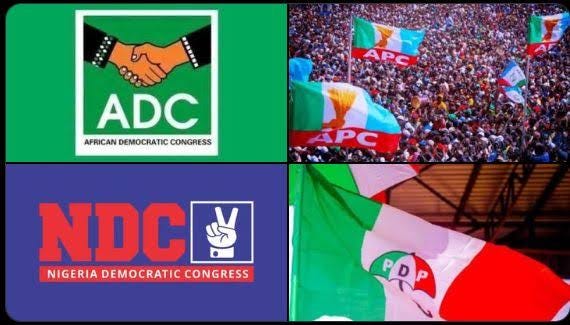
Politics is big money in Nigeria by Tunde Akande

Every Nigerian has a price and whoever can pay it wins the election.

My friend and brother, who I always go to for political discussions, has confidence in me. He has been in politics for a long time. He lived with me during his NYSC in Lagos in the early 80s. In those days during sleep, you will hear him shouting “up Awo.” I knew from then that he would end up in politics, though he is a graduate of chemistry. And that is exactly what happened. He entered politics during the second republic in the days of Chief Obafemi Awolowo.

I asked him recently what motivated him to enter politics. I told him he always shouted “up Awo” in his sleep in the days we lived together in Surulere in Lagos. He told me he always attended Chief Awolowo’s campaigns and always stood in the front row. So he heard all Awolowo said. He was attracted by what Awolowo said in those campaigns. Chief Obafemi Awolowo was a great, committed and dedicated statesman who introduced many transformative policies in the western region in Nigeria’s early days.

My friend was part of the successors of Awo when they formed the Alliance for Democracy (AD). He told me with relish that the entire team could not afford the N50,000 to pay for the party’s registration, and that it was his secondary school classmate who gave them the money. He introduced me to that man. He worked with the likes of the then Lagos State deputy governor, Alhaji Rafiu Jafojo.

Nigeria was saner then. They had no money but they were committed and principled. Chief Obafemi Awolowo had passed and his lieutenants who drank very deep into his lifestyle and philosophy were continuing his works. Both Alhaji Lateef Jakande and his deputy, Alhaji Rafiu Jafojo were Muslims and it didn’t matter to anybody. Bola Ahmed Tinubu joined later and he introduced some elements of money politics into their midst. “If you ask for N20,000, Tinubu will give you N50,000,” my friend told me.

He worked with Alhaji Lam Adesina who served as governor of Oyo State. Lam Adesina was a poor school principal, yet he won the nomination of the AD. “When you go to visit him in his house, a very simple bungalow, he does not serve you food. One day his wife brought him lunch which was just a few pieces of roasted plantain. She thrusted it in the hands of her husband,” and said “that is your lunch, and if you like, you can share it among the people here.” Lam did not. That was his meal.

Unlike the politicians of today, Lam was a stickler for time like his political boss, Chief Obafemi Awolowo. “If you give Lam 10 o’clock, you can be sure he will be waiting for you.” My friend told me this when I observed the shoddy attitude of current politicians. They are so disorganized. I was making my observation when my friend jumped in to give the example of Lam Adesina.

He agreed with me that his colleagues are not so organized today. When I made my observation to another politician, he said politicians are not that organized. They don’t keep time and it reflects in all they do. How then can leaders who are not organized and who treat time with levity organize a nation? The reason why Nigeria continues to fail is reflected in the disorganization of the politicians who lead the nation. “Don’t expect politicians to be organized” is a common refrain in the mouth of politicians as if they were specially created to be disorganized.

I tried to talk my friend and colleague into upping his game in politics, into contesting a higher office. Since he served as local government chairman, he had only won election into the state assembly, an election that was cancelled when General Sanni Abacha, the man who organized it, died. Since then he had served at the background. Why? “My friend, politics is big money in Nigeria,” he continues to mutter to me. “Why can’t you use your brain to make an impact and forge ahead,” I asked? “It is more than that, politics is big money in Nigeria. My forte is organization now, I can summon people within two days.”

I can’t understand why a man would not want to make progress in his chosen career. I was later to understand what had come over my friend. Since he crossed from the AD to PDP, since he left the camp of the serious and disciplined, he has lost all the virtues he learned which were carryover of the Awo virtues. He has become a pursuer of money. He has joined a group of Nigerians whose great wrecking they do in national politics is hardly realized. He had joined a special rentier class who lived on the misfortune of common Nigerians.

There are three classes or hierarchies of politicians in Nigeria, the first are the higher up, the president, the governors, the ministers, the commissioners, the legislatures, special advisers etc at the centre and the states. They have access to the treasury. They could dip their hands into it and steal as much as they want. They are visible. The next level is the middle men and women, represented by my friend. They don’t work but never lack as long as politics is around. They build big houses in choice areas.

They are around the first level politicians. They may have what looks like businesses, but those businesses are smokescreens. They are very rich. The first level gives them money to use and distribute to those on the shop floor, the downtrodden who sing at their rallies. Usually what gets to these third rankers are nothing but pittances, five hundred naira or at best one thousand naira. I had an experience at a rally of the APM where one first line politician, a member of the House of Representatives, addressed the party members.

Actually, I got appalled by the shoddy arrangements and, after the member of House of Representatives had wasted our time, he didn’t arrive on time, a testimony again of the Nigerian politician’s disdain for time, I made to leave. A young man ran after me yelling, “Sir, won’t you wait for your envelope.” I was so annoyed that I didn’t know when I said: “I don’t need it.” This envelope I later learnt contained one thousand naira. It is the reason everybody came there and so they thought I had also come for it. The politician I later learnt had donated one million naira which the next line of leaders had lied was only N500,000. Hell broke loose.

With monetized politics, Nigeria can never move forward. I have heard of where these middle level leaders, about ten of them, shared 75 million naira given by an aspiring member of the House of Representatives. I have heard of countless amount of money that have been shared and they all stop at the level of the middle-level leaders. I have heard in this current campaign of an account of 120 million naira given by the bigwigs in Abuja to a middle level politician who crossed from one party to another, I have heard of 200 million naira given by Abuja to a gubernatorial contender who promised to trade away presidential ballots of his party.

When FCT Minister Nyesom Wike boasted that he would resign if President Bola Tinubu didn’t win Rivers State and the FCT, he was not leaning on any love of the people for the president and himself, he was trusting on the power of money. Every Nigerian has a price and whoever can pay it wins the election. When Seyi Makinde, Oyo Governor, thought he could be president or at least be a spoiler to throw spanner in the works for President Bola Tinubu’s second term bid, he was not trusting in any popularity, he was trusting in his hold on the state treasury.

One thug, they call them youth as a euphemism, told me, denying he’s not motivated by money, “If I wanted money I would go to APM, because they are spending so big.” All the parties are involved. This is the same thug that also told me that he was the one who sent his boys to disrupt a meeting of middle level leaders of a political party. They had gathered at a dinghy hotel to share 75 million naira given to them by a first line leader. According to that thug, he did that to let them know that nobody can enter his territory without his consent. For his efforts, the thug got N150,000.

What will bail us out? We cannot legislate because those who will put together that legislation are also neck deep in the crime. We don’t have data that will enable us monitor how much is being spent. For now, it is apparent that Nigeria is not short of resources to fund all that is necessary as people are made to believe. But much of our resources are going to waste in the pockets of lazy political jobbers. We will need something that will clean this Augean stable and impose a welfare community that will take care of all.

First Published in METRO

***********************

Tunde Akande is both a journalist and pastor. He earned a Master's degree in Mass Communication from the University of Lagos.


Screws & Chips #136 #Cartoon by Thanos Kalamidas


In a galaxy far, far away, intelligence demonstrated by screws and chips,
boldly gone where no robot has gone before!

For more Screws & Chips, HERE!
For more Ovi Cartoons, HERE!


Brexit: The Great British con trick by Jemma Norman

The most extraordinary thing about Brexit is not that Britain made a historic mistake. It is that, years later, the people who sold the mistake still expect the country to pretend it was a triumph.

Andy Burnham's willingness to talk about a possible British return to the European Union, or at least a softer relationship with it, has reopened a political wound that Westminster has desperately tried to cover with patriotic wallpaper. And look at the reaction. Not the hysterical national outrage that once accompanied even the suggestion of closer European integration, but something considerably more revealing: a relatively mild response, a political shrug, and an increasingly obvious willingness to discuss what was once treated as national treason.

That change matters. For years, Brexit's architects presented themselves as the fearless liberators of a nation supposedly imprisoned by Brussels. They promised sovereignty, prosperity, control of borders, economic renewal and a glorious restoration of Britain's international importance. They sold nostalgia as an economic programme and nationalism as a substitute for political intelligence. The British public was promised a land of opportunity, freed from European bureaucracy, where everything from trade to immigration would magically become easier.

What a magnificent collection of political rubbish. The country was told that leaving the EU would be straightforward, that trade agreements would fall into Britain's lap, that the NHS would receive imaginary weekly fortunes, that immigration would be controlled and that British sovereignty would somehow become more powerful simply by abandoning one of the world's largest economic and political partnerships.

And what happened? Years of economic uncertainty, bureaucratic complications, damaged commercial relationships, labour shortages in important sectors, reduced opportunities for younger generations and a country still struggling to explain what exactly it gained.

The greatest achievement of Brexit was making Britain smaller while convincing some of its politicians that it had become bigger.

Of course, one must be careful about interpreting public reaction. A mild response to Burnham's remarks does not, by itself, prove that every British voter regrets Brexit. Nor does it establish that a majority is ready to rejoin. But it does demonstrate something politically significant: the old emotional defences of Brexit are weakening. The subject can increasingly be discussed without triggering the familiar theatrical performance about sovereignty, traitors and Brussels dictators.

That is progress. The most poisonous aspect of Brexit was never simply the departure itself. It was the dishonesty surrounding it. Political opportunists transformed complicated economic and constitutional questions into a simplistic battle between supposedly patriotic Britons and imaginary foreign oppressors. They exploited genuine frustrations, ignored inconvenient facts and treated warnings as sabotage. When reality arrived, many of those responsible conveniently disappeared into political retirement, television studios or their next lucrative opportunity.

Meanwhile, ordinary people were left with the consequences. Britain does not need another referendum tomorrow, nor another round of political circus. It needs an honest national conversation about its future relationship with Europe, including the practical possibilities of rebuilding cooperation, restoring economic connections and eventually considering membership again.

And it needs politicians with enough courage to admit that a decision can be democratically made and still be disastrously wrong. There is no shame in reconsidering a mistake. There is considerable shame in defending it indefinitely because admitting the truth would embarrass the people who made it.

Brexit was marketed as Britain's liberation. It increasingly looks like an expensive lesson in what happens when a nation mistakes political propaganda for a national strategy. Perhaps the most British thing about the whole affair is that the country is now being asked to pay for the promises of people who never intended to pick up the bill. The European door has never been the problem. The British politicians who slammed it shut were.


Democracy's million-dollar hunger by Thanos Kalamidas

I know it sounds cliché, often written and even more often mentioned, but… what the hell? Why are there no laws stopping people like Elon Musk from spending millions to buy politicians who will serve them, and forcing them to pay their fair share of taxes to help a health system in ruins, fund pensions, and support the homeless, the hungry, and the millions of poor people suffering and literally dying in the USA today?

The money poured into US’ midterm elections from both political parties could literally save lives, settle thousands of desperate families, heal thousands of wounded and sick people and feed millions for years. And that is before counting the enormous sums already sitting in party coffers, patiently waiting for the next electoral circus. Apparently, the US political establishment has discovered a miraculous economic principle, money is practically unlimited when the objective is winning power, but mysteriously scarce when the objective is helping people survive.

This is not merely an argument about campaign finance. It is an indictment of political priorities, a particularly American contradiction in which wealth becomes a weapon of electoral competition while human suffering becomes an inconvenient background statistic.

Consider what political fundraising actually represents. It is not simply money spent on television advertisements, consultants, rallies, digital propaganda, opposition research and an army of professional persuaders. It is an enormous mobilisation of economic resources around a single question: who gets to occupy the corridors of power? Meanwhile, outside those corridors, millions of Americans confront medical bills capable of destroying a lifetime's savings, families struggling with housing costs, children experiencing food insecurity and communities still waiting for infrastructure, dignity and opportunity.

The grotesque irony is that both parties can recognise suffering perfectly well when it becomes electorally useful. Poverty becomes a campaign photograph. Healthcare becomes a slogan. Veterans become patriotic decorations. Working families become the protagonists of carefully rehearsed speeches. Then the fundraising machinery starts again, swallowing millions in the name of defending those very people.

Democrats and Republicans may disagree about taxation, immigration, healthcare, reproductive rights, climate policy and the proper size of government. Yet their dependence on enormous financial machinery increasingly resembles a shared political addiction. They compete fiercely for donations while the citizens supposedly represented by those donations compete for affordable medicine, decent housing and a future their children can believe in.

The problem is not that elections cost money. Elections require organisation, communication and the participation of citizens. The problem is the scale, the concentration of influence and the grotesque opportunity cost. When political survival demands an endless financial war, governing becomes secondary to fundraising, and public service increasingly resembles a business whose shareholders are wealthy donors.

Imagine redirecting even a fraction of this electoral expenditure towards emergency housing, food programmes, medical treatment, mental health services, refugee assistance and rebuilding devastated communities. Imagine the thousands of families rescued from homelessness, the children whose hunger would disappear, the patients receiving treatment before their conditions become irreversible. These are not abstract moral fantasies. They are measurable human possibilities.

Of course, campaign money cannot simply be transformed overnight into public welfare. Political expenditure and public budgets are different instruments, and private donations do not automatically become government revenue. But that distinction does not diminish the moral question. It sharpens it.

What kind of political culture celebrates billions spent persuading people to vote while treating billions required improving their lives as an ideological battlefield?

US' electoral machinery has become exceptionally efficient at manufacturing political urgency. Every election is presented as the last opportunity to rescue the republic from catastrophe. Every opponent is portrayed as an existential threat. Every donation becomes a patriotic obligation. Yet the catastrophe that rarely receives comparable urgency is the everyday destruction of human potential through poverty, preventable illness, homelessness and hunger.

Perhaps the most revealing feature of US elections is not how much money they consume but how little shame accompanies the consumption.

Democracy should be about the people, not the price of convincing them. If political parties genuinely believe their campaigns are about protecting American lives, perhaps they should occasionally examine what those lives might look like if even a modest portion of their electoral fortune were spent protecting people rather than purchasing power.

The tragedy is not that USA cannot afford to help. The tragedy is that USA can afford both the suffering and the spectacle and somehow keeps choosing the spectacle.


The search is dead. Long live the rumour! By Jiro Lambert

We used to search for information. Now we ask strangers, algorithms and artificial intelligence to tell us what we should think. Somewhere between Google's search box and ChatGPT's confident answer, the art of actually finding the truth is becoming an endangered species.

There was a time when searching for something meant searching for something. You typed a question, received a collection of websites, opened a few dozen tabs, compared information, became frustrated, discovered something unexpected and, occasionally, found the answer. It was messy, exhausting and wonderfully human. It also required one rather inconvenient activity: thinking.

That era is disappearing. Google Search, once the magnificent gateway to the world's information, increasingly resembles a commercial shopping centre where the shops are advertisements, the corridors are sponsored suggestions and the actual information is somewhere behind a security door. The search engine has not necessarily disappeared, but the relationship between people and searching has fundamentally changed. People are increasingly turning to Reddit, specialised forums, social communities and artificial intelligence for answers that traditional search engines struggle to deliver.

And there is a reason. People are tired of searching through ten pages of recycled articles, suspiciously similar product recommendations, search-engine-optimised nonsense and websites that seem to have been written by someone who has never actually experienced the subject. Want to know whether a particular washing machine survives five years of family abuse? A manufacturer's website will tell you it is revolutionary. A stranger on Reddit will tell you that the bloody thing started leaking after eleven months.

Guess which one people trust? Reddit has become an enormous informal knowledge warehouse, built from personal experiences, arguments, expertise, mistakes and occasionally spectacular stupidity. Its attraction is precisely what traditional search engines have struggled to reproduce: human context. People do not merely want information; they want somebody who has been there, done it and perhaps regretted buying the bloody T-shirt.

But there is a catch. Reddit is not a university library. An experienced engineer and an enthusiastic idiot can occupy precisely the same digital space, sometimes with identical confidence. Upvotes are not academic qualifications, popularity is not evidence, and a thousand people repeating the same mistake do not transform it into scientific truth.

Then comes artificial intelligence. AI tools have changed the equation even more dramatically. Instead of searching for ten different explanations, users can ask one question and receive a coherent answer in seconds. They can demand clarification, challenge an argument, request comparisons and explore subjects without navigating an endless maze of hyperlinks.

It is convenient, extraordinarily powerful and potentially dangerous. The problem is not that artificial intelligence can make mistakes. Human beings have been producing mistakes professionally for centuries. The problem is that AI can package uncertainty in beautifully constructed sentences, delivering an answer with the confidence of a Supreme Court judge and occasionally the factual accuracy of a drunken pub philosopher.

The user receives an answer without necessarily seeing the process, the competing interpretations or the missing evidence. The intellectual labour of searching, comparing and questioning is quietly outsourced.

And that brings us to the real crisis: information literacy. Knowing how to use a search engine is not the same as knowing how to evaluate information. The next generation must learn something considerably more important than typing clever keywords into a box. They must recognise manipulation, identify unreliable sources, distinguish evidence from opinion, understand algorithmic incentives and question information even when it confirms everything they already believe.

This is particularly important in an age when misinformation is not simply an unfortunate by-product of the internet. It is an industry, a political instrument and, sometimes, a business model. The traditional search engine presented us with a distorted but relatively visible landscape of competing sources. AI increasingly offers us a destination. Reddit offers us a crowd. Neither guarantees truth.

There is also a commercial dimension that deserves considerably more attention. Search engines, social platforms and AI companies are competing to become the first and perhaps only place people visit when they need information. Whoever controls that first answer gains enormous influence over what people discover, what they ignore and eventually what they believe.

The old gatekeepers were journalists, editors, librarians and publishers. The new gatekeepers are algorithms, recommendation systems and privately controlled artificial intelligence models. The technology has changed; the concentration of informational power has not necessarily disappeared.

Perhaps the biggest irony is that humanity has never had greater access to knowledge and has never been so willing to surrender the responsibility of examining it.

I am not nostalgic for the days of endless searching, broken hyperlinks and websites demanding that we accept seventeen different cookies before reading three paragraphs. Progress is welcome. Better tools are welcome. AI can democratise access to knowledge in ways that previous generations could barely imagine.

But convenience must not become intellectual laziness. We should use Google, Reddit, specialist forums and AI. We should use libraries, newspapers, academic research and human expertise. We should compare, challenge and investigate. Most importantly, we should never confuse an answer with an understanding.

The death of Google Search, if that is what we are witnessing, is not necessarily the death of searching. It is the transformation of how we encounter knowledge.

The real danger is something much uglier: a generation that knows how to ask every possible question but has forgotten how to recognise a convincing lie.

And when the machines eventually become the librarians, the researchers and the interpreters of our collective knowledge, somebody should remind them of one very old human principle: Trust is earned. Truth is investigated. And neither comes with a convenient little button marked 'Generate Answer'.


Berserk Alert! #133 #Cartoon by Tony Zuvela


Tony Zuvela and his view of the world around us in a constant berserk alert!
For more Berserk Alert! HERE!
For more Ovi Cartoons, HERE!


Puppi & Caesar #55 #cartoon by Thanos Kalamidas


Another cartoon with a mean and know-all of a bully cat, Puppi and her intellectual, pompous companion categorically-I-know-all, Caesar the squirrel!  

For more Puppi & Caesar, HERE!
For more Ovi Cartoons, HERE!


The Cockroach that won’t disappear by Avani Devi

When political empires begin to crack, the most dangerous thing for their masters is not necessarily an army, a revolution or even an angry electorate. Sometimes it is a survivor with a thousand political lives, crawling through the wreckage of a carefully constructed illusion.

Narendra Modi built his political empire on the promise of invincibility. The strongman of New Delhi, the self-appointed architect of a Hindu nationalist renaissance, the man who turned electoral victories into personal mythology, suddenly faces an uncomfortable question: what happens when the cockroach refuses to die?

Indian politics has always been a brutal ecosystem, but Modi's greatest achievement was convincing millions that he was not merely another politician surviving the jungle. He was the jungle's undisputed king. His machinery of propaganda, religious mobilisation, muscular nationalism and carefully choreographed public appearances manufactured the impression that opposition was obsolete and political alternatives were little more than historical curiosities.

Then reality intervened. The Indian electorate reminded Modi that democracy is not a private property deed issued to a charismatic leader. His party's reduced parliamentary strength in 2024 forced him into coalition dependence, exposing an uncomfortable vulnerability beneath the carefully polished armour. Suddenly, the supposedly invincible emperor needed allies, compromises and parliamentary arithmetic. The mythology of absolute dominance suffered a rather undignified collision with mathematics.

And lurking in this political mess is the cockroach: India's surviving opposition, particularly the Congress-led alliance, and the stubborn democratic instinct that refuses to surrender the country to one political personality.

The cockroach, after all, is not beautiful, respectable or particularly welcome in the kitchen. It survives. It adapts. It appears precisely when somebody believes the room has been thoroughly disinfected. India's opposition has demonstrated something Modi's political theatre desperately wanted to conceal: survival is itself a political weapon.

But the danger for Modi extends beyond parliamentary numbers. His political project depends on permanent mobilisation, permanent enemies and permanent emotional intoxication. Hindu nationalism provides the fuel, but economic frustrations, unemployment, inequality and the ordinary indignities of everyday existence cannot indefinitely be buried beneath religious spectacle. A temple inauguration does not create employment. A nationalist slogan does not fill a stomach. And another televised declaration of greatness cannot magically transform political disappointment into prosperity.

The irony is delicious. A leader who cultivated the image of a political exterminator now discovers that democratic competition possesses extraordinary reproductive capacity. Eliminate one opponent and another emerges. Marginalise one institution and another becomes troublesome. Silence one criticism and ten more crawl out from beneath the furniture.

This does not mean Modi's departure is imminent, nor that India's opposition has suddenly become competent, united or morally immaculate. The opposition has its own failures, dynastic baggage and political parasites. Modi remains powerful, his organisation formidable, and his ideological project deeply rooted. But power without vulnerability is an illusion, and the illusion has been punctured.

The real question is whether India can recover something more valuable than the humiliation of one political heavyweight: the democratic space in which disagreement is not treason, minorities are not permanent suspects, journalists are not enemies, and citizenship does not require ideological obedience.

Modi may yet survive another political season. The cockroach certainly will. And perhaps that is the most irritating lesson for every aspiring authoritarian: democracy does not need to be magnificent to survive. Sometimes it only needs to be stubborn, ugly, inconvenient and impossible to kill. In India, the political insect has survived the spraying. Now the exterminator has a problem.


Joan of Arc in Marine’s armour …again by Nadine Moreau

France does not need another saint. It needs a political movement that stops confusing national pride with national paranoia. Marine Le Pen launching her presidential campaign in Orléans, wrapping herself in the symbolic armour of Joan of Arc. When politicians begin borrowing their legitimacy from medieval saints, one should immediately check what they are trying to smuggle into the present.

Joan of Arc liberated Orléans from English occupation. She became a symbol of resistance, sacrifice and French national identity. Her story belongs to a complicated history of faith, courage, tragedy and national mythology. Marine Le Pen, however, has discovered something considerably more convenient in this historical inheritance: a magnificent political costume.

The symbolism is not accidental. Joan of Arc has long occupied the French nationalist imagination, offering an emotionally irresistible combination of patriotism, victimhood and heroic resistance against foreign domination. For Le Pen, this is political gold. Why bother constructing a convincing vision of France's future when you can borrow the emotional machinery of its past?

The problem is that France in 2027 is not medieval Orléans, and the enemies of contemporary French society cannot simply be assembled into a convenient procession of foreign invaders.

Le Pen's political project has spent decades transforming anxiety into electoral capital. Immigration becomes an existential threat. European integration becomes an assault on sovereignty. Cultural diversity becomes evidence of national decline. The familiar promise is that France can recover its greatness by recovering its supposed purity.

This is nationalism with an enormous rear-view mirror and remarkably little imagination. The strategy is particularly cynical because Joan of Arc's historical significance cannot be reduced to the ideological property of the French far right. She belongs to French history, certainly, but her courage and sacrifice are not exclusive possessions of any political party. Turning her into a campaign mascot is less an act of historical reverence than an attempt to monopolise patriotism.

And that is precisely where the danger begins. When the far right claims exclusive ownership of the nation, everybody else becomes a questionable guest in their own country. Citizens with different origins, different religions, different political convictions or different interpretations of French identity are gradually pushed towards the margins of an increasingly narrow national definition.

The genius of this political theatre is that it makes exclusion appear patriotic and prejudice sound like historical responsibility. France deserves better than this theatrical resurrection of medieval nationalism. It deserves a serious discussion about immigration, economic inequality, public services, security, secularism and the future of European democracy. It deserves political leadership capable of addressing contemporary problems without manufacturing imaginary civilisational wars.

Joan of Arc fought for a France that did not yet exist in its modern form. Marine Le Pen campaigns for a France that exists largely as an ideological fantasy, populated by nostalgic certainties and conveniently selected enemies.

The difference matters. A nation is not a museum exhibit, a bloodline or a religious monument. It is a living political community, constantly negotiating its identity through democracy, citizenship and shared responsibilities.

If Marine Le Pen wants to invoke Joan of Arc, she should remember that history is considerably more complicated than a campaign poster. France does not need another political saint. It needs fewer political exorcists.


The Nobel Is not a mandate by Mia Rodríguez

Venezuela has welcomed back its most celebrated opposition leader. But a Nobel medal is not a presidential mandate and Washington's military intervention is not democracy delivered by helicopter.

María Corina Machado is back. Venezuela has its Nobel laureate on home soil again, after ten months abroad, several failed attempts to return and a political journey that has taken her from clandestine opposition leader to international celebrity. The reception was emotional, the symbolism powerful and the political implications enormous. Yet beneath the applause lies an uncomfortable question: does Machado actually command the Venezuela she claims to represent, or has she become another political personality inflated by international admiration?

Machado's courage against Nicolás Maduro's authoritarian machinery deserves recognition. Her movement helped expose the grotesque manipulation of Venezuela's electoral process, while millions of citizens demonstrated that chavismo had exhausted much of its popular legitimacy. But courage is not political invincibility, and suffering under dictatorship does not automatically transform somebody into an unquestionable democratic leader.

Then came the American intervention. Maduro was removed by US forces, and suddenly Venezuela's political future became a peculiar mixture of Washington's strategic calculations, Delcy Rodríguez's interim authority and Machado's ambitions. The opposition leader welcomed the operation, praised Donald Trump and expected the removal of her principal adversary to open the road towards democratic power.

Instead, Washington discovered that removing Maduro did not necessarily mean installing Machado. That humiliation matters. Trump has demonstrated little sentimental attachment to democratic principles when they conflict with American interests. His administration has worked with Rodríguez while leaving Machado outside crucial negotiations. The Nobel laureate has consequently found herself in the absurd position of celebrating American intervention while discovering that the Americans might prefer another Venezuelan political arrangement.

The Nobel Peace Prize, meanwhile, has become both an asset and a political complication. Machado's international recognition elevated her struggle, but the medal cannot substitute for political organisation, institutional reconstruction or negotiations with a society exhausted by decades of economic collapse, repression and mass emigration.

Nor should the Venezuelan people be reduced to a cheering crowd waiting for a saviour. They have already endured enough messianic politics. Maduro promised revolutionary salvation; his opponents must not promise a democratic salvation requiring unquestioning loyalty to another personality.

Machado's return is important precisely because it restores her to the political arena where legitimacy must be earned, tested and renewed. She must convince not only her enthusiastic supporters but also sceptical citizens, exhausted workers, impoverished families and those who fear that another transition will merely replace one elite with another.

Her challenge is not simply to defeat chavismo's remaining structures. It is to demonstrate that Venezuela can become a democracy rather than an American-managed political experiment with Venezuelan scenery.

And here lies the uncomfortable truth: Machado may have won international recognition, Maduro may have lost his throne, and Washington may congratulate itself on liberation. But Venezuela has still not won democracy.

That victory requires elections, accountable institutions, political freedoms and a government answerable to Venezuelans rather than foreign patrons. The Nobel medal opened doors. The American operation removed a dictator. Machado has returned. Now comes the difficult part: proving that the future belongs to the Venezuelan people, not to another political messiah.


2nd opinion! 26#19 #Cartoon by Thanos Kalamidas


Seriously, a human hater self-centred agoraphobic in quarantine!
I think you’ll need a second opinion after this.

For more 2nd opinion, quarantined!, HERE!
For more Ovi Cartoons, HERE!


Sudan, the warlords’ republic by Solomon Mensah

When a country begins to fracture, the world does not necessarily hear the sound. Sometimes it simply stops listening. Sudan is not merely...