Sudan, the warlords’ republic by Solomon Mensah

When a country begins to fracture, the world does not necessarily hear the sound. Sometimes it simply stops listening.

Sudan is not merely bleeding. It is disintegrating, and the international community has perfected the art of watching a catastrophe become background noise. While diplomats rehearse their carefully sterilised vocabulary of ceasefires and negotiations, a country of extraordinary historical significance is being transformed into a collection of armed territories, competing loyalties and increasingly permanent warlord fiefdoms.

The November defections within the Rapid Support Forces (RSF) are not simply another military embarrassment for Mohamed Hamdan Dagalo, better known as Hemedti. They expose something considerably more dangerous: the possibility that Sudan's war is escaping even the control of those who started it. Senior commanders abandoning the organisation, tribal loyalties shifting, and regional alliances becoming increasingly transactional suggest a militia whose internal cohesion is deteriorating faster than the international appetite for dealing with Sudan. Recent defections have exposed deep fractures within the RSF's tribal alliances and its family-centred command structure.

And here lies the tragedy. A collapsing central authority does not necessarily produce peace. It produces vacancies, and vacancies in Sudan are invitations to armed entrepreneurs.

The RSF was never a conventional army held together by national purpose or constitutional loyalty. It was an instrument of power built around patronage, money, tribal networks and violence. Its expansion depended on the ability to distribute spoils, reward commanders and maintain an uneasy coalition of armed interests. Now that battlefield losses, economic pressures and competition over resources are undermining that arrangement, the cracks are becoming political geography.

Sudan is consequently drifting towards something more insidious than a conventional partition. The country may retain its name, its flag and its diplomatic representation while losing the substance of national sovereignty. The Sudanese Armed Forces dominate the eastern and central territories, while the RSF consolidates its grip over much of Darfur and parts of Kordofan. Parallel administrations, competing financial arrangements and separate systems of territorial control are creating the foundations of an increasingly entrenched division. But maps are the least important casualties of this fragmentation. People are.

For millions of Sudanese, national unity has become an abstract luxury compared with the immediate realities of hunger, displacement, sexual violence, ethnic persecution and the daily struggle to survive. Entire communities are being uprooted, while the destruction of homes, livelihoods and local institutions makes eventual reconciliation increasingly difficult. A partition imposed through exhaustion and violence would not resolve these grievances. It would institutionalise them. And what exactly is the international community doing?

Issuing statements. Organising conferences. Expressing profound concern. Occasionally remembering Sudan when another atrocity becomes too grotesque to ignore.

The hypocrisy is particularly infuriating because this war is not sustained by Sudanese weapons alone. External supply networks, regional rivalries and foreign political calculations have repeatedly helped the belligerents preserve their capacity to fight. The international response continues to resemble a fire brigade negotiating access while somebody keeps pouring petrol into the building. Accusations concerning external support remain politically contested, but the broader reality of an internationalised conflict is impossible to dismiss.

The RSF's fragmentation should therefore not be mistaken for an opportunity to celebrate military collapse. A fractured militia can become several militias, each more local, more unpredictable and less accountable. Commanders who abandon Hemedti may simply discover another patron, another revenue stream or another population to terrorise. Defection is not democracy. Nor is the defeat of one armed organisation automatically the liberation of the people it has brutalised. Sudan deserves better than the cynical choice between competing military dictatorships.

It needs a civilian political settlement, humanitarian access without military manipulation, serious restrictions on external weapons supplies, accountability for atrocities and a reconstruction process that restores institutions rather than merely replacing uniforms at government buildings.

The danger is that the world will eventually accept partition as realism. That is how forgotten partitions become permanent: first as an emergency arrangement, then as an administrative convenience, finally as an irreversible political fact.

Sudan is not an inconvenient African problem waiting patiently for the next diplomatic calendar. It is a warning about what happens when armed power becomes more valuable than citizenship, when international interests outweigh human lives, and when exhaustion is mistaken for peace. The warlords may eventually divide Sudan between themselves.

The real question is whether the world will help the Sudanese people reclaim their country, or quietly congratulate itself for having stopped paying attention.


Enlargement without a spine by Melina Barnett

Europe wants more members but it should first ask whether it still knows how to govern itself. Brussels is preparing to welcome new democracies, rebuild geopolitical credibility and expand its continental influence while simultaneously struggling to convince its existing members that solidarity, compromise and common responsibility are anything more than diplomatic decorations. Europe wants to become bigger. The uncomfortable question is whether it can survive becoming bigger without first learning how to function.

The November 2026 Enlargement Package celebrates progress by Montenegro, Albania, Moldova and Ukraine, presenting integration as a strategic investment in European stability. And strategically, it is. Russia’s aggression, the vulnerability of the Western Balkans and the political instability surrounding Europe’s eastern neighbourhood have transformed enlargement from a bureaucratic exercise into a geopolitical necessity. Leaving these countries permanently in Europe’s waiting room would be an invitation to authoritarian influence, political manipulation and strategic dependency. But geopolitical necessity does not magically manufacture institutional competence.

The European Union already struggles with twenty-seven governments pursuing twenty-seven national calculations under the comforting fiction of a common European interest. Foreign policy, taxation and other sensitive decisions remain hostage to unanimity, allowing individual governments to obstruct collective action, bargain for concessions or simply turn European solidarity into a personal political hostage. The result is an increasingly familiar spectacle: ambitious declarations followed by exhausting negotiations, watered-down compromises and the occasional humiliating paralysis.

Now imagine adding countries carrying the consequences of war, fragile institutions, economic disparities, unresolved territorial disputes and enormous reconstruction requirements. Ukraine alone would fundamentally transform the Union’s agricultural, financial, security and political calculations. Moldova and the Western Balkans would bring legitimate demands for investment, institutional protection and economic convergence. These are not minor administrative adjustments. They represent a profound redistribution of European power, money and responsibility.

And yet, Brussels continues selling enlargement through the reassuring language of progress reports, technical benchmarks and negotiating chapters, as though the European project were an oversized spreadsheet waiting for a few additional columns. The real danger is not enlargement itself. It is enlargement without institutional reform.

A Union that cannot consistently enforce its democratic standards internally risks becoming a particularly expensive club of selective principles. Governments that undermine judicial independence, manipulate institutional safeguards or treat European funding as an entitlement rather than a responsibility expose a fundamental contradiction. Brussels demands transformation from aspiring members while struggling to discipline those already sitting at the table. This hypocrisy is not merely embarrassing. It undermines the credibility of the entire accession process.

Nor should enlargement become another theatrical exercise in rewarding geopolitical loyalty while quietly postponing democratic accountability. Countries deserve a credible European future, but their citizens deserve functioning institutions, independent courts and accountable governments more than ceremonial accession dates. Accelerating membership without securing those foundations would import instability rather than eliminate it.

Europe also needs to confront its own political exhaustion. The original integration machinery was designed for a smaller, more manageable community. Today, the Union faces war, energy insecurity, technological dependency, democratic erosion, migration disputes and increasingly aggressive nationalism. Adding members without changing decision-making structures risks transforming institutional fatigue into permanent paralysis.

The answer is not to slam the door. That would be strategically cowardly and historically disastrous. Nor is it to promise membership by the late 2020s as though deadlines could substitute for political courage.

Europe needs differentiated integration, stronger democratic enforcement, a serious reconsideration of unanimity and a financial framework capable of accommodating new members without turning existing solidarity into a continental auction. Above all, it needs political leaders willing to explain that European integration requires sacrifices, not merely subsidies and symbolic victories. The candidate countries are not Europe's problem. They are Europe's opportunity. But opportunities become disasters when ambition outruns competence.

The European Union must decide whether enlargement is the culmination of a functioning political project or an attempt to disguise its institutional decay behind a larger membership. Because a Europe of thirty or more members, unable to agree on what twenty-seven already demand, will not become a stronger Europe. It will become a larger waiting room, with everyone inside waiting for somebody else to make a decision.


The beautiful ruins of progress by Alana Desham

We have finally discovered how to turn our addiction to technology into art. The problem is that the raw material is the wreckage of a civilisation that cannot stop buying, upgrading and throwing away. Welcome to E-Waste Baroque, where planned obsolescence meets artistic immortality, and where capitalism accidentally provides the sculptor with an unlimited supply of rubbish.

Perhaps this is the most honest art movement of our time. Imagine a magnificent baroque angel constructed from broken television screens, its wings assembled from the motherboards of computers that became obsolete before their owners finished paying for them. Imagine a towering mechanical Madonna whose face is made from cracked mobile phones, each screen carrying the ghost of somebody's photographs, messages, passwords and digital memories. Beautiful? Certainly. Disturbing? Absolutely. Because behind every artistic masterpiece stands an industrial system that treats the planet as an inexhaustible rubbish bin.

Technology has become the most sophisticated disposable commodity in human history. We buy devices that promise to connect us, entertain us, educate us and simplify our lives. Then, almost immediately, somebody announces that the next model is faster, thinner, smarter and equipped with another feature nobody particularly needs. Suddenly, yesterday's technological miracle becomes today's embarrassment.

The battery cannot be replaced. The software stops receiving updates. Repairing the device costs almost as much as purchasing another. Manufacturers call this innovation. Consumers call it progress. The planet receives the invoice.

And what an invoice it is. Electronic waste is not simply an unpleasant collection of broken gadgets waiting for municipal disposal. It contains valuable metals, plastics and hazardous substances, often passing through complicated international recycling networks where environmental responsibilities become conveniently difficult to trace. Meanwhile, communities exposed to poorly managed electronic waste inherit contamination that nobody included in the original marketing campaign.

But perhaps the most revealing contradiction is cultural. We live in a society obsessed with digital cleanliness. Our photographs are stored in invisible clouds, our entertainment arrives through immaculate streaming platforms, and our communications travel through apparently weightless networks. Everything looks clean, frictionless and wonderfully modern.

Except that none of it is weightless. Somewhere, somebody mines the materials, manufactures the components, assembles the devices, transports them across continents and eventually deals with their remains. The digital revolution has a physical body. We simply prefer not to look at it.

This is where E-Waste Baroque becomes more than an artistic curiosity. It is environmental protest disguised as beauty. It takes the discarded evidence of consumer excess and forces us to look at it. It transforms the symbols of technological worship into monuments of technological mortality.

There is also something wonderfully subversive about giving rubbish a second life as art. The motherboard that once processed financial transactions becomes the foundation of a sculpture. The broken screen that displayed advertisements becomes an artistic surface. The obsolete keyboard that helped somebody write emails becomes part of a monument to human absurdity.

The irony is almost too perfect. However, we should resist turning environmental destruction into another fashionable aesthetic. A sculpture made from electronic waste does not automatically recycle the materials, compensate affected communities or challenge the manufacturers responsible for disposable design. Art can expose the problem, but it cannot become an expensive decorative excuse for leaving the problem untouched.

Manufacturers must design products that can be repaired, upgraded and recycled. Governments must enforce meaningful producer responsibility. Consumers must question the absurdity of replacing perfectly functional devices simply because advertising has manufactured another artificial desire.

And artists? They should continue building their uncomfortable masterpieces. Let the galleries fill with electronic angels, circuit-board monsters and magnificent altars assembled from the remains of our technological vanity. Let visitors admire their intricate beauty before recognising what they are actually looking at.

Perhaps the greatest E-Waste Baroque sculpture would be a giant golden smartphone, built entirely from discarded devices, standing in the middle of a gallery like a secular cathedral. Its inscription should be simple:

WE INVENTED THE FUTURE. THEN WE THREW IT AWAY.

And somewhere beneath that magnificent monument, the planet will continue collecting the rubbish.

Worming #140 #cartoon by Thanos Kalamidas


A family of worms and all their worm friends worming in new adventures.

For more Worming, HERE!
For more Ovi Cartoons, HERE!


The empire beneath the waves by Mathew Walls

The South China Sea is no longer just a battlefield for sovereignty. It is becoming a potential execution chamber for the global internet. There is something wonderfully convenient about modern warfare. You no longer need to invade a country to cripple it. You do not necessarily need to bomb its cities, occupy its ports or send tanks across its borders. Sometimes all you need is a fishing vessel, a suspicious anchor, a little maritime intimidation and a few kilometres of broken cable lying quietly on the seabed.

Welcome to the new battlefield of the South China Sea, where the next major confrontation might not begin with a missile but with an internet connection that suddenly disappears. Scarborough Shoal has become another uncomfortable reminder that China's territorial ambitions are not confined to drawing imaginary borders on maritime maps. Beijing's increasingly aggressive military and coastguard presence around the disputed shoal is part of a wider strategy of persistent intimidation, designed to make its neighbours gradually accept what they would never voluntarily surrender: Chinese control over international waters.

The Philippines understands the problem. It has spent years confronting a Chinese maritime presence that operates somewhere between military aggression and carefully choreographed harassment. The language is familiar: patrols, fishing fleets, coastguard operations, territorial claims and diplomatic protests. What receives considerably less attention is what lies beneath all this theatre.

Under the South China Sea runs an extraordinary network of submarine telecommunications cables carrying the world's digital lifeblood. Financial transactions, government communications, commercial information, military coordination, medical records and the everyday conversations of billions of people depend on these fragile physical connections.

The internet might appear to live in an invisible cloud, but there is nothing particularly magical about it. It lives in cables, landing stations, switching centres and infrastructure that can be damaged, intercepted or deliberately disrupted.

And that is where the South China Sea becomes considerably more dangerous. Undersea cables are particularly vulnerable to the sort of grey-zone operations that have become China's preferred instruments of regional pressure. A vessel can drag an anchor, damage a cable and disappear into the fog of maritime ambiguity. Was it an accident? Negligence? Sabotage? A deliberate act of coercion? By the time investigators establish what happened, the damage is already done.

The beauty of this strategy, from the aggressor's perspective, is that it creates disruption without necessarily creating an identifiable act of war. No invasion, no declaration, no dramatic announcement. Just millions of people discovering that their supposedly indispensable digital world has developed a rather inconvenient technical problem.

The Philippines and its regional partners must therefore begin treating submarine cables as strategic infrastructure, not merely commercial property. Cooperation with Taiwan, Japan, Australia and other regional democracies could strengthen maritime surveillance, information-sharing, cable protection and emergency repair capabilities. Taiwan, itself exposed to the vulnerability of undersea communications, has particularly compelling reasons to participate in such cooperation.

But this requires something more sophisticated than another diplomatic statement expressing concern. It requires joint monitoring, transparent investigations, alternative communication routes, protected landing stations and coordinated responses to suspicious maritime activity. It also requires governments to recognise that private telecommunications companies cannot be left alone to defend infrastructure upon which entire national economies depend.

There is an uncomfortable geopolitical irony here. The countries most dependent on an open global internet are also among those that have allowed its physical foundations to remain dangerously exposed. Governments spend fortunes on fighter jets, missiles and military exercises while treating the cables carrying their economic and political existence as somebody else's technical responsibility.

China understands the strategic value of this vulnerability. Its ambitions extend beyond territorial control towards technological influence, economic leverage and the ability to shape the regional balance of power. Controlling the maritime environment, or making others fear that control, creates opportunities for pressure far beyond the disputed reefs and shoals.

And Beijing is not the only government capable of recognising this. The weaponisation of critical infrastructure is becoming a feature of international politics, from energy pipelines to communication networks. The lesson is brutally simple: whoever can threaten the infrastructure of another country can influence its decisions without necessarily firing a shot.

The danger is that the international community will once again wait for a catastrophe before taking the problem seriously. We have already demonstrated an extraordinary talent for treating predictable disasters as unexpected events.

Scarborough Shoal is not simply another argument about fishing rights, historical maps or competing sovereignty claims. It is a warning about the physical vulnerability of globalisation itself. The sea floor has become an extension of the geopolitical battlefield, and the countries that fail to understand this will discover that their national security has been resting on a few vulnerable strands of glass.

Perhaps it is time to abandon the comforting illusion that the internet is somewhere up in the clouds. It is down there, in the darkness, thousands of metres beneath the waves, carrying the world's money, secrets, conversations and political nervous system.

And while governments argue about who owns the water above it, somebody might already be preparing to cut the connection. The next war in the South China Sea might not leave a crater. It might simply leave the world offline.


Ovi History #eMagazine #25: Kristallnacht

 This image has an empty alt attribute; its file name is ovi-history-isssue-no25-kristallnacht.jpg

November 9, 1938, marked the beginning of Kristallnacht ("Night of Broken Glass"), a state-sponsored pogrom against Jews throughout Nazi Germany, annexed Austria, and the Sudetenland . The violence was framed by the regime as "spontaneous public outrage" following the assassination of a German diplomat in Paris by a Jewish teenager, but it was in fact centrally coordinated by Nazi leaders, including Propaganda Minister Joseph Goebbels, with Adolf Hitler's backing.

Over November 9–10, SA and Hitler Youth units, joined by ordinary civilians, burned or destroyed over 1,400 synagogues, ransacked thousands of Jewish businesses, and vandalized homes, schools, and hospitals . At least 90 Jews were murdered, and roughly 26,000 to 30,000 Jewish men were arrested and sent to concentration camps such as Dachau, Buchenwald, and Sachsenhausen . Police and fire brigades stood by, instructed not to intervene.

The name refers to the shattered glass from Jewish shop windows that littered the streets . Kristallnacht is widely regarded as a turning point: it stripped away any remaining illusion of safety for Jews in Germany, accelerated forced emigration, and marked a decisive escalation toward the Holocaust.

For this issue of Ovi History, a historical fiction short story from Kristina Claesson and a new book review.

So, turn the pages and ...take cover.

Read the Ovi History eMagazine online HERE!
View, read it online or download it in PDF/epub format HERE!
And enjoy viewing & reading it online or download in PDF format HERE!
All eMagazines and eBooks downloads are FREE!

You can find it in the Ovi Pedia pages, HERE!
Or Ovi Thematic eMagazines pages, HERE!

With the hope that you will read and learn from the articles,
so take cover and ...do read this historic chronicle

Thanos Kalamidas


The last human component by Todd Foley

If you replace every piece of yourself, do you inherit immortality or simply become somebody else's hardware? Imagine waking up one morning to discover that your memories are intact, your personality remains recognisable, your sense of humour is still irritatingly yours, and even your childhood embarrassments continue to haunt you. There is just one small problem. Your brain is no longer entirely biological. A few damaged neurons have been replaced by digital prosthetics. Then a few thousand more. Eventually, half your brain is artificial. You still recognise your friends, remember your first kiss, hate politicians and complain about the weather. But are you still you?

Welcome to the great technological identity crisis, where Silicon Valley's latest promise of immortality meets one rather inconvenient question: who exactly gets to survive? The technological evangelists have a wonderfully uncomplicated answer. Replace the failing biological components gradually, preserve the information, maintain the connections and, voilà, personal identity survives. Apparently, the human being is a sophisticated computer, consciousness is software and the brain is simply an increasingly outdated operating system awaiting its next upgrade. Humanity 2.0, complete with improved memory, enhanced processing and, presumably, fewer embarrassing mistakes during dinner conversations.

What an attractive sales pitch. What a spectacularly arrogant assumption. The problem is that we have confused information with identity. Our memories are not necessarily ourselves. They are fragments of experience, distorted by time, emotion, selective recollection and the extraordinary human capacity to rewrite personal history whenever reality becomes uncomfortable. Our personality is not a downloadable application. Consciousness is not a collection of files that can be transferred to a more efficient storage device.

We do not yet understand precisely how subjective experience emerges from the biological brain. We certainly have no scientific guarantee that reproducing its functions reproduces the experience of being the person whose functions are being reproduced.

A digital prosthetic might remember your mother's voice. It might reproduce your laughter, recognise your children and even imitate your particular way of swearing at the television. But does it remember loving your mother, or does it merely possess the information necessary to describe that love?

There is a difference, and it is enormous. Gradual replacement makes the philosophical problem even more interesting. If one artificial component replaces one biological component, nobody would reasonably suggest that a person immediately disappears. If ten per cent is replaced, probably not. Fifty per cent? Eighty? Ninety-nine?

Where is the magical percentage at which the original human being clocks out and the technological replacement clocks in? There may be no percentage at all. Perhaps identity is not a fixed object but a continuous process, sustained through changing physical structures, memories, relationships and experiences. Our biological brains already change throughout our lives. We are not physically identical to the children we once were, yet we recognise an unbroken personal history.

But this does not automatically establish that artificial replacement preserves that continuity. A functioning imitation might emerge with every memory intact while the original subject's conscious experience has quietly ended. The imitation would insist that it was you. Your family might believe it. Your bank would certainly be delighted to continue charging you.

But would you have survived? And here lies the most uncomfortable political dimension of this technological adventure. Who owns the upgraded human being? Who controls the prosthetics, the software, the security protocols and the updates? What happens when the company maintaining your artificial neurons goes bankrupt, changes its business model or decides that continued access to your cognitive functions requires a premium subscription?

Imagine paying a monthly fee to remember your childhood. Imagine a software licence determining whether you can retain access to your own personality. Imagine a corporation holding the keys to your memories, emotions or cognitive abilities. The traditional exploitation of human beings suddenly looks almost charmingly primitive.

The promise of immortality could become the ultimate privatisation of existence. And there is another uncomfortable possibility. Perhaps the replacement does not kill you. Perhaps it creates a successor who genuinely believes it is you. It inherits your debts, your prejudices, your unfinished arguments and your family photographs. It might even continue writing opinion articles complaining about the same technological billionaires who made its existence possible.

That would be continuity of biography, certainly. Whether it constitutes continuity of consciousness remains unanswered. We should therefore be careful about celebrating neural upgrades as the next great human liberation. Extending cognitive function is one thing. Claiming to have conquered death is another. The first is a technological ambition; the second is a philosophical promise that no software demonstration can establish.

The question is not simply how much of the brain we can replace. It is whether the experience of being someone can survive the replacement of the machinery that makes that experience possible. Perhaps one day science will provide an answer. Until then, I would suggest a little humility.

Because when the last biological neuron is switched off, the machine might open its eyes, recognise everybody in the room and announce, quite convincingly, that it is still you. Everybody might applaud. But the original you might already be gone. And the greatest trick of technological immortality may be persuading the replacement that it never died.


Ghostin’ #139 #Cartoon by Thanos Kalamidas


They are like neighbours we are aware of,
except we are NOT aware of and
they have absolutely nothing to do with Halloween.

For more Ghostin’, HERE!
For more Ovi Cartoons, HERE!


The Missing Rupture in Bengal’s Agrarian History By Habib Siddiqui

Modern accounts of Bengal's agrarian history often offer illuminating discussions of debt, land tenure, and peasant mobilization but frequently treat the transition from pre-colonial to colonial Bengal as a largely continuous process.Many such narratives correctly highlight how peasant grievances eventually found political expression through agrarian reform movements, tenant activism, and the rise of leaders such as A. K. Fazlul Huq.

Yet a recurring problem in interpretations of Bengal's agrarian history is the tendency to understate the magnitude of the colonial transformation that began with the Permanent Settlement of 1793.By emphasizing continuity between pre-colonial land relations and twentieth-century peasant grievances, some interpretations inadvertently obscure the profound structural rupture created by British colonial policy.

The result is not merely a matter of historical imprecision. It affects how readers understand the origins of peasant indebtedness, the social foundations of Fazlul Huq's political appeal, and the very nature of the agrarian crisis that shaped late colonial Bengal.

The Problem of Historical Continuity

A common weakness in discussions of Bengal's agrarian evolution lies in the tendency to merge two distinct historical realities: the Mughal agrarian order and the colonial land regime that replaced it.

Some interpretations of Mughal agrarian relations emphasize the existence of overlapping claims among the peasant, the zamindar, and the state, while also suggesting that cultivators enjoyed hereditary rights of possession that were recognized and protected by imperial authority.

This interpretation derives largely from the work of Irfan Habib, whose scholarship describes a highly organized Mughal fiscal system designed to secure revenue by preserving the productive relationship between cultivators and the land. Yet Habib himself carefully distinguished between hereditary occupancy rights and modern notions of absolute ownership. Mughal agrarian relations remained layered, negotiated, and characterized by overlapping claims rather than exclusive proprietary titles. Any attempt to translate these arrangements into the language of modern property rights risks oversimplifying a historically contested terrain.

The problem becomes particularly acute in the Bengal context. Historians have long noted that Mughal administrative penetration in Bengal remained uneven and that only a small fraction of villages (~1.5%) were directly measured for revenue purposes during much of the Mughal period.This raises an important historical question: to what extent could a distant imperial bureaucracy systematically enforce or protect individual peasant rights in a vast deltaic frontier where local powerholders frequently exercised considerable autonomy?

The distinction between the tightly administered Mughal heartland and the more decentralized agrarian reality of Bengal is therefore essential. Failing to recognize these regional differences risks importing institutional assumptions from the imperial core into a frontier society that often operated according to different political and fiscal dynamics.

The Structural Rupture of 1793

The deeper historiographical problem is temporal. Many interpretations of Bengal's agrarian history implicitly assume that the customary rights and agrarian relationships of the Mughal era survived largely intact into the nineteenth and twentieth centuries. Such an assumption tends to obscure the profound structural rupture created by the Permanent Settlement of 1793.

Under the Mughal system, the zamindar functioned primarily as an intermediary responsible for revenue collection and local administration. Whatever privileges and influence zamindars exercised, they were not universally regarded as unrestricted private proprietors of land in the modern legal sense. Cultivators retained customary and hereditary claims that formed an essential component of the agrarian order.

The Permanent Settlement altered these relationships dramatically. Seeking a predictable source of revenue and a politically loyal landed elite, the East India Company vested zamindars with legally enforceable proprietary rights and transformed land into a commodity capable of transfer, auction, mortgage, and speculation on an unprecedented scale.

This change represented far more than an administrative adjustment. It introduced a fundamentally new conception of property rooted in British legal and commercial principles. In effect, the colonial state replaced a layered agrarian structure with a system that privileged landlord interests above those of cultivators.

The agrarian crisis confronting Bengal's peasants in the nineteenth and twentieth centuries was therefore not simply a continuation of earlier Mughal arrangements. It was the cumulative product of more than a century of colonial economic and legal restructuring.

The Absentee Babu and the Communalization of Class

The structural rupture created by the Permanent Settlement also transformed the demography of land ownership in Bengal and profoundly altered the social foundations of rural politics.

The Permanent Settlement enabled wealthy, urbanized Hindu elites, often identified with the "Babu" class of Calcutta and western Bengal, to acquire extensive zamindari estates across eastern Bengal. Many of these absentee landlords lived far from the countryside from which they derived their income and often remained detached from the daily realities of agricultural life while extracting rents from a predominantly Muslim peasantry.

This observation should not be interpreted through a simplistic communal lens. The essential issue was economic power rather than religious identity. Nevertheless, because patterns of class and community often overlapped in Bengal, agrarian grievances increasingly acquired a communal dimension in popular political discourse.

This geographical, class, and increasingly communal divide helped transform rural indebtedness into what became the quiet architecture of everyday life in Bengal. The growth of absentee landlordism, combined with the expansion of money-lending networks and layers of agrarian intermediaries, made indebtedness a structural feature of the colonial countryside. Understanding these developments requires examining not merely communal identities but the broader political economy created by the Permanent Settlement and subsequent colonial land policies.

The political significance of Fazlul Huq's movement can only be fully understood against this background. His appeal rested not simply on promises of debt relief but on his ability to give political expression to a broad sense of agrarian injustice rooted in generations of rural inequality, indebtedness, and unequal access to land. His challenge was directed not merely at individual landlords but at a colonial agrarian order that had shaped Bengal's countryside for nearly a century and a half.

Fazlul Huq and the Institutionalization of Agrarian Reform

By the 1920s and 1930s, Bengal's agrarian crisis had reached a stage where legislative intervention became unavoidable. It was in this context that A. K. Fazlul Huq emerged as one of the most important advocates of peasant interests and agrarian reform.

Huq recognized the severe limits of mere tenancy reform.While the Bengal Tenancy Amendment Act of 1928 strengthened occupancy rights for some categories of tenants, it did little to address the deeper problem of rural indebtedness and the predatory credit market that trapped millions of cultivators.

The Bengal Agricultural Debtors Act of 1935 became one of the most important legislative instruments available to agrarian reformers. After assuming office in 1937, Huq used the legislation as a practical mechanism for reducing peasant indebtedness and challenging entrenched creditor power. Debt Settlement Boards significantly reduced the burden of rural debt in many districts (from Rs 367 lakh to Rs 179 lakh by late 1938), providing tangible relief to thousands of indebted cultivators and demonstrating the practical impact of agrarian reform policies.

Equally important was the political strategy of the Krishak Praja Party.The KPP functioned as an agricultural coalition that brought together wealthy jotedars, indebted smallholders, tenant farmers, and landless laborers around a common program of rural reform.

Why the Permanent Settlement Matters

Any attempt to understand twentieth-century peasant politics must begin with the structural transformation produced by the Permanent Settlement of 1793. The agrarian world inherited by Fazlul Huq was not simply an extension of the Mughal system. It was the result of more than a century of colonial restructuring of land rights, revenue administration, and rural power.

The significance of the Permanent Settlement extends beyond legal changes in ownership. It reshaped class relations throughout Bengal by strengthening landlord interests, facilitating absentee landlordism, encouraging sub-infeudation, and creating new opportunities for commercial capital to acquire landed property. The jotedar class that later became a major force in Bengal's rural politics emerged largely within this transformed environment.

Agrarian politics therefore cannot be separated from political economy. Rural indebtedness, tenancy disputes, peasant mobilization, and the eventual anti-zamindari movement were all deeply connected to the colonial land regime established after 1793.

To understand the politics of Fazlul Huq without understanding the Permanent Settlement is to examine the consequences while overlooking one of the principal causes.

Conclusion

The history of Bengal's agrarian transformation reveals how localized peasant grievances gradually evolved into organized political movements capable of influencing legislation, governance, and ultimately the structure of landownership itself.Yet many interpretations of Bengal's rural history continue to underestimate the scale of the transformation unleashed by colonial land policies.

The Permanent Settlement of 1793 constituted a fundamental rupture in Bengal's agrarian history, separating the layered and negotiated land relations of the pre-colonial era from the proprietary landlordism of colonial rule.

A more historically grounded interpretation would acknowledge that the agrarian world inherited by Fazlul Huq was not a surviving remnant of the Mughal order but a fundamentally new colonial construct. Recognizing this distinction is essential not only for understanding Bengal's agrarian history but also for appreciating the full significance of Huq's challenge to the colonial political economy that shaped it.


Read the first part: Land, Revenue, and Authority: The Making of Bengal’s Zamindari System, HERE!


Dr. Habib Siddiqui is a scholar, human-rights activist, and freelance writer who has authored several books and numerous articles focusing on politics, history, and human rights. His notable works include: Bangladesh: A Polarized and Divided Nation? (2021) and ‘Modi-fied’ India: The Transformation of a Nation, a meticulously researched study published by Peter Lang International Academic Publishers examining the shifting landscape of democracy and human rights in the region (2026).


What's your song? #Poem by Abigail George


The child stares at me
with concern in her foal eyes, like dew
Her eyes, two brown pennies
Her hands as white as eggs
found in an American grocery store
I want to place all my thoughts
in her dreams, thankfully though, I don't
Why is your face so wet?

She asks, her voice CeCe Winans
All Christian caring, a hymn
It feels as if the child is fighting this battle
It feels as if she is winning
Are you sad?
The child, my brother's daughter asks
I answer, I'm cloud watching
The sun is in my eyes
and it's hurting my eyes, I fib
She looks confused
It's night-time, look outside,
is her response
You can cloud watch at night, didn't you know that,
my voice playful but it cracks
What's the matter?
I take a deep breath
She studies my face intently
like a shark
Are those tears?
Are you crying?
Why is your face so wet?
Of course, I don't answer
because I know better
because I am human
because I am kind
because she is the child, and I'm adulting
because I am supposed to be brave
because I should have known better
and cried in the privacy of my bedroom
about her grandfather's cancer diagnosis
The song is so beautiful, these tears
are tears of joy
The Flower Duet always makes me cry
What's your favourite song?
I pause
I don't know, she shrugs her shoulders
I thought my niece would say, Maybe fishing for Jesus or
Building up a temple or Jesus wants me for a sunbeam
But she says, brightly, Spongebob is my favourite
My lie seems to satisfy her
and placate me
And off she goes to watch Toy Story.

The robe and the baton by Gabriele Schmitt

Democracy has an unfortunate habit of discovering that the weapons used against its enemies are remarkably convenient when pointed at its own institutions and Poland is discovering this the hard way.

Warsaw, November 2026, offers a spectacle: judges suspended, competing claims of legitimacy, political demonstrations, police cordons and a government insisting that extraordinary measures are necessary to repair extraordinary damage. The irony is almost too perfect. Poland's democratic restoration is beginning to resemble another episode in the political theatre it promised to end.

Donald Tusk's argument is not without substance. The Law and Justice Party (PiS), during its eight years in power, systematically transformed Poland's judiciary into a battlefield of political domination. The Constitutional Tribunal, once intended to serve as the ultimate guardian of constitutional legality, became increasingly compromised by appointments, institutional manipulation and decisions that undermined confidence in judicial independence. The European Union's objections were neither imaginary nor ideological hysteria. Poland had a genuine constitutional problem, and pretending otherwise would be intellectual dishonesty. But genuine constitutional injuries do not automatically legitimise every treatment prescribed for them.

The latest confrontation, involving the suspension of Tribunal President Bogdan Święczkowski and his deputy, Bartłomiej Sochański, by senior judge Anna Korwin-Piotrowska, has exposed the extraordinary fragility of Poland's institutional reconstruction. The legality of the suspensions, the authority claimed by the acting leadership and the legitimacy of competing judicial appointments remain fiercely contested. Outside, police protect the institution while politicians accuse one another of destroying it. Inside, the very judges expected to embody constitutional authority are fighting over who possesses it. This is not restoration. It is institutional trench warfare.

And Tusk should understand the danger better than most. A government elected on the promise of democratic repair cannot afford to confuse political victory with constitutional legitimacy. Its opponents may have spent years hollowing out judicial independence, but that does not give the victorious coalition a licence to improvise constitutional procedures, suspend inconvenient officials or treat disputed authority as an administrative inconvenience.

The distinction matters enormously. Democracy is not merely the replacement of one political faction by another. It is the establishment of rules sufficiently impartial that the losing faction can still trust the system to protect its rights. Without that guarantee, elections become temporary permission slips for institutional revenge.

There is an even uglier possibility. Today's exceptional measures could become tomorrow's constitutional precedent. A future government, perhaps considerably less committed to European democratic standards, could invoke Tusk's methods to justify its own intervention against judges. It could argue that institutional paralysis requires decisive action, that judicial resistance represents obstruction, and that police presence is simply necessary to restore order. The vocabulary would be familiar. The political beneficiaries would change.

That is precisely how democratic safeguards become disposable: not always through dramatic coups, but through successive exceptions defended as necessary, temporary and morally superior.

Poland's constitutional crisis is also a warning to Brussels. European institutions cannot demand judicial independence while tolerating its restoration through politically convenient shortcuts. The rule of law cannot become a selective instrument, rigorously enforced against nationalist governments but generously interpreted when liberal administrations encounter inconvenient judges. Such hypocrisy would destroy the credibility of Europe's democratic commitments.

Tusk must resist the temptation to become the anti-PiS version of PiS. His government should pursue transparent judicial reform, constitutionally defensible appointments, independent legal scrutiny and negotiated institutional solutions wherever possible. Difficult compromises are not surrender. They are the price of rebuilding trust.

Poland deserves more than a change of political ownership over its courts. It deserves courts that belong to nobody. Because the ultimate test of democratic restoration is not whether the right people finally occupy the judges' chambers. It is whether those chambers remain independent when the wrong people win the next election. A constitution restored through political muscle may survive the immediate confrontation. But unless its independence is restored through law, the victory will be little more than another occupation.


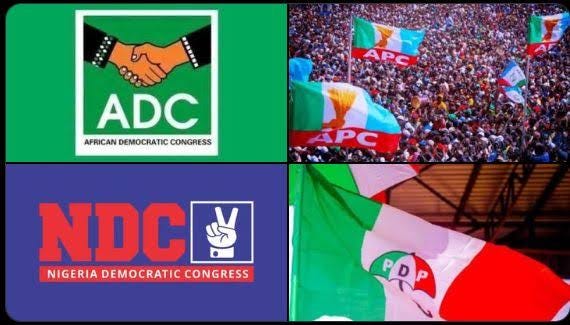
Politics is big money in Nigeria by Tunde Akande

Every Nigerian has a price and whoever can pay it wins the election.

My friend and brother, who I always go to for political discussions, has confidence in me. He has been in politics for a long time. He lived with me during his NYSC in Lagos in the early 80s. In those days during sleep, you will hear him shouting “up Awo.” I knew from then that he would end up in politics, though he is a graduate of chemistry. And that is exactly what happened. He entered politics during the second republic in the days of Chief Obafemi Awolowo.

I asked him recently what motivated him to enter politics. I told him he always shouted “up Awo” in his sleep in the days we lived together in Surulere in Lagos. He told me he always attended Chief Awolowo’s campaigns and always stood in the front row. So he heard all Awolowo said. He was attracted by what Awolowo said in those campaigns. Chief Obafemi Awolowo was a great, committed and dedicated statesman who introduced many transformative policies in the western region in Nigeria’s early days.

My friend was part of the successors of Awo when they formed the Alliance for Democracy (AD). He told me with relish that the entire team could not afford the N50,000 to pay for the party’s registration, and that it was his secondary school classmate who gave them the money. He introduced me to that man. He worked with the likes of the then Lagos State deputy governor, Alhaji Rafiu Jafojo.

Nigeria was saner then. They had no money but they were committed and principled. Chief Obafemi Awolowo had passed and his lieutenants who drank very deep into his lifestyle and philosophy were continuing his works. Both Alhaji Lateef Jakande and his deputy, Alhaji Rafiu Jafojo were Muslims and it didn’t matter to anybody. Bola Ahmed Tinubu joined later and he introduced some elements of money politics into their midst. “If you ask for N20,000, Tinubu will give you N50,000,” my friend told me.

He worked with Alhaji Lam Adesina who served as governor of Oyo State. Lam Adesina was a poor school principal, yet he won the nomination of the AD. “When you go to visit him in his house, a very simple bungalow, he does not serve you food. One day his wife brought him lunch which was just a few pieces of roasted plantain. She thrusted it in the hands of her husband,” and said “that is your lunch, and if you like, you can share it among the people here.” Lam did not. That was his meal.

Unlike the politicians of today, Lam was a stickler for time like his political boss, Chief Obafemi Awolowo. “If you give Lam 10 o’clock, you can be sure he will be waiting for you.” My friend told me this when I observed the shoddy attitude of current politicians. They are so disorganized. I was making my observation when my friend jumped in to give the example of Lam Adesina.

He agreed with me that his colleagues are not so organized today. When I made my observation to another politician, he said politicians are not that organized. They don’t keep time and it reflects in all they do. How then can leaders who are not organized and who treat time with levity organize a nation? The reason why Nigeria continues to fail is reflected in the disorganization of the politicians who lead the nation. “Don’t expect politicians to be organized” is a common refrain in the mouth of politicians as if they were specially created to be disorganized.

I tried to talk my friend and colleague into upping his game in politics, into contesting a higher office. Since he served as local government chairman, he had only won election into the state assembly, an election that was cancelled when General Sanni Abacha, the man who organized it, died. Since then he had served at the background. Why? “My friend, politics is big money in Nigeria,” he continues to mutter to me. “Why can’t you use your brain to make an impact and forge ahead,” I asked? “It is more than that, politics is big money in Nigeria. My forte is organization now, I can summon people within two days.”

I can’t understand why a man would not want to make progress in his chosen career. I was later to understand what had come over my friend. Since he crossed from the AD to PDP, since he left the camp of the serious and disciplined, he has lost all the virtues he learned which were carryover of the Awo virtues. He has become a pursuer of money. He has joined a group of Nigerians whose great wrecking they do in national politics is hardly realized. He had joined a special rentier class who lived on the misfortune of common Nigerians.

There are three classes or hierarchies of politicians in Nigeria, the first are the higher up, the president, the governors, the ministers, the commissioners, the legislatures, special advisers etc at the centre and the states. They have access to the treasury. They could dip their hands into it and steal as much as they want. They are visible. The next level is the middle men and women, represented by my friend. They don’t work but never lack as long as politics is around. They build big houses in choice areas.

They are around the first level politicians. They may have what looks like businesses, but those businesses are smokescreens. They are very rich. The first level gives them money to use and distribute to those on the shop floor, the downtrodden who sing at their rallies. Usually what gets to these third rankers are nothing but pittances, five hundred naira or at best one thousand naira. I had an experience at a rally of the APM where one first line politician, a member of the House of Representatives, addressed the party members.

Actually, I got appalled by the shoddy arrangements and, after the member of House of Representatives had wasted our time, he didn’t arrive on time, a testimony again of the Nigerian politician’s disdain for time, I made to leave. A young man ran after me yelling, “Sir, won’t you wait for your envelope.” I was so annoyed that I didn’t know when I said: “I don’t need it.” This envelope I later learnt contained one thousand naira. It is the reason everybody came there and so they thought I had also come for it. The politician I later learnt had donated one million naira which the next line of leaders had lied was only N500,000. Hell broke loose.

With monetized politics, Nigeria can never move forward. I have heard of where these middle level leaders, about ten of them, shared 75 million naira given by an aspiring member of the House of Representatives. I have heard of countless amount of money that have been shared and they all stop at the level of the middle-level leaders. I have heard in this current campaign of an account of 120 million naira given by the bigwigs in Abuja to a middle level politician who crossed from one party to another, I have heard of 200 million naira given by Abuja to a gubernatorial contender who promised to trade away presidential ballots of his party.

When FCT Minister Nyesom Wike boasted that he would resign if President Bola Tinubu didn’t win Rivers State and the FCT, he was not leaning on any love of the people for the president and himself, he was trusting on the power of money. Every Nigerian has a price and whoever can pay it wins the election. When Seyi Makinde, Oyo Governor, thought he could be president or at least be a spoiler to throw spanner in the works for President Bola Tinubu’s second term bid, he was not trusting in any popularity, he was trusting in his hold on the state treasury.

One thug, they call them youth as a euphemism, told me, denying he’s not motivated by money, “If I wanted money I would go to APM, because they are spending so big.” All the parties are involved. This is the same thug that also told me that he was the one who sent his boys to disrupt a meeting of middle level leaders of a political party. They had gathered at a dinghy hotel to share 75 million naira given to them by a first line leader. According to that thug, he did that to let them know that nobody can enter his territory without his consent. For his efforts, the thug got N150,000.

What will bail us out? We cannot legislate because those who will put together that legislation are also neck deep in the crime. We don’t have data that will enable us monitor how much is being spent. For now, it is apparent that Nigeria is not short of resources to fund all that is necessary as people are made to believe. But much of our resources are going to waste in the pockets of lazy political jobbers. We will need something that will clean this Augean stable and impose a welfare community that will take care of all.

First Published in METRO

***********************

Tunde Akande is both a journalist and pastor. He earned a Master's degree in Mass Communication from the University of Lagos.


Screws & Chips #136 #Cartoon by Thanos Kalamidas


In a galaxy far, far away, intelligence demonstrated by screws and chips,
boldly gone where no robot has gone before!

For more Screws & Chips, HERE!
For more Ovi Cartoons, HERE!


Brexit: The Great British con trick by Jemma Norman

The most extraordinary thing about Brexit is not that Britain made a historic mistake. It is that, years later, the people who sold the mistake still expect the country to pretend it was a triumph.

Andy Burnham's willingness to talk about a possible British return to the European Union, or at least a softer relationship with it, has reopened a political wound that Westminster has desperately tried to cover with patriotic wallpaper. And look at the reaction. Not the hysterical national outrage that once accompanied even the suggestion of closer European integration, but something considerably more revealing: a relatively mild response, a political shrug, and an increasingly obvious willingness to discuss what was once treated as national treason.

That change matters. For years, Brexit's architects presented themselves as the fearless liberators of a nation supposedly imprisoned by Brussels. They promised sovereignty, prosperity, control of borders, economic renewal and a glorious restoration of Britain's international importance. They sold nostalgia as an economic programme and nationalism as a substitute for political intelligence. The British public was promised a land of opportunity, freed from European bureaucracy, where everything from trade to immigration would magically become easier.

What a magnificent collection of political rubbish. The country was told that leaving the EU would be straightforward, that trade agreements would fall into Britain's lap, that the NHS would receive imaginary weekly fortunes, that immigration would be controlled and that British sovereignty would somehow become more powerful simply by abandoning one of the world's largest economic and political partnerships.

And what happened? Years of economic uncertainty, bureaucratic complications, damaged commercial relationships, labour shortages in important sectors, reduced opportunities for younger generations and a country still struggling to explain what exactly it gained.

The greatest achievement of Brexit was making Britain smaller while convincing some of its politicians that it had become bigger.

Of course, one must be careful about interpreting public reaction. A mild response to Burnham's remarks does not, by itself, prove that every British voter regrets Brexit. Nor does it establish that a majority is ready to rejoin. But it does demonstrate something politically significant: the old emotional defences of Brexit are weakening. The subject can increasingly be discussed without triggering the familiar theatrical performance about sovereignty, traitors and Brussels dictators.

That is progress. The most poisonous aspect of Brexit was never simply the departure itself. It was the dishonesty surrounding it. Political opportunists transformed complicated economic and constitutional questions into a simplistic battle between supposedly patriotic Britons and imaginary foreign oppressors. They exploited genuine frustrations, ignored inconvenient facts and treated warnings as sabotage. When reality arrived, many of those responsible conveniently disappeared into political retirement, television studios or their next lucrative opportunity.

Meanwhile, ordinary people were left with the consequences. Britain does not need another referendum tomorrow, nor another round of political circus. It needs an honest national conversation about its future relationship with Europe, including the practical possibilities of rebuilding cooperation, restoring economic connections and eventually considering membership again.

And it needs politicians with enough courage to admit that a decision can be democratically made and still be disastrously wrong. There is no shame in reconsidering a mistake. There is considerable shame in defending it indefinitely because admitting the truth would embarrass the people who made it.

Brexit was marketed as Britain's liberation. It increasingly looks like an expensive lesson in what happens when a nation mistakes political propaganda for a national strategy. Perhaps the most British thing about the whole affair is that the country is now being asked to pay for the promises of people who never intended to pick up the bill. The European door has never been the problem. The British politicians who slammed it shut were.


Democracy's million-dollar hunger by Thanos Kalamidas

I know it sounds cliché, often written and even more often mentioned, but… what the hell? Why are there no laws stopping people like Elon Musk from spending millions to buy politicians who will serve them, and forcing them to pay their fair share of taxes to help a health system in ruins, fund pensions, and support the homeless, the hungry, and the millions of poor people suffering and literally dying in the USA today?

The money poured into US’ midterm elections from both political parties could literally save lives, settle thousands of desperate families, heal thousands of wounded and sick people and feed millions for years. And that is before counting the enormous sums already sitting in party coffers, patiently waiting for the next electoral circus. Apparently, the US political establishment has discovered a miraculous economic principle, money is practically unlimited when the objective is winning power, but mysteriously scarce when the objective is helping people survive.

This is not merely an argument about campaign finance. It is an indictment of political priorities, a particularly American contradiction in which wealth becomes a weapon of electoral competition while human suffering becomes an inconvenient background statistic.

Consider what political fundraising actually represents. It is not simply money spent on television advertisements, consultants, rallies, digital propaganda, opposition research and an army of professional persuaders. It is an enormous mobilisation of economic resources around a single question: who gets to occupy the corridors of power? Meanwhile, outside those corridors, millions of Americans confront medical bills capable of destroying a lifetime's savings, families struggling with housing costs, children experiencing food insecurity and communities still waiting for infrastructure, dignity and opportunity.

The grotesque irony is that both parties can recognise suffering perfectly well when it becomes electorally useful. Poverty becomes a campaign photograph. Healthcare becomes a slogan. Veterans become patriotic decorations. Working families become the protagonists of carefully rehearsed speeches. Then the fundraising machinery starts again, swallowing millions in the name of defending those very people.

Democrats and Republicans may disagree about taxation, immigration, healthcare, reproductive rights, climate policy and the proper size of government. Yet their dependence on enormous financial machinery increasingly resembles a shared political addiction. They compete fiercely for donations while the citizens supposedly represented by those donations compete for affordable medicine, decent housing and a future their children can believe in.

The problem is not that elections cost money. Elections require organisation, communication and the participation of citizens. The problem is the scale, the concentration of influence and the grotesque opportunity cost. When political survival demands an endless financial war, governing becomes secondary to fundraising, and public service increasingly resembles a business whose shareholders are wealthy donors.

Imagine redirecting even a fraction of this electoral expenditure towards emergency housing, food programmes, medical treatment, mental health services, refugee assistance and rebuilding devastated communities. Imagine the thousands of families rescued from homelessness, the children whose hunger would disappear, the patients receiving treatment before their conditions become irreversible. These are not abstract moral fantasies. They are measurable human possibilities.

Of course, campaign money cannot simply be transformed overnight into public welfare. Political expenditure and public budgets are different instruments, and private donations do not automatically become government revenue. But that distinction does not diminish the moral question. It sharpens it.

What kind of political culture celebrates billions spent persuading people to vote while treating billions required improving their lives as an ideological battlefield?

US' electoral machinery has become exceptionally efficient at manufacturing political urgency. Every election is presented as the last opportunity to rescue the republic from catastrophe. Every opponent is portrayed as an existential threat. Every donation becomes a patriotic obligation. Yet the catastrophe that rarely receives comparable urgency is the everyday destruction of human potential through poverty, preventable illness, homelessness and hunger.

Perhaps the most revealing feature of US elections is not how much money they consume but how little shame accompanies the consumption.

Democracy should be about the people, not the price of convincing them. If political parties genuinely believe their campaigns are about protecting American lives, perhaps they should occasionally examine what those lives might look like if even a modest portion of their electoral fortune were spent protecting people rather than purchasing power.

The tragedy is not that USA cannot afford to help. The tragedy is that USA can afford both the suffering and the spectacle and somehow keeps choosing the spectacle.


The search is dead. Long live the rumour! By Jiro Lambert

We used to search for information. Now we ask strangers, algorithms and artificial intelligence to tell us what we should think. Somewhere between Google's search box and ChatGPT's confident answer, the art of actually finding the truth is becoming an endangered species.

There was a time when searching for something meant searching for something. You typed a question, received a collection of websites, opened a few dozen tabs, compared information, became frustrated, discovered something unexpected and, occasionally, found the answer. It was messy, exhausting and wonderfully human. It also required one rather inconvenient activity: thinking.

That era is disappearing. Google Search, once the magnificent gateway to the world's information, increasingly resembles a commercial shopping centre where the shops are advertisements, the corridors are sponsored suggestions and the actual information is somewhere behind a security door. The search engine has not necessarily disappeared, but the relationship between people and searching has fundamentally changed. People are increasingly turning to Reddit, specialised forums, social communities and artificial intelligence for answers that traditional search engines struggle to deliver.

And there is a reason. People are tired of searching through ten pages of recycled articles, suspiciously similar product recommendations, search-engine-optimised nonsense and websites that seem to have been written by someone who has never actually experienced the subject. Want to know whether a particular washing machine survives five years of family abuse? A manufacturer's website will tell you it is revolutionary. A stranger on Reddit will tell you that the bloody thing started leaking after eleven months.

Guess which one people trust? Reddit has become an enormous informal knowledge warehouse, built from personal experiences, arguments, expertise, mistakes and occasionally spectacular stupidity. Its attraction is precisely what traditional search engines have struggled to reproduce: human context. People do not merely want information; they want somebody who has been there, done it and perhaps regretted buying the bloody T-shirt.

But there is a catch. Reddit is not a university library. An experienced engineer and an enthusiastic idiot can occupy precisely the same digital space, sometimes with identical confidence. Upvotes are not academic qualifications, popularity is not evidence, and a thousand people repeating the same mistake do not transform it into scientific truth.

Then comes artificial intelligence. AI tools have changed the equation even more dramatically. Instead of searching for ten different explanations, users can ask one question and receive a coherent answer in seconds. They can demand clarification, challenge an argument, request comparisons and explore subjects without navigating an endless maze of hyperlinks.

It is convenient, extraordinarily powerful and potentially dangerous. The problem is not that artificial intelligence can make mistakes. Human beings have been producing mistakes professionally for centuries. The problem is that AI can package uncertainty in beautifully constructed sentences, delivering an answer with the confidence of a Supreme Court judge and occasionally the factual accuracy of a drunken pub philosopher.

The user receives an answer without necessarily seeing the process, the competing interpretations or the missing evidence. The intellectual labour of searching, comparing and questioning is quietly outsourced.

And that brings us to the real crisis: information literacy. Knowing how to use a search engine is not the same as knowing how to evaluate information. The next generation must learn something considerably more important than typing clever keywords into a box. They must recognise manipulation, identify unreliable sources, distinguish evidence from opinion, understand algorithmic incentives and question information even when it confirms everything they already believe.

This is particularly important in an age when misinformation is not simply an unfortunate by-product of the internet. It is an industry, a political instrument and, sometimes, a business model. The traditional search engine presented us with a distorted but relatively visible landscape of competing sources. AI increasingly offers us a destination. Reddit offers us a crowd. Neither guarantees truth.

There is also a commercial dimension that deserves considerably more attention. Search engines, social platforms and AI companies are competing to become the first and perhaps only place people visit when they need information. Whoever controls that first answer gains enormous influence over what people discover, what they ignore and eventually what they believe.

The old gatekeepers were journalists, editors, librarians and publishers. The new gatekeepers are algorithms, recommendation systems and privately controlled artificial intelligence models. The technology has changed; the concentration of informational power has not necessarily disappeared.

Perhaps the biggest irony is that humanity has never had greater access to knowledge and has never been so willing to surrender the responsibility of examining it.

I am not nostalgic for the days of endless searching, broken hyperlinks and websites demanding that we accept seventeen different cookies before reading three paragraphs. Progress is welcome. Better tools are welcome. AI can democratise access to knowledge in ways that previous generations could barely imagine.

But convenience must not become intellectual laziness. We should use Google, Reddit, specialist forums and AI. We should use libraries, newspapers, academic research and human expertise. We should compare, challenge and investigate. Most importantly, we should never confuse an answer with an understanding.

The death of Google Search, if that is what we are witnessing, is not necessarily the death of searching. It is the transformation of how we encounter knowledge.

The real danger is something much uglier: a generation that knows how to ask every possible question but has forgotten how to recognise a convincing lie.

And when the machines eventually become the librarians, the researchers and the interpreters of our collective knowledge, somebody should remind them of one very old human principle: Trust is earned. Truth is investigated. And neither comes with a convenient little button marked 'Generate Answer'.


Berserk Alert! #133 #Cartoon by Tony Zuvela


Tony Zuvela and his view of the world around us in a constant berserk alert!
For more Berserk Alert! HERE!
For more Ovi Cartoons, HERE!


Puppi & Caesar #55 #cartoon by Thanos Kalamidas


Another cartoon with a mean and know-all of a bully cat, Puppi and her intellectual, pompous companion categorically-I-know-all, Caesar the squirrel!  

For more Puppi & Caesar, HERE!
For more Ovi Cartoons, HERE!


The Cockroach that won’t disappear by Avani Devi

When political empires begin to crack, the most dangerous thing for their masters is not necessarily an army, a revolution or even an angry electorate. Sometimes it is a survivor with a thousand political lives, crawling through the wreckage of a carefully constructed illusion.

Narendra Modi built his political empire on the promise of invincibility. The strongman of New Delhi, the self-appointed architect of a Hindu nationalist renaissance, the man who turned electoral victories into personal mythology, suddenly faces an uncomfortable question: what happens when the cockroach refuses to die?

Indian politics has always been a brutal ecosystem, but Modi's greatest achievement was convincing millions that he was not merely another politician surviving the jungle. He was the jungle's undisputed king. His machinery of propaganda, religious mobilisation, muscular nationalism and carefully choreographed public appearances manufactured the impression that opposition was obsolete and political alternatives were little more than historical curiosities.

Then reality intervened. The Indian electorate reminded Modi that democracy is not a private property deed issued to a charismatic leader. His party's reduced parliamentary strength in 2024 forced him into coalition dependence, exposing an uncomfortable vulnerability beneath the carefully polished armour. Suddenly, the supposedly invincible emperor needed allies, compromises and parliamentary arithmetic. The mythology of absolute dominance suffered a rather undignified collision with mathematics.

And lurking in this political mess is the cockroach: India's surviving opposition, particularly the Congress-led alliance, and the stubborn democratic instinct that refuses to surrender the country to one political personality.

The cockroach, after all, is not beautiful, respectable or particularly welcome in the kitchen. It survives. It adapts. It appears precisely when somebody believes the room has been thoroughly disinfected. India's opposition has demonstrated something Modi's political theatre desperately wanted to conceal: survival is itself a political weapon.

But the danger for Modi extends beyond parliamentary numbers. His political project depends on permanent mobilisation, permanent enemies and permanent emotional intoxication. Hindu nationalism provides the fuel, but economic frustrations, unemployment, inequality and the ordinary indignities of everyday existence cannot indefinitely be buried beneath religious spectacle. A temple inauguration does not create employment. A nationalist slogan does not fill a stomach. And another televised declaration of greatness cannot magically transform political disappointment into prosperity.

The irony is delicious. A leader who cultivated the image of a political exterminator now discovers that democratic competition possesses extraordinary reproductive capacity. Eliminate one opponent and another emerges. Marginalise one institution and another becomes troublesome. Silence one criticism and ten more crawl out from beneath the furniture.

This does not mean Modi's departure is imminent, nor that India's opposition has suddenly become competent, united or morally immaculate. The opposition has its own failures, dynastic baggage and political parasites. Modi remains powerful, his organisation formidable, and his ideological project deeply rooted. But power without vulnerability is an illusion, and the illusion has been punctured.

The real question is whether India can recover something more valuable than the humiliation of one political heavyweight: the democratic space in which disagreement is not treason, minorities are not permanent suspects, journalists are not enemies, and citizenship does not require ideological obedience.

Modi may yet survive another political season. The cockroach certainly will. And perhaps that is the most irritating lesson for every aspiring authoritarian: democracy does not need to be magnificent to survive. Sometimes it only needs to be stubborn, ugly, inconvenient and impossible to kill. In India, the political insect has survived the spraying. Now the exterminator has a problem.


Joan of Arc in Marine’s armour …again by Nadine Moreau

France does not need another saint. It needs a political movement that stops confusing national pride with national paranoia. Marine Le Pen launching her presidential campaign in Orléans, wrapping herself in the symbolic armour of Joan of Arc. When politicians begin borrowing their legitimacy from medieval saints, one should immediately check what they are trying to smuggle into the present.

Joan of Arc liberated Orléans from English occupation. She became a symbol of resistance, sacrifice and French national identity. Her story belongs to a complicated history of faith, courage, tragedy and national mythology. Marine Le Pen, however, has discovered something considerably more convenient in this historical inheritance: a magnificent political costume.

The symbolism is not accidental. Joan of Arc has long occupied the French nationalist imagination, offering an emotionally irresistible combination of patriotism, victimhood and heroic resistance against foreign domination. For Le Pen, this is political gold. Why bother constructing a convincing vision of France's future when you can borrow the emotional machinery of its past?

The problem is that France in 2027 is not medieval Orléans, and the enemies of contemporary French society cannot simply be assembled into a convenient procession of foreign invaders.

Le Pen's political project has spent decades transforming anxiety into electoral capital. Immigration becomes an existential threat. European integration becomes an assault on sovereignty. Cultural diversity becomes evidence of national decline. The familiar promise is that France can recover its greatness by recovering its supposed purity.

This is nationalism with an enormous rear-view mirror and remarkably little imagination. The strategy is particularly cynical because Joan of Arc's historical significance cannot be reduced to the ideological property of the French far right. She belongs to French history, certainly, but her courage and sacrifice are not exclusive possessions of any political party. Turning her into a campaign mascot is less an act of historical reverence than an attempt to monopolise patriotism.

And that is precisely where the danger begins. When the far right claims exclusive ownership of the nation, everybody else becomes a questionable guest in their own country. Citizens with different origins, different religions, different political convictions or different interpretations of French identity are gradually pushed towards the margins of an increasingly narrow national definition.

The genius of this political theatre is that it makes exclusion appear patriotic and prejudice sound like historical responsibility. France deserves better than this theatrical resurrection of medieval nationalism. It deserves a serious discussion about immigration, economic inequality, public services, security, secularism and the future of European democracy. It deserves political leadership capable of addressing contemporary problems without manufacturing imaginary civilisational wars.

Joan of Arc fought for a France that did not yet exist in its modern form. Marine Le Pen campaigns for a France that exists largely as an ideological fantasy, populated by nostalgic certainties and conveniently selected enemies.

The difference matters. A nation is not a museum exhibit, a bloodline or a religious monument. It is a living political community, constantly negotiating its identity through democracy, citizenship and shared responsibilities.

If Marine Le Pen wants to invoke Joan of Arc, she should remember that history is considerably more complicated than a campaign poster. France does not need another political saint. It needs fewer political exorcists.


Sudan, the warlords’ republic by Solomon Mensah

When a country begins to fracture, the world does not necessarily hear the sound. Sometimes it simply stops listening. Sudan is not merely...